Part 1 of 3
The Birthday Table Near the Plants
Marcus Ellery paid for his mother’s seventieth birthday party because he believed that was what a good son did.
He paid for the private dining room at an elegant restaurant in Leawood, Kansas. He paid for the flowers, the photographer, the custom cake, the live music, the decorated tables, and the expensive dinner menu his mother had chosen herself.
He even paid for the deep red dress Carol Ellery wore that evening, because she had told him, with a soft sigh, that she wanted to look beautiful for such an important milestone.
Marcus was thirty-nine years old, a project manager for a construction company in Overland Park, and the kind of man who rarely complained. He had spent most of his adult life convincing himself that family meant sacrifice.
So when his mother asked, he gave.
When his father needed something, he handled it.
When his younger sister, Alyssa, said she was struggling again, Marcus quietly sent money.
And when his wife, Hannah, told him that his family did not treat him like a son but like an open wallet, he always defended them.
“They’re still my parents,” he would say.
Hannah never argued for long. She only looked at him with tired eyes and answered quietly.
“I know they’re your parents, Marcus. I just wish they remembered you were someone’s father too.”
That night, he finally understood what she meant.
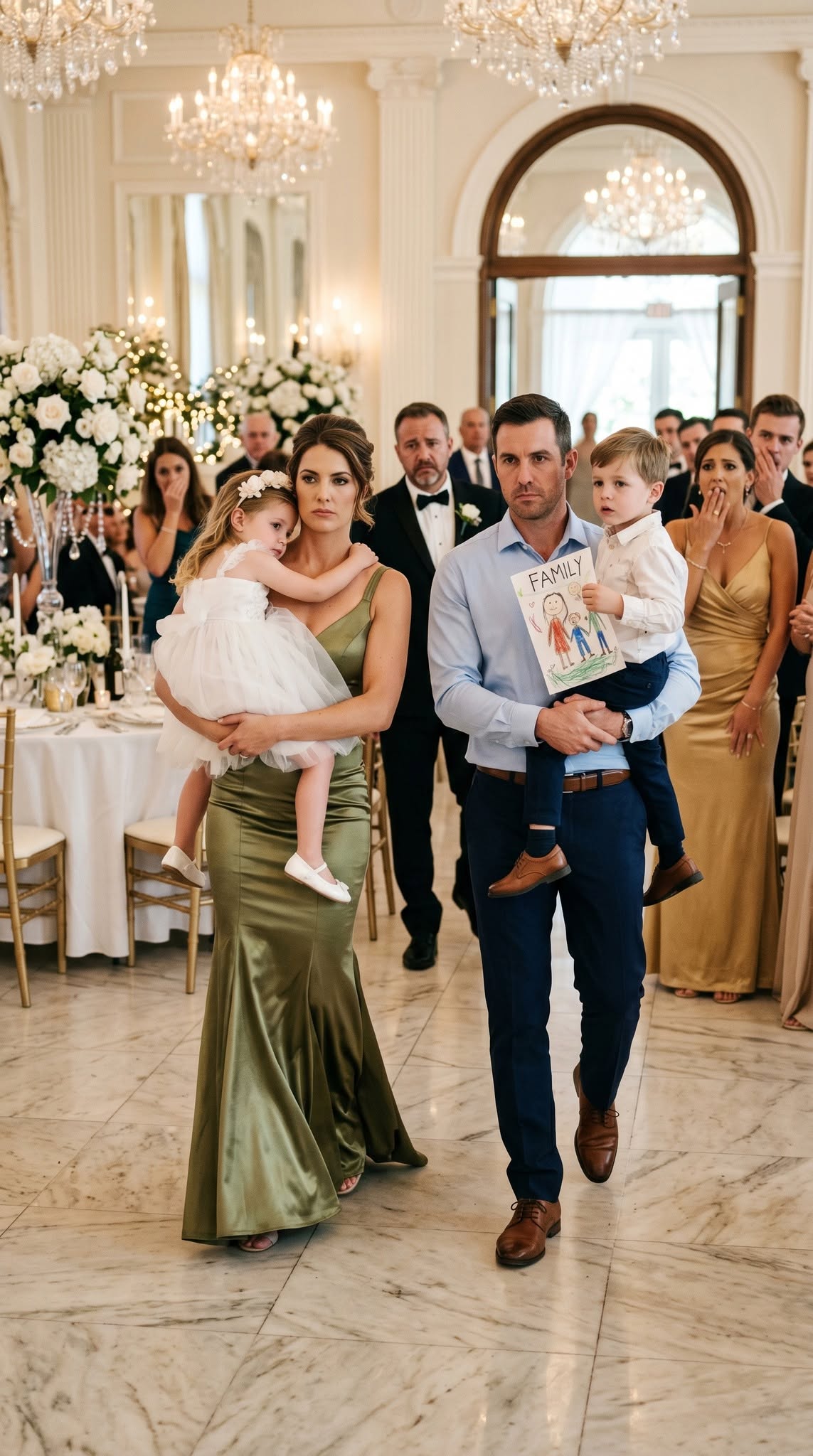
The restaurant was filled with warm lighting, white tablecloths, polished glasses, and relatives Marcus had not seen in years. His mother sat at the center table like a queen, smiling for photos while Alyssa’s two children sat beside her in the best seats, their names written on small gold place cards.
Marcus walked in holding his daughter Ivy’s hand. She was eight, wearing a pale blue dress and white shoes she had picked out herself. His six-year-old son, Jonah, carried a homemade birthday card covered in crooked hearts and purple marker.
The front of the card said, “Happy 70th Birthday, Grandma Carol.”
Jonah had worked on it for two days.
But before the children reached the main table, Marcus’s father, Vernon, pointed toward the back of the room.
“Marcus’s kids can sit over there by the plants,” Vernon said calmly. “That table is better for them.”
He did not say it loudly.
He did not sound angry.
That somehow made it worse.
He said it as if Ivy and Jonah were extra chairs, extra coats, extra clutter that needed to be moved away so the family pictures would look cleaner.
Ivy’s fingers tightened around Marcus’s hand.
Jonah looked down at the card and slowly pulled it closer to his chest.
Marcus waited for his mother to correct Vernon.
Carol only adjusted her pearl necklace and smiled thinly.
“Don’t start, Marcus,” she said. “Children need to learn that they don’t always get the front row.”
For a moment, Marcus could not speak.
Hannah stood beside him, her face calm but her eyes shining. She had warned him for years. She had watched the pattern before he was willing to name it.
Alyssa leaned back in her chair and gave a small laugh.
“It’s just seating, Marcus. Please don’t make everything emotional.”
Marcus looked at the table near the plants.
It was half-hidden behind a tall decorative screen, away from the music, away from the cake, away from the center of the room. His children had been placed where they could be forgotten.
And he had paid for every part of that room.
The Moment He Stopped Explaining
Marcus did not yell.
That surprised everyone most of all.
He simply took Ivy and Jonah to the back table, pulled out their chairs, and helped them sit down. Hannah sat beside them and placed a gentle hand on Jonah’s shoulder.
“It’s okay, sweetheart,” she whispered.
But Marcus knew it was not okay.
Nothing about it was okay.
A few minutes later, the event coordinator, a young woman named Brooke, approached him with a tablet in her hands.
“Mr. Ellery,” she said politely, “I just need your final approval for the premium dinner service, the dessert bar, the additional live music hour, and the champagne package.”
Marcus looked across the room.
His mother was smiling for another photo. His sister was fixing her hair. His father was laughing with an uncle near the head table. Alyssa’s children were eating from little gift bags with their names printed in gold.
Then Marcus looked back at Ivy and Jonah.
Ivy was pretending to fold her napkin into a flower.
Jonah still had not given his grandmother the card.
Something inside Marcus became quiet.
Not cold.
Not cruel.
Just clear.
He took the tablet from Brooke.
“I need to change the service.”
Brooke blinked.
“Change it, sir?”
“Cancel the champagne package. Remove the dessert bar. End the live music after the first set. Change the dinner to the standard menu.”
Brooke looked uncomfortable.
“Mr. Ellery, your guests will notice.”
“Good.”
“Your family may be upset.”
Marcus glanced toward the table near the plants.
“They already made their choice. I’m making mine.”
Brooke hesitated, then nodded.
Within minutes, servers began removing expensive bottles from the side tables. The dessert display disappeared behind the kitchen doors. The musicians quietly packed away part of their equipment. The large custom cake was rolled out of sight and replaced with a smaller one from the standard package.
At first, there were whispers.
Then Carol’s voice cut through the room.
“Why are they taking away my cake?”
A server froze.
“There was a change in the service, ma’am.”
Carol turned slowly toward Marcus.
The room grew still.
She walked toward him with the careful smile she used when she wanted to look graceful in front of others.
“Marcus, what is going on?”
He met her eyes.
“I’m paying for what is necessary.”
Her smile faded.
“Excuse me?”
“It’s your birthday. But it’s my money.”
Vernon stepped forward, his jaw tight.
“Don’t embarrass your mother.”
Marcus looked at his father, then at the back table where his children sat in silence.
“My children are sitting beside the plants at a party I paid for. That is embarrassing.”
A few relatives turned away.
Someone coughed.
Alyssa stood up quickly.
“Are you serious right now? You’re going to punish Mom on her seventieth birthday?”
Marcus gave a sad smile.
“No, Alyssa. I’m just done rewarding people for disrespecting my family.”
The Family Secret Everyone Pretended Not to See
Carol’s face tightened.
Part 2 of 3
“You are being dramatic.”
Marcus nodded slowly.
“That’s what you always say when I finally tell the truth.”
Alyssa folded her arms.
“What truth?”
Marcus looked at her, and for the first time, he did not soften his voice to protect her pride.
“The truth that I paid your rent for three years. The truth that I paid your car payment twice when you said you were about to lose it. The truth that I paid for your children’s summer camps, your phone bill, your groceries, and that beach trip you called a mental health break.”
Alyssa’s face went pale.
“Stop talking.”
“No,” Marcus said. “I stopped talking for years. That was the problem.”
Vernon pointed toward the hallway.
“We can discuss this outside.”
“No,” Marcus answered. “You taught my children their place in front of everyone. So I can explain mine in front of everyone too.”
Carol’s eyes filled with tears, but Marcus recognized those tears. They were not sorrow. They were control.
“You’re ruining my birthday,” she said.
Marcus’s voice stayed calm.
“You ruined it when you decided my children needed to learn they were less important.”
Hannah looked down, trying not to cry.
Jonah slid from his chair and walked toward his grandmother with the purple card still in his hands. For one second, Carol reached toward it as if she expected him to give it to her anyway.
But Jonah stopped.
He looked at her hand, then at the table near the plants, then back at his father.
Slowly, he held the card against his chest and returned to Hannah.
The room went completely quiet.
That small movement said more than Marcus ever could.
Brooke returned with the revised bill. Marcus signed it without shaking.
The party continued, but it no longer felt like a celebration. It felt like a room full of people eating carefully around a truth that had finally been placed in the center of the table.
Alyssa sat down, furious, already typing on her phone.
Carol dabbed her eyes with a napkin.
Vernon stared at Marcus like he had become a stranger.
But Marcus did not feel like a stranger.
For the first time in years, he felt like himself.
The Message That Changed Everything
When Marcus and Hannah left the restaurant with the children, the cool Kansas night felt easier to breathe.
They buckled Ivy and Jonah into the back seat. No one spoke for a while.
Then Marcus’s phone buzzed.
It was a message from Alyssa.
“If you want to talk about money, maybe we should also talk about the lake house Mom keeps calling hers.”
Marcus stared at the screen.
Hannah leaned closer.
“What lake house?”
Marcus swallowed.
Five years earlier, he had bought a small lake house near Table Rock Lake in Missouri. It was not a mansion. It was a quiet place with a wooden porch, a dock, and enough space for his children to run around during summer weekends.
His parents had asked to use it a few times.
Then a few times became often.
Marcus had not minded at first. He thought he was being generous. He thought he was giving his parents comfort.
But Carol had apparently been telling relatives that the house belonged to her.
That night, after Ivy and Jonah fell asleep, Marcus sat at the kitchen table with his laptop open.
Hannah sat beside him.
Together, they reviewed the accounts.
Monthly transfers to his mother.
Insurance payments for Vernon’s truck.
Utility bills for the lake house.
Alyssa’s phone bill.
Subscription charges.
Old “temporary” loans that were never repaid.
Repair costs.
Medical bills.
Credit card payments.
Years of quiet support.
Years of being told he was selfish whenever he asked a question.
Marcus leaned back in his chair and covered his face with both hands.
“I thought I was helping them,” he whispered.
Hannah placed her hand over his.
“You were helping them. They were the ones who turned help into entitlement.”
The next morning, Marcus canceled everything he legally could.
One by one.
No yelling.
No long message.
No apology.
Then he called his attorney.
“I need the locks changed at the lake house,” Marcus said. “I need an inventory done, and I need written notice sent. No one enters without my permission.”
His attorney paused.
Then he said quietly, “I’m glad you finally made this call.”
When the Truth Reached the Rest of the Family
The calls started three days later.
Alyssa called first.
“Why is my phone not working?”
“Because I’m not paying for it anymore.”
“Marcus, I have kids.”
“So do I.”
Then Vernon called.
“My truck insurance was canceled.”
“Yes.”
“Who do you think you are?”
Marcus looked through the kitchen window at Jonah chasing Ivy across the backyard.
“The person whose name was on the policy.”
Carol came to his house that Sunday.
She wore sunglasses, carried an expensive handbag, and spoke in the soft, wounded voice she used whenever she wanted people to feel guilty.
Hannah opened the door but did not invite her in.
Marcus stepped onto the porch.
“What do you need, Mom?”
Carol tried to hug him.
Part 3 of 3
He stepped back.
The hurt on her face was real, but Marcus knew real hurt did not erase years of real damage.
“Don’t do this,” she said. “We’re your family.”
Marcus looked at her for a long moment.
“My family was sitting beside the plants while you smiled at the table I paid for.”
Her lips trembled.
“It was a mistake.”
“No,” he said. “It was a habit.”
Carol looked away.
Marcus continued, his voice steady.
“Every time you favored Alyssa’s children and expected mine to accept less, it was a habit. Every time you asked me for money and called me ungrateful when I hesitated, it was a habit. Every time Hannah had to stay quiet to keep the peace, it was a habit.”
Carol began to cry.
“I never meant to make your children feel unwanted.”
“But you did,” Marcus said. “And the worst part is that you expected them to learn to live with it.”
The truth about the lake house came out that same weekend.
Carol had invited relatives there for a family gathering. She had promised a cookout, photos by the water, and a weekend at “her little place by the lake.”
When they arrived, they found new locks and a property manager waiting near the driveway.
“This is private property,” he told them. “No one is allowed inside without written authorization from the owner.”
Vernon raised his voice.
Alyssa recorded videos.
A cousin called Marcus, angry and confused.
“Why would you lock your parents out of their own lake house?”
Marcus did not argue.
He sent documents.
The deed.
Payment records.
Tax bills.
Utility statements.
Bank transfers.
There was a long silence on the phone.
Then his cousin spoke again, much softer this time.
“Marcus… you paid for all of this?”
“Yes.”
“And they told everyone it was theirs?”
“Yes.”
Another silence.
“I’m sorry,” the cousin said.
Those two words reached Marcus in a way his family’s excuses never had.
The Life He Chose After Walking Away
The family story changed quickly after that.
Carol said Marcus had abandoned her.
Vernon said a son should never turn his back on his parents.
Alyssa said Hannah had poisoned his mind.
But fewer people believed them now.
Because documents do not care about performance.
Receipts do not change their story.
And truth has a way of standing quietly until people stop shouting over it.
Alyssa eventually had to find steady work.
Vernon sold the truck he had always bragged about.
Carol stopped posting photos from places she did not own.
Marcus did not celebrate their struggle. That was not who he was.
But he also did not rescue them from the consequences of their own choices.
Months later, Marcus sold the lake house.
With part of the money, he paid off debts he had carried while supporting others. With the rest, he took Hannah, Ivy, and Jonah to a small beach town in South Carolina.
Not a luxury resort.
Not a place meant to impress anyone.
Just a clean little rental near the water, where the children could run barefoot and Hannah could finally sleep without waiting for another family emergency to take money from their home.
One evening, Jonah ran toward the waves with a red plastic shovel in his hand.
Ivy sat beside Marcus on the sand.
She was quiet for a long time.
Then she asked, “Dad, are we important?”
The question broke something open in him.
Hannah heard it too. She turned her face toward the ocean, blinking hard.
Marcus pulled Ivy close and called Jonah back from the water. When both children were beside him, he wrapped his arms around them.
“You never have to earn a place in this family,” he said. “You already have one.”
Ivy leaned against his chest.
Jonah finally smiled.
That night, they ate fish tacos at a small outdoor table with paper napkins and plastic cups. No one sat in the corner. No one had to be grateful for being tolerated. No one had to pretend that disrespect was love.
Marcus understood then that he had spent years trying to buy a seat at a table where he was never truly welcomed.
He had paid for parties, bills, favors, trips, and family stories that made other people look better than they were.
But love cannot be purchased.
Respect cannot be begged into existence.
And sometimes the bravest thing a good son can do is stop being useful to people who forgot how to be kind.
Carol still told relatives that Marcus had changed.
Alyssa still said he had become selfish.
Vernon still insisted that family loyalty meant never saying no.
But Marcus knew the truth.
That night at the birthday party, he did not lose his family.
He finally chose the one that had been waiting for him at the back table all along.
A person can give for years and still be treated like they owe more, which is why love must never be measured only by how much someone is willing to pay.
Sometimes the moment that changes a family is not loud or dramatic, but quiet enough for one child’s lowered eyes to reveal what adults kept pretending not to see.
Helping your parents or siblings can be beautiful, but it becomes unhealthy when your own spouse and children are expected to accept less so others can keep taking more.
A peaceful person does not become cruel when they finally set boundaries; they simply stops handing their life to people who never planned to carry it with care.
Children remember where they are seated, how adults speak about them, and whether their parents protect them when the room makes them feel small.
Respect inside a family should not depend on money, gifts, favors, or silence, because real love does not require someone to keep paying for basic kindness.
When someone calls your boundaries selfish, it may be because they benefited from the version of you who never said no.
The family you were born into matters, but the family you are responsible for building deserves your courage, your protection, and your clearest loyalty.
Walking away from unfair treatment does not mean you stopped loving people; sometimes it means you finally stopped allowing love to be used against you.
Marcus did not become less of a son when he chose his wife and children; he became the father his children needed, and that was the choice that saved his home.