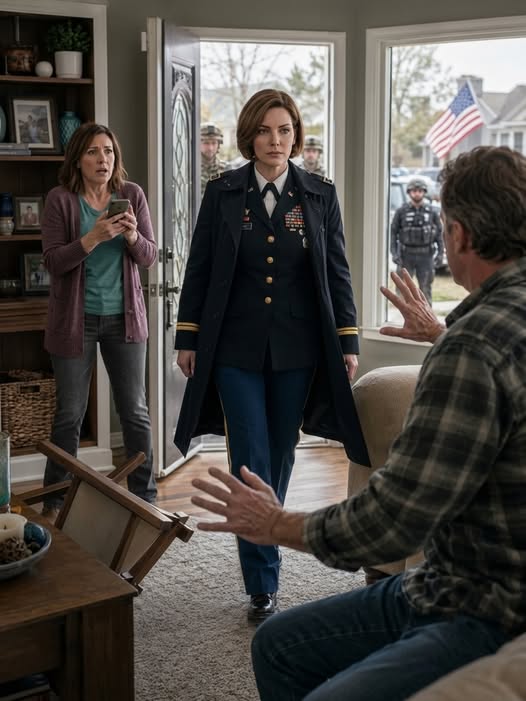
The Night My Mother Sent the Code
### Part 1
At 11:42 p.m., my mother sent me the emergency code we had not used since I was thirteen.
Three words.
Blue porch candle.
No punctuation. No explanation. Just those three words, followed nine seconds later by a location pin from her kitchen in Brookhaven, North Carolina.
I stared at the message long enough for my phone screen to dim in my hand. Rain tapped against the windows of my townhouse in slow, cold needles. The television was on, but I could not have told you what show was playing. All I could hear was my mother’s voice from twenty-four years ago, standing in our old laundry room after my father’s funeral, pressing a folded slip of paper into my palm.
If you ever need me and can’t explain, send this. If I ever send it to you, come.
My mother, Marian Vale, did not dramatize anything. She labeled leftovers with masking tape. She folded grocery bags into triangles. She still believed a person could fix most trouble with black coffee, a clean kitchen, and a good night’s sleep.
So when she sent that code, I was already reaching for my keys before my mind caught up.
Ten minutes later, I was standing in the rain behind her house with the spare key digging so hard into my palm it left a mark.
The first thing I noticed was the porch light.
Mom never left lights on late. She said electricity bills were how poor decisions introduced themselves politely. That yellow bulb glowing above the back steps felt wrong before I even touched the door.
I stood still and listened.
Thunder rolled somewhere past the interstate. Water dripped from the gutters into the azalea beds. Inside, a television murmured faintly, too low to understand. No shouting. No crashing. Nothing dramatic.
That scared me more.
I unlocked the back door and stepped into the kitchen.
The smell hit first. Burnt coffee. Lemon cleaner. Bourbon.
Then I saw the broken mug near the sink, one of Mom’s blue ceramic mugs from the flea market. A dish towel lay over part of it like someone had tried to hide the pieces and given up halfway through. One chair was pushed back too far from the table. A cabinet hung open. Mom’s purse sat on the floor beside the trash can, tipped over, lipstick and receipts spilled across the tile.
I did not call out.
Old habits die hard. Mine had been sharpened in rooms where the wrong sound could change everything. I walked carefully, noticing before feeling.
A smear of pink lipstick stained a paper towel near the sink. Not fresh. Recently wiped.
Then my stepfather’s voice barked from the living room.
“Marian? Who’s in the kitchen?”
Grant Harlow sounded drunk enough to be mean and sober enough to aim it.
I stepped around the corner slowly.
He was in his recliner with a glass balanced on his stomach, a college basketball replay muted on the television. Gray hair combed too neatly. Polo shirt stretched over a retirement belly. Expensive watch on his wrist, though he had not held a real job in years.
His eyes narrowed when he saw me.
“Well,” he said. “Look who decided to visit.”
I ignored him and looked at my mother.
She stood near the hallway in her pale green cardigan, one hand pressed to her mouth. Even from across the room, I saw the split along her lower lip beneath faded lipstick.
Something inside me went cold.
Not hot. Cold.
“Mom,” I said quietly. “Are you okay?”
Grant answered for her.
“She dropped a damn mug and cut herself cleaning it up.”
Mom tried to smile.
That hurt worse than the cut.
“I’m all right, honey.”
No, she was not. I knew her tells. Tight shoulders. Eyes lowered. Voice too careful, like every word had to step around broken glass.
Grant sat forward. “You can’t just walk into people’s homes in the middle of the night.”
“My mother sent me a code.”
His face changed for half a second.
Then he laughed.
“Jesus. You make everything sound like a spy movie.”
I kept my voice even. “Mom, do you want me here?”
Grant cut in. “She’s tired. You should go.”
But Mom nodded.
Small. Barely visible.
Enough.
Grant stood too fast. Bourbon sloshed over his hand and onto the rug.
“For God’s sake, Marian, tell her to stop acting like she’s back in one of those government buildings pretending she matters.”
There it was.
For twelve years, Grant had treated my career like a silly little secretarial hobby. According to him, women in federal service pushed paper, answered phones, and exaggerated stress for attention.
I had never corrected him.
Quiet is useful when arrogant men mistake it for weakness.
He stepped closer. “You got your drama now. Leave.”
I glanced at Mom again. Her cardigan sleeve had slipped up.
Bruising.
Not fresh.
“How long?” I asked her softly.
Grant scoffed. “Oh, for crying out loud.”
My mother looked down at the carpet.
That silence said more than any confession could.
Grant pointed at the door. “Get out.”
I remember how calm my voice sounded.
“No.”
He moved toward me fast enough that my body reacted before my anger did. His hand clamped around my wrist.
Wrong decision.
I turned, rotated his arm inward, and pinned him lightly against the wall beside the refrigerator before his breath finished leaving his chest. Not hard enough to injure him. Just enough to remind him that touching me had been a mistake.
His glass shattered behind us.
“What the hell?” he gasped.
“Don’t touch me again,” I said.
I released him immediately.
Mom stared at me like she had opened a door and found a stranger standing there.
Grant rubbed his shoulder, humiliated more than hurt.
“You crazy witch,” he muttered.
I looked at my mother. “Get your overnight bag.”
Grant laughed. “She’s not going anywhere.”
But this time, Mom did not answer him. She disappeared down the hallway without a sound.
That was when Grant’s face changed for real.
Because for the first time all night, he realized control was slipping.
A minute later, Mom came back carrying the old navy overnight bag we used to take to the beach when I was little. Her hands trembled around the handles.
Grant stared at her.
“You’ll be back tomorrow,” he said. “You always are.”
Mom looked at him for a long moment.
Then she said, softly but clearly, “No. I don’t think I will.”
I thought we were leaving.
Then Mom grabbed my sleeve in the doorway and whispered, “Anna, wait. There’s something in the kitchen drawer he can’t find.”
And just like that, I understood the bruises were only the beginning.
### Part 2
I wanted to put my mother in my truck and drive until Grant Harlow’s house disappeared behind rain and distance.
That was my whole plan for about six seconds.
Then Mom stopped in the doorway.
Her slippers were getting wet from rain blowing across the back porch. The overnight bag hung from one hand. With the other, she gripped the doorframe like the house itself might pull her back inside.
“Anna,” she whispered, “I can’t just leave.”
Grant heard her from the living room and smiled.
Not a big smile. Not enough for anyone else to notice.
Just one corner of his mouth lifting.
That tiny smile told me shame had been working for him for years.
I softened my voice. “Yes, you can.”
Mom shook her head. “The house. The bills. My insurance. My accounts. He’ll say I’m confused.”
Grant folded his arms. “Because you are confused, Marian.”
I turned toward him. “Stop talking.”
He opened his mouth, thought better of it, and shut it again.
Mom looked smaller than I remembered. She had always been sturdy, practical, five foot six with strong hands and a voice that could calm a church kitchen during a power outage. But standing there in her damp slippers, she looked like someone had been folded inward, one careful crease at a time.
So I made the choice I hated.
“We’ll stay tonight,” I said. “But I’m staying too.”
Grant laughed once. “You’re not sleeping in my house.”
“My mother’s name is on the deed,” I said. “I’m not asking.”
His eyes moved over me, measuring. He had never really looked at me before. Not as a threat. Not as a person with edges. I could almost see him redoing math in his head.
He chose not to push.
Smartest thing he did all night.
I took Mom back into the kitchen and sat her at the table. She kept apologizing for the broken mug.
“I should have cleaned it up.”
“Mom.”
“It made such a mess.”
“Mom.”
She looked at me then, and her face crumpled for half a second before she forced it back into place.
A hurt woman should not be worried about ceramic.
I found the first-aid kit under the sink between dishwasher pods and an old bottle of Windex. Grant hovered in the living room, pretending to search for the remote, muttering just loudly enough to be heard but not clearly enough to answer.
Mom flinched when I touched a cotton pad to her lip.
“Sorry,” I said.
“It’s all right, honey.”
It was not.
I wanted to ask everything at once. When did this start? How often? Did he threaten you? Who else knew? Why didn’t you call sooner?
But care is not interrogation.
So I asked one question.
“Do you feel safe sleeping here tonight if I’m in the house?”
Her eyes flicked toward the living room, then back to me.
“Yes.”
Grant shouted, “I can hear you two whispering.”
I raised my voice just enough. “Good.”
Mom almost smiled.
Almost.
After I helped her into bed, I went back to the kitchen. The drawer she had mentioned was the narrow one beside the stove, the one that used to hold coupons, birthday candles, rubber bands, and every mystery key in North Carolina.
Inside, under takeout menus and batteries, I found a small brass key taped beneath the plastic organizer.
I slipped it into my pocket.
I slept in the guest room, though sleep is too generous a word. I sat on top of the quilt with my boots on and the lamp off, listening.
Every house has a night language.
This one used to be peaceful. Ice maker clicking. Wall clock ticking. Pines brushing against the siding. Now I heard Grant pacing.
At 1:18 a.m., he stopped outside my door.
The floorboard gave him away.
He stood there for ten seconds.
I did not move.
Then he walked away.
That told me plenty.
The next morning, Grant came into the kitchen dressed like a wounded country club member. Khaki shorts. Duke sweatshirt. Wet hair from a shower. Mint mouthwash and resentment.
“My shoulder hurts,” he announced.
I was making coffee in my mother’s old Mr. Coffee machine.
“That’s strange,” I said. “I thought I was just a secretary.”
Mom stared down at her toast to hide a smile.
Grant did not find it funny.
“You assaulted me.”
“You grabbed my wrist.”
“I was trying to get you out of my home.”
“Mom asked me to stay.”
He leaned over the counter toward her. “Marian, tell her she misunderstood.”
That was when I saw the machinery of him.
Not just anger. Not just drinking.
A system.
Push. Deny. Make her doubt herself. Make everyone else doubt her too.
Mom’s hand tightened around her coffee mug.
I stepped between them before he got too close.
“Back up.”
Grant’s face flushed. “You don’t give orders here.”
“No,” I said. “I give warnings.”
He grabbed his truck keys from the bowl by the door.
“I’m going to breakfast. Maybe when I come back, both of you will be finished with this performance.”
The front door slammed hard enough to rattle the window over the sink.
For a full minute, Mom did not move.
Then she started crying without making a sound.
I sat beside her.
“Has this happened before?”
She nodded once.
“How many times?”
“I don’t know anymore.”
I had to look away.
At the refrigerator magnets. At the church calendar. At the photograph of me in uniform that Grant had pushed behind a stack of grocery coupons.
“When did it start?”
“After he retired. Maybe before.” She gave a tired laugh. “I made excuses.”
“What kind?”
“The usual kind. Stress. Money. Bourbon. Me being difficult.”
I hated how practiced those words sounded.
Then she told me about the checking account. How Grant had started “helping” with bills. How he took her debit card because she was “too trusting.” How he read her texts. How he told neighbors she was getting forgetful.
“He says if I leave, he’ll prove I can’t manage alone,” she whispered.
There it was.
Not one bad night.
A cage.
I took the brass key from my pocket. “What does this open?”
Mom looked toward the hallway.
“The old recipe box in the linen closet.”
Inside that box, under yellowed index cards for peach cobbler and chicken casserole, we found bank notices, unpaid taxes, copies of checks, and a folded property form connected to my father’s lake cabin.
Mom stared at her signature at the bottom.
“That isn’t mine,” she whispered.
And suddenly the house felt much darker in broad daylight.
### Part 3
The lake cabin had been my father’s pride.
Not because it was fancy. It wasn’t. It had crooked cabinets, a screened porch with one bad corner, and a hot water heater that sounded like it was full of gravel. But Thomas Vale bought that cabin near Lake Briar after twenty years of overtime at a textile plant, and every loose board in that place carried something of him.
I learned to fish off that dock.
Mom kept his old thermos in the kitchen cabinet, even after the handle cracked.
Seeing Grant’s name on paperwork tied to that cabin made my stomach tighten in a way the bruises had not. Bruises were terrible, but they told a clear story. Paperwork could lie with a straight face for years.
“Mom,” I said carefully, “did you refinance the cabin?”
“No.”
“Did Grant ever bring you papers to sign without explaining them?”
She gave a humorless little laugh.
“All the time.”
The ceiling fan clicked overhead while we spread the documents across the dining table. Checking withdrawals. Late notices. Credit card advances. Home equity forms. Some signatures looked like hers. Some did not. A few looked like someone had practiced.
Mom rubbed her forehead.
“I should have paid more attention.”
“This is not your fault.”
“It is.”
“No,” I said firmly. “It isn’t.”
She looked at the papers as if they might crawl off the table.
“You know what the worst part is?”
I waited.
“It wasn’t the yelling. Not even when he grabbed me.” Her voice thinned. “It was how gradual everything was. One thing at a time. Like water rising.”
That stayed with me because she was right.
Nobody wakes up one morning and volunteers to be controlled. It happens through favors, criticisms, apologies, small embarrassments, small fears. A password shared. A card taken. A friend discouraged. A daughter described as dramatic. Eventually the victim is standing in her own kitchen asking permission to buy shampoo.
I made three calls from the back porch.
The first was to an elder law attorney in Wilmington named Celia Ross. Former prosecutor. Sharp voice. No patience for pretty lies.
The second was to Damon Price, an old friend who now worked in financial compliance at a regional bank in Charlotte.
The third was Adult Protective Services.
That one was hardest.
I sat on the back steps listening to cicadas scream in the wet pine trees while a calm woman named Patrice asked practical questions.
Did Marian appear mentally competent?
Yes.
Was there physical violence?
Yes.
Financial control?
Absolutely.
Did Marian want help?
I looked through the glass door. Mom sat at the dining table with her hands folded over the recipe box, staring at thirty years of marriage and widowhood and second chances turned into evidence.
“Yes,” I said finally. “I think she does.”
That evening, Grant grilled hamburgers like we were one big happy family.
You ever notice how some people think normal routines erase ugly behavior?
He stood on the deck in white sneakers, flipping patties while country music played from a portable speaker. If a neighbor had walked by, they would have seen a retired man cooking dinner under clearing skies.
They would not have seen my mother flinch every time his spatula clanged against the grill.
At dinner, Grant smiled across the table.
“You planning to stay long, Anna?”
“For now.”
“That can’t be healthy. Woman your age moving back in with her mother.”
Mom looked nervous, waiting for the weather to turn.
I took a bite of hamburger, chewed, swallowed, and set my napkin in my lap.
“You’d be amazed what women can survive, Grant.”
His jaw tightened.
Score one for me.
But Grant changed after that.
Not loudly. Quietly.
That was worse.
He stopped grabbing. Stopped shouting when I could hear. But control did not disappear just because he cleaned it up. It showed in his pauses, in the way he watched Mom unlock her phone, in how she lowered her voice when she asked whether she could go to Target.
Three mornings later, I woke at 5:11 to kitchen drawers opening and closing downstairs.
Not slamming.
Searching.
I went halfway down the hall and saw light under the kitchen doorway.
Grant stood at the counter in his underwear and old sweatshirt, flipping through one of Mom’s checkbooks.
He did not hear me at first.
When he finally looked up, he jerked and snapped it shut.
“Couldn’t sleep?” I asked.
“Looking for stamps.”
“At five in the morning?”
“Couldn’t remember where Marian moved things.”
I nodded like I believed him.
That irritated him more than arguing would have.
Later, while he was out “running errands,” Mom and I opened the locked drawer in the bottom of his desk with a key from the same brass ring. I expected more bills.
Instead, we found a manila folder labeled M.V. Capacity Concerns.
Inside were notes about Mom’s memory, written in Grant’s blocky handwriting.
Forgets dates. Confused about money. Becomes emotional when challenged. Daughter unstable and aggressive.
My hands went still.
He was not only stealing from her.
He was building a case to take her voice away.
Then my phone buzzed.
Damon’s text read: Call me. Your stepfather’s name appears in two prior complaints.
I looked at Grant’s folder, then at my mother.
This was no longer a family problem.
### Part 4
A week after the code, Grant invited the whole family to Sunday dinner like nothing had happened.
That was his style. If things grew too tense behind closed doors, he dragged them into public, where he could become charming again. Men like Grant need an audience the way some people need oxygen.
Dinner was at my cousin Rebecca’s place in Oakfield, one of those newer neighborhoods where every mailbox matches and every backyard has a grill big enough to feed a football team.
I almost told Mom we were not going.
I was tired. Not physically. Mentally. People think investigations are exciting. Mostly they are paperwork, waiting, and swallowing your temper while someone dangerous smiles at everyone around you.
But Mom wanted to go.
“I don’t want people asking questions,” she said while putting on earrings with shaking hands.
That sentence bothered me more than she knew.
It meant she had spent years organizing her life around avoiding embarrassment instead of avoiding harm.
So we went.
Grant arrived carrying a peach cobbler like he was running for mayor.
“Look at this crowd,” he announced. “A family that still eats together. That’s rare these days.”
People laughed politely.
I stood near the kitchen island with a Diet Coke and watched him work the room. He kissed Mom’s cheek in front of everyone. Pulled out her chair. Touched her lower back constantly.
Performance.
Every bit of it.
Rebecca leaned toward me while arranging deviled eggs.
“You and Grant doing better?”
I kept my face neutral. “We’re managing.”
Most people do not actually want the truth. They want reassurance that the floor under the family is still solid.
Grant wandered over wearing khakis and a tucked-in UNC polo.
“There she is,” he said, pointing at me with barbecue tongs. “Our mysterious government employee.”
“Retired,” I said.
“Same thing.” He chuckled. “Anna still won’t tell us what she actually did all those years. Mostly paperwork, right?”
A few people laughed.
I smiled politely and took a sip of soda.
Inside, I felt my jaw tighten.
Not because of the joke.
Because Mom laughed too.
Not genuinely. Nervously. Like she was trying to keep weather from turning bad.
Dinner moved to the patio. Kids ran through the grass with glow sticks. Someone’s speaker played old country songs too quietly. The air smelled like grilled chicken, citronella, and humid grass.
Normal American family stuff.
That somehow made it sadder.
Grant sat at the head of the patio table holding court. Golf complaints. Gas prices. Young people being lazy. The usual retired-man starter pack.
Then he began steering the conversation toward me.
Subtle at first.
“You know, Anna’s had a hard time adjusting since retirement.”
I kept eating potato salad.
“She spent years in stressful environments. Change can get to a person.”
Rebecca glanced at me awkwardly.
Grant continued, “Federal life isn’t exactly normal. Some folks come home carrying things.”
There it was.
Planting seeds.
Making me sound unstable before anything became public.
My uncle Paul cleared his throat. “She seems all right to me.”
Grant lifted one shoulder. “Oh, sure. Anna’s tough. Sometimes maybe too tough.”
Mom went completely still beside me.
That tiny reaction told me she understood exactly what he was doing.
I set my fork down.
“Grant.”
He smiled. “Yes?”
“You should probably stop talking now.”
His smile tightened. “See? That intensity.”
Nobody laughed.
After dinner, I went into the garage for bottled water from the extra refrigerator.
Grant followed me.
Of course he did.
The garage smelled like motor oil and old grass clippings. One fluorescent light buzzed overhead. He closed the door halfway behind him.
“You enjoying yourself?”
“I’m fine.”
“You know people start asking questions when middle-aged women move back in with their mothers.”
I picked up the water case. “You done?”
“No.” He stepped closer. “I built this life with Marian. You think you can walk in after all these years and tear it apart?”
“You tore it apart yourself.”
His face hardened.
“There isn’t a person in this family who will believe your little stories over me.”
I did not answer.
That bothered him.
“She needs me,” he said. “You think your mother can handle bills? Lawyers? Courtrooms? She’ll fall apart in a month.”
That almost got me.
Not because I believed him.
Because I knew part of Mom did.
Abusive people spend years convincing victims they cannot survive alone. Eventually, even outsiders start doubting it.
Grant lowered his voice.
“You should have stayed gone, Anna.”
I stepped closer, just enough that he had to look up slightly instead of down.
“You really ought to stop talking when you think you’re winning.”
Footsteps approached. Grant backed away fast and put on his fake smile before Rebecca opened the door.
“There you two are,” she said nervously.
Grant grabbed a water bottle.
“Just helping out.”
Later, while people ate cobbler under string lights, an older man named Harold Finch pulled me aside near the fence. Harold was one of Grant’s poker buddies, a retired electrician with nicotine-stained fingers and tired eyes.
“You got a minute?”
I nodded.
He looked toward the patio, then lowered his voice.
“Grant ever talk to your mama about investment property?”
Every nerve in my body sharpened.
“What kind?”
“My sister got mixed up with him last year,” Harold said. “Widow. Good savings. He told her retirees could make passive income flipping old houses.”
I waited.
“She lost nearly forty thousand.”
The air seemed to thicken.
“Did she report it?”
“She was too embarrassed.” Harold swallowed. “But she might talk now.”
Across the yard, Grant was laughing too loudly under the lights.
Harold looked at him with disgust.
“I always figured something wasn’t right with him.”
“Yeah,” I said quietly. “So did I.”
That night, driving back with Mom asleep in the passenger seat, my phone lit up with a message from Celia Ross.
Do not confront him alone. He has already filed something at the county clerk.
I pulled into a gas station under fluorescent lights and read the next line twice.
It was a petition questioning my mother’s competence.
### Part 5
The next morning, Mom made toast and burned both pieces.
She stood over the sink scraping black crumbs with a butter knife, her shoulders stiff, her mouth pressed tight.
“I can still cook,” she said suddenly.
I looked up from Celia’s message.
“I know.”
“I forgot the toaster was set high. That doesn’t mean I can’t take care of myself.”
“I know, Mom.”
She scraped harder.
“That’s what he’ll say. He’ll say I burn things. He’ll say I lose bills. He’ll say I cry too much.”
The knife slipped and clattered into the sink.
She gripped the counter with both hands.
That was the cruelty of Grant’s plan. It did not need to be fully true. It only needed to be plausible enough for strangers to hesitate.
Celia called at 8:15.
Her voice sounded like a judge’s gavel in human form.
“He has not filed for guardianship yet,” she said, “but he has prepared a petition. Capacity concerns, emotional instability, alleged financial confusion. He’s also mentioned you by name.”
“Of course he has.”
“He describes you as aggressive, recently retired from classified government work, possibly suffering from stress-related issues.”
Mom closed her eyes.
Celia continued, “Listen carefully. We do not panic. We document. We move assets legally. We get your mother evaluated by an independent physician of her choosing. We revoke permissions. We freeze what can be frozen. And we do not let Mr. Harlow bait either of you into a scene.”
I watched Grant through the kitchen window.
He was in the driveway wiping rainwater off his truck with a towel, slow and careful, like a man polishing a weapon.
“He’s already baiting.”
“Then disappoint him,” Celia said.
By noon, Mom had signed paperwork with Celia’s office by video call. Not dramatic paperwork. Not movie paperwork. Real life moves through forms, scanned IDs, hold music, and signatures on a kitchen table while coffee goes cold.
We changed passwords. Called the bank. Requested statements. Made appointments.
Grant noticed by 3:00.
He came into the kitchen holding his phone.
“Why can’t I access the joint account?”
Mom froze.
I did not answer for her.
She swallowed. “Because I changed my login.”
He smiled.
That smile was worse than yelling.
“Marian, sweetheart, you don’t understand these things.”
“I understand enough.”
His eyes flicked to me.
“You’re coaching her.”
“No,” I said. “I’m sitting beside her.”
He stepped closer to Mom. “This is embarrassing.”
Her face tightened.
There was the hook. Shame again.
He lowered his voice. “You really want bankers and lawyers knowing our private business? You want people at church whispering?”
Mom’s hands trembled in her lap.
For a second, I thought he had her.
Then she said, “I think I want my debit card back.”
Grant blinked.
Small sentence. Huge shift.
He laughed through his nose and left the room.
That night, he did not drink in the living room. He sat in his study with the door closed. The house felt like a held breath.
At 10:30, Mom went upstairs.
At 11:04, I heard the garage door open.
Through the front window, I watched Grant carry a cardboard file box to his truck. He moved quickly, head down against the rain.
I slipped out the side door and stood under the carport shadows.
He placed the box behind the driver’s seat and went back inside.
I had maybe forty seconds.
The truck door was unlocked.
Inside the box were folders.
Some labeled with names I did not recognize. Women’s names. Most older. Some with property addresses. Some with bank logos.
Then I saw one labeled Marian—Medical.
My stomach turned.
I took photos quickly. Not every page. Just enough.
When I closed the truck door, something white on the floor mat caught my eye.
Mom’s old phone.
The one she had used before Grant insisted she upgrade.
I picked it up.
The screen was cracked, but when I pressed the side button, it lit.
One unsent draft message sat open.
Anna, if anything happens, look behind the freezer.
Before I could move, the porch light snapped on.
Grant stood at the side door, staring straight at me.
For one second, neither of us spoke.
Then he smiled and held up Mom’s current phone in his hand.
“Looking for something?”
### Part 6
I did not move.
Rain ticked against the carport roof. Grant stood in the doorway with my mother’s phone in his hand, his face lit from below by the screen. He looked pleased with himself in a childish way, like a boy who had found a hidden candy jar.
“Give me her phone,” I said.
“She left it downstairs.”
“No, she didn’t.”
His smile thinned. “You calling your mother a liar now?”
I stepped forward.
Not fast. Not dramatic.
Just enough.
Grant’s thumb moved across the screen.
My phone buzzed in my pocket.
A message from Mom’s number appeared.
I’m staying with Grant. Please leave us alone.
The words were so fake I almost laughed.
Mom never called him Grant in texts. She called him G when she was trying to be cheerful or “your stepfather” when she was tired. She also never used periods when she was upset. She stacked short fragments like little white flags.
Grant watched my face.
“See?” he said. “She’s made her choice.”
The old me wanted to snatch the phone out of his hand and pin him against the doorframe.
Celia’s voice stopped me.
Do not let him bait you into a scene.
I held out my palm. “Her phone.”
He slipped it into his pocket.
“Get off my property.”
“My mother’s property.”
“For now.”
There it was.
The real man, peeking out through the cracks.
From upstairs, a floorboard creaked.
Mom appeared at the top of the stairs in her robe, pale and confused.
“Anna?”
Grant turned instantly. “Go back to bed, Marian.”
She looked at me.
I lifted the cracked old phone just slightly so she could see it.
Her expression changed.
Fear first.
Then recognition.
Then something else.
Resolve, maybe.
“Grant,” she said, voice shaking, “give me my phone.”
He stared at her like she had slapped him.
“You’re half asleep.”
“No.” She came down one step. “I’m not.”
“I said go to bed.”
“And I said give me my phone.”
The whole house seemed to lean toward that staircase.
Grant’s face darkened. His hands curled, then relaxed.
He knew I was watching. He knew I wanted him to make a mistake. He knew, for once, the kitchen and hallway and living room were not his private kingdom.
He pulled the phone from his pocket and tossed it onto the couch.
“There,” he snapped. “Happy?”
Mom came downstairs slowly, picked it up, and held it to her chest.
“No,” she said. “But I’m awake.”
That was the first time I heard steel in her voice.
The next morning, we found what she had meant by the freezer.
The basement smelled like dust, old paint, and damp cardboard. The freezer sat against the far wall, humming softly beside Christmas decorations and rusted gardening tools. Behind it, taped to the concrete, was a plastic envelope.
Inside were copies of documents Mom had hidden months earlier.
Bank statements. A copy of the cabin deed. Notes in her handwriting.
If I say I forgot, check this folder.
If I say I wanted Grant to handle everything, check this folder.
If I am afraid to talk, ask me about blue porch candle.
I had to sit down on the basement steps.
Mom stood beside the freezer, arms wrapped around herself.
“I started making copies last spring,” she whispered. “Then I got scared and stopped.”
“You didn’t stop,” I said. “You hid them.”
She let out a broken little sound that was almost a laugh.
At the bottom of the envelope was a photograph.
It showed Grant standing outside a county building with a woman I did not know. She was older, silver-haired, wearing sunglasses and a navy blazer. On the back, Mom had written: Nora Bell? Wake County complaint?
“Nora Bell,” I said.
Mom nodded. “I heard him say her name on the phone. He told her she was lucky he hadn’t told her son everything.”
Damon confirmed the name two hours later.
Nora Bell had filed a complaint against Grant three years earlier, then withdrawn it two weeks later. Her son had tried to reopen it after she died, but there had not been enough documentation.
I stared at the photograph on Mom’s kitchen table.
Grant had not become dangerous because he was desperate.
He had been practicing.
That afternoon, Celia called again.
“Anna,” she said, “your stepfather just requested a hearing date.”
“For guardianship?”
“Worse,” she said. “He’s asking for temporary control of Marian’s finances while the court evaluates her.”
Mom watched my face from across the table.
I forced myself to stay calm.
Then Celia added, “And he attached a written statement about you.”
I looked down at the photo of Nora Bell.
“What kind of statement?”
Celia paused.
“The kind meant to make a judge afraid of you.”
### Part 7
I spent twenty-six years learning how not to react.
People think discipline looks like hardness. Sometimes it does. More often, it looks like sitting at a kitchen table while someone tries to erase your mother on paper, and keeping your hands folded because rage will only help him.
Grant’s statement was six pages long.
Celia emailed it under a subject line that simply read: Brace yourself.
I read it in the guest room while rainwater streaked the window glass.
According to Grant, I had returned from “secretive government employment” unstable, controlling, paranoid, and obsessed with turning Mom against him. He claimed I had assaulted him without provocation. He claimed Mom was afraid of me. He claimed I was manipulating her into signing legal documents she did not understand.
He even mentioned my old service record without knowing what it was.
Anna refuses to disclose the nature of her work, which raises concerns.
I almost admired the nerve.
Almost.
At the end, he wrote: I fear for my wife’s safety if her daughter remains involved.
Mom read it after me.
Halfway through, her eyes filled.
“He’s making you sound like him,” she whispered.
That hit harder than I expected.
Because she was right.
Grant did not just want control of her money. He wanted control of the story. In his version, he was the worried husband, she was the confused wife, and I was the dangerous daughter.
Clean. Familiar. Easy for strangers to understand.
The truth was messier.
The truth had bruises hidden under cardigans, forged signatures, burner folders, whispered threats, and a mother who still apologized when she cried.
Celia’s advice was simple.
“We gather witnesses before the hearing. We do not wait for him to define the room.”
So we gathered.
Harold’s sister, Patty, agreed to speak. Her voice shook on the phone, but she did not back out.
A bank manager in Oakfield confirmed unusual withdrawals.
Damon found patterns connecting Grant to two old complaints and one active inquiry.
Adult Protective Services scheduled an in-home visit with Mom away from Grant.
And Mom made an appointment with an independent doctor who later wrote one clear sentence Celia loved: Mrs. Vale demonstrates full orientation, consistent recall, and decision-making capacity.
Grant hated that sentence.
I knew because he came home that evening, found the appointment card on the counter, and went silent.
Not yelling.
Not cursing.
Silent.
He looked at Mom with such coldness that I stepped closer without thinking.
He saw me and smiled.
“You two have been busy.”
Mom lifted her chin. “Yes.”
“You think paperwork saves people?”
“No,” she said. “But it helps people believe them.”
That one landed.
Grant’s eyes flashed.
For a second, I thought he might forget himself.
Then the doorbell rang.
It was Pastor Eli from Mom’s church, holding a foil-covered casserole and wearing the strained expression of a man who had been told only half a story.
“Grant called,” he said gently. “He said Marian might need support.”
Of course he did.
Grant appeared behind us, suddenly soft-faced.
“We’re worried about her,” he said.
Pastor Eli looked between us. “Maybe we can all sit down.”
Mom’s hand found mine.
Her fingers were cold.
I wanted to tell the pastor to leave. Instead, I let Mom decide.
She looked at Grant, then at the casserole, then at the man who had known her for twelve years and somehow never noticed she stopped singing in church.
“No,” Mom said.
Pastor Eli blinked.
Grant stiffened.
Mom repeated it, stronger.
“No. I don’t want to sit down with him.”
The pastor’s face changed. Not dramatically. Just enough. His eyes moved to her lip, still healing. Then to Grant. Then to me.
“I see,” he said quietly.
Grant laughed. “You see nothing.”
But he had lost that room.
A small room, yes.
Still a room.
Two days later, we moved Mom out.
Not everything. Not even close.
Two overnight bags. A shoebox of documents. Her medications. Three framed photos. Her grandmother’s Bible. A blue sweater she kept holding and setting down until I finally packed it for her.
Forty years of adult life reduced to what fit in my truck.
She stayed with her friend Lila in a condo near the river. Lila was seventy-two, divorced twice, and mean enough to scare coyotes. When Grant called, Lila answered and said, “Try me again, sweetheart, and I’ll make this spiritual.”
Mom laughed so hard she had to sit down.
For two days, Grant did not contact me.
That made me nervous.
Quiet men with plans are worse than loud men with tempers.
On Friday afternoon, Harold called.
“Poker night’s still on,” he said. “Grant told everybody to come. Said Marian’s having a spell and you’re making it worse.”
I looked at Mom across Lila’s kitchen.
She heard enough to understand.
“No,” she whispered. “Don’t go.”
“I have to.”
“He wants you angry.”
“I know.”
Her eyes filled. “Then don’t give him what he wants.”
I drove to the house after sunset and parked half a block away.
Warm light spilled through the curtains. Men laughed inside. Grant’s laugh carried loudest.
I stepped onto the porch with my phone recording in my pocket.
When I opened the door, Grant looked up from the card table and grinned.
“Well, boys,” he said. “Princess Government finally came to supervise.”
Nobody laughed for long.
Because before the night was over, Grant would explain himself better than any of us ever could.
### Part 8
Poker night smelled like cheap beer, cigar smoke, and chili Mom had not cooked.
That bothered me first.
Not the smoke. Not the laughter. The chili.
Grant had made some store-bought version in her slow cooker and set out bowls like he had any right to use her kitchen as a stage.
Five men sat around the folding card table in the den. Harold Finch was there, shoulders hunched, eyes low. Two of Grant’s golf buddies held cards and looked uncomfortable the moment I walked in. A former car dealer named Vince ate crackers straight from the sleeve. Another man I did not know stood near the fireplace, pretending not to stare.
Grant held a glass of bourbon.
Of course he did.
“Anna,” he said warmly. “Where’s your mother tonight?”
“Safe.”
His smile flickered.
“Dramatic as ever.”
I pulled out a chair and sat.
The men glanced at one another.
Grant laughed. “You joining the game?”
“No.”
“Then what are you doing?”
“Listening.”
That irritated him immediately.
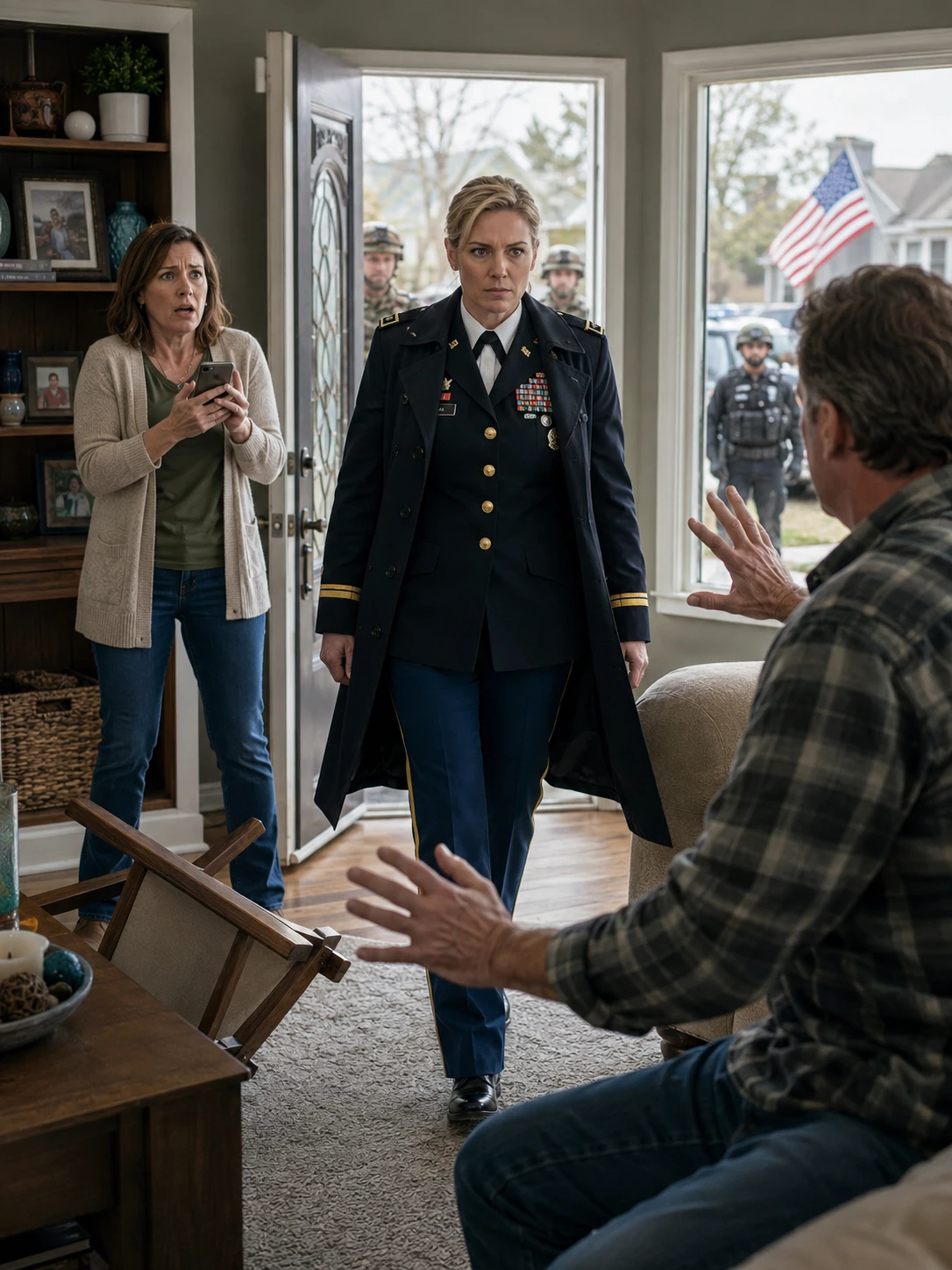
Grant liked being watched only when he controlled what people saw.
He dealt another hand with exaggerated calm. The cards snapped against the table. Outside, rain ticked softly against the windows.
For a while, he performed.
He complained about lawyers. About daughters who “come home and take over.” About how nobody respects marriage anymore. Every few sentences, he glanced at me, waiting for a reaction.
I gave him none.
Bourbon did the work for me.
By the second drink, his voice got louder.
By the third, he stopped choosing words carefully.
“You want to know marriage?” he said, pointing at Vince with two fingers full of cards. “Marriage is management. People don’t like that word, but it’s true.”
Vince forced a chuckle. “Careful, Grant.”
“No, I’m serious. Marian’s sweet, but she can’t handle pressure. Bills, taxes, insurance. She gets overwhelmed. So I manage.”
Harold stared at the table.
I leaned back slightly. “Is that what you call it?”
Grant looked at me.
“What?”
“Management.”
His eyes narrowed.
The room quieted.
Then he laughed.
“She signs what I put in front of her. Always has. That’s trust.”
There it was.
Harold slowly lifted his head.
One golf buddy shifted in his chair.
I kept my voice calm. “What about the cabin?”
Grant froze for less than a second.
“What cabin?”
“Lake Briar.”
He took a slow drink. “You mean Marian’s cabin?”
“No,” I said. “I mean my father’s cabin.”
Silence settled hard.
Even the television in the living room seemed too loud.
Grant set his glass down.
“Property taxes are expensive.”
“That wasn’t the question.”
“You accusing me of something?”
Before I could answer, headlights swept across the front windows.
One set.
Then another.
Grant glanced toward the driveway.
The knock came firm and professional.
Nobody moved.
A voice called through the door. “Mr. Harlow? Wake County Sheriff’s Office.”
Grant looked at me slowly.
“What did you do?”
“Not me.”
The knock came again.
Harold stood from the table.
“My sister filed her statement yesterday.”
Grant stared at him.
“You son of a—”
“You stole from a widow,” Harold said, voice shaking but clear.
Vince pushed his chair back. “Grant, what the hell is going on?”
Grant pointed at me. “She’s lying. All of this is her. She’s been trying to turn Marian against me.”
I walked to the door and opened it.
Two deputies stood outside beside Patrice from Adult Protective Services and a plainclothes financial crimes investigator holding a folder thick enough to bend.
Rain silvered the driveway behind them.
One deputy looked past me into the house, then back at my face.
Recognition moved through his expression.
“Ma’am,” he said carefully. “Colonel Vale?”
Grant went still.
The deputy straightened slightly before he could stop himself.
“I didn’t realize you were involved.”
I nodded once. “Family matter.”
Grant looked between us, confused now. Uncertain.
For the first time in twelve years, he understood he had misjudged me completely.
Not because of the title. Not because of fear.
Because he realized my silence had never been ignorance.
The investigator stepped inside.
“Mr. Harlow, we need to speak with you regarding reports of financial exploitation, forged property documents, and intimidation involving Mrs. Marian Vale and others.”
Grant laughed.
It sounded thin.
“This is insane.”
No one joined him.
One of the golf buddies quietly reached for his keys.
Grant’s little kingdom collapsed in real time.
Then Mom appeared across the yard under Lila’s umbrella.
She was pale but upright, wearing her blue sweater, rain misting around her like smoke.
Grant saw her instantly.
“Marian.”
She did not move.
He stepped toward the porch, but a deputy blocked him gently.
Mom looked at him for a long moment.
Then she pulled off her wedding ring.
Not dramatic. Not angry.
Just tired.
“I am done being afraid in my own kitchen,” she said.
Grant opened his mouth.
Nothing came out.
And honestly, that silence was more satisfying than any revenge fantasy I had ever allowed myself.
Then, as the investigator guided him toward the den, Grant looked back at me and smiled one last ugly smile.
“Ask your mother what she signed after your father died.”
Mom’s face went white.
And the ground beneath my certainty shifted.
### Part 9
I did not sleep that night.
Neither did Mom.
After the deputies left, after the poker players scattered, after Grant was taken for questioning and then released pending further investigation, the house stood quiet in a way that felt unnatural.
Mom sat at the kitchen table in Lila’s borrowed raincoat, hands wrapped around a mug she never drank from.
I stood near the sink, staring at the broken place in the baseboard where water had swelled the wood years ago.
Grant’s last sentence hung between us.
Ask your mother what she signed after your father died.
I wanted to dismiss it as poison. One final attempt to turn me against her.
But Mom’s face had gone white.
That meant something.
“Mom,” I said gently.
She closed her eyes.
“I should have told you.”
The words landed heavier than I expected.
“Tell me what?”
She covered her mouth with one hand, careful of the healing cut even now.
“After your father died, there was insurance. Not much by rich people’s standards. But enough. Enough to keep the house. Enough for school. Enough for the cabin taxes.”
“I know that.”
“No,” she whispered. “You don’t.”
Outside, rainwater dripped from the gutters in uneven beats.
Mom stared into the untouched tea.
“Grant came into my life later, but before we married, he helped me with some old financial paperwork. I was tired. Lonely. Scared all the time. You were already so serious, Anna. Thirteen years old and looking at me like you were the adult.”
I remembered that year in flashes. Funeral flowers browning in vases. Men from the plant bringing casseroles. Mom crying in the laundry room where she thought I could not hear. Me learning to check locks before bed.
“He said some of the insurance money should be moved somewhere safer,” she continued. “He said I was too emotional to make decisions.”
My throat tightened.
“How much?”
Her lips trembled.
“Almost all of what was left.”
I looked away, not because I hated her, but because I needed one second to keep my face from showing too much.
She saw anyway.
“I thought I was protecting us.”
“I know.”
“No, you don’t.” Her voice cracked. “I let him into places your father trusted me to guard.”
That was the wound beneath the wound.
Grant had not only abused my mother. He had used her grief as a doorway.
But as Celia reminded me the next morning, shame is not evidence.
Evidence was in the basement.
We found the fire safe behind paint cans and a box of Christmas lights. Mom did not know the combination. Grant had changed it years ago.
Celia told us not to force it ourselves. A locksmith came by noon with Patrice present and a deputy waiting near the stairs. He opened it in seven minutes.
Inside were birth certificates, old tax records, copies of IDs, blank checks, and folders with women’s names.
Nora Bell.
Patty Finch.
Marian Vale.
Others.
My skin went cold.
At the bottom was a red folder labeled A.V.
My initials.
I opened it slowly.
There were printed photos of me arriving at Mom’s house. Notes about my truck. Dates of my visits. A copy of Grant’s statement about my “instability.” Screenshots from public military ceremony pages where my name appeared years ago. Half of them wrong. One article circled in red.
Lieutenant Colonel Anna Vale retires after twenty-six years of service.
Grant had known more than he admitted.
Not everything.
Enough to be afraid.
“He was preparing for you,” Damon said when I sent him photos. “That means he knew Marian might call you.”
Mom sat on the basement steps, looking sick.
“I’m sorry.”
I closed the folder.
“Stop apologizing for surviving him.”
She shook her head. “I’m not apologizing for that.”
I waited.
She looked up at me with tears in her eyes.
“I’m apologizing because I almost didn’t send the code.”
That broke something in me.
Not because I was angry.
Because I suddenly understood how close she had come to disappearing inside that house forever.
Two days later, Celia filed emergency motions to freeze disputed assets and block any transfer related to the cabin. Adult Protective Services opened a formal case. The financial crimes investigator requested additional statements. Patty Finch agreed to testify.
Grant responded by filing for a protective order.
Against me.
The hearing was scheduled for Monday morning.
On Sunday night, Mom stood in Lila’s kitchen wearing borrowed slippers and said, “I want to speak for myself.”
I looked at her.
“Are you sure?”
Her hands trembled, but her voice did not.
“He stole enough from me. He doesn’t get my voice too.”
The next morning, we walked into the courthouse together.
And Grant was already there, smiling like he had brought an audience.
### Part 10
Courthouses smell the same everywhere.
Floor wax. Paper. Coffee burned down to mud. People sweating through clothes they ironed too carefully.
The hearing room was smaller than I expected. Beige walls, wooden benches, a flag in the corner, fluorescent lights humming overhead. Grant sat at one table in a navy sport coat, hair combed neatly, face arranged into wounded dignity.
He had brought Rebecca.
That surprised me.
My cousin sat behind him with her purse clutched in her lap, eyes red, avoiding mine.
For one sharp second, betrayal rose in my throat.
Then Celia leaned toward me.
“Do not assume the worst until we know.”
Good advice.
Hard to follow.
Grant’s attorney was a polished man named Whit Sanger who spoke like he was narrating a luxury car commercial. He opened with concern. Always concern.
Concern for Marian’s well-being.
Concern over my influence.
Concern over “a volatile household situation” caused by my sudden return.
He described Grant as a devoted husband overwhelmed by a difficult family crisis.
He described Mom as fragile.
He described me as “highly trained, secretive, and physically aggressive.”
There it was again.
Making competence sound like danger.
When it was our turn, Celia stood slowly.
She did not perform. She organized.
Bank records. Medical evaluation. Photographs. Copies of Grant’s handwritten notes. The forged cabin document. Statements from Patty Finch and Nora Bell’s son. The folder labeled M.V. Capacity Concerns.
Then she called my mother.
Mom walked to the front in a navy dress she had not worn since Easter. Her hands trembled when she took the oath.
Grant looked at her with soft eyes.
The old look.
The one that said: Come on, sweetheart. Don’t embarrass us.
I watched Mom see it.
I watched her almost fold.
Then she looked at me.
Not for rescue.
For witness.
Celia asked simple questions.
Her full name.
Her address.
The date.
The president.
Her doctor’s appointment.
Her bank.
Mom answered each one clearly.
Then Celia asked, “Mrs. Vale, do you understand why we are here?”
Mom took a breath.
“Yes. My husband wants the court to believe I can’t manage my life because that would make it easier for him to manage my money.”
Grant’s jaw tightened.
Celia continued. “Do you want your daughter making decisions for you?”
“No.”
That startled even me.
Mom looked at me, then back at Celia.
“I want my daughter beside me. Not over me. There’s a difference.”
I had to blink hard.
She told the court about the debit card. The passwords. The phone. The threats. The cabin.
Not perfectly. Real truth rarely sounds polished. She forgot one date and corrected herself. She cried once, wiped her face, and kept going.
Grant’s attorney tried to use the tears.
“Mrs. Vale, would you agree this has been emotionally overwhelming?”
Mom looked tired.
“Yes.”
“Would you also agree that you sometimes become confused when under stress?”
“No,” she said. “I become afraid. That is not the same thing.”
The room went still.
Even the judge looked up fully at that.
Then came Rebecca.
My cousin stepped forward, pale and miserable. Grant’s attorney submitted an email supposedly from her, describing me as “cold,” “intense,” and “possibly dangerous.”
Rebecca stared at it.
“I didn’t write this.”
Grant turned sharply.
Sanger froze.
Rebecca’s voice shook. “Grant asked me questions after dinner. About Anna. About her work. About whether she seemed different. I said she seemed serious, but she always has. I never wrote this.”
Celia requested the printed email.
The judge’s expression changed.
Not dramatically.
Enough.
By the end of the hearing, Grant did not get his protective order. He did not get temporary control of Mom’s finances. The judge issued temporary protections for Mom, ordered disputed accounts frozen, and warned Grant not to contact her except through counsel.
It was not final justice.
But it was oxygen.
Outside the courthouse, Grant waited near the steps despite being told not to approach.
A deputy moved closer.
Grant looked past him at Mom.
“You’ll regret this by Christmas,” he said. “You’ll come crawling back when she gets tired of babysitting you.”
Mom flinched.
Then she did something I will never forget.
She stepped forward, just one step, and said, “I was lonely with you in the room. I can be lonely without being afraid.”
Grant’s face twisted.
For once, no polished line came to him.
We walked away.
In the parking lot, Mom held herself together until we reached my truck. Then she sat in the passenger seat and sobbed into both hands.
I stood in the open door, shielding her from the wind.
That was when my phone buzzed.
A message from Damon.
They found another transfer attempt. This one was scheduled for Friday.
### Part 11
Real justice does not arrive with music.
It arrives through faxed forms, unanswered calls, temporary orders, continuances, and lawyers telling you to be patient while your whole body wants to kick down a door.
The Friday transfer was blocked before it went through. Grant had tried to move money through a shell repair company tied to one of his golf buddies. The company had a mailbox, a dead website, and invoices for work nobody had done.
Damon called it sloppy.
Celia called it useful.
Mom called it humiliating.
That was the hardest part after she left. Not fear, exactly. Shame. It clung to her like smoke.
She replayed every warning sign.
Every paper she signed.
Every friend she stopped calling because Grant said they were nosy.
Every time she laughed at one of his jokes about me because it was easier than making him mad.
I told her none of that made it her fault.
Sometimes she believed me.
Sometimes she did not.
She stayed with Lila for six weeks. Then she rented a small townhouse outside Wilmington, close enough to smell salt in the air on damp mornings. Beige siding. Tiny porch. Wind chimes beside the door.
Nothing fancy.
Quiet.
That mattered.
The first time I visited after she moved in, I noticed something immediately.
She had slept.
Really slept.
No television running at two in the morning. No footsteps pacing. No listening for truck doors in the driveway. Just my mother at the kitchen table in a robe, hair messy, drinking coffee slowly like nobody was timing her.
“I bought half-and-half,” she said, almost proudly.
Grant hated half-and-half. Said it was wasteful.
I opened the refrigerator and saw flowers in a mason jar, strawberry yogurt, two peaches, and a carton of half-and-half standing there like a declaration of independence.
I nearly cried over dairy.
Mom started doing small things again.
Watercolor class at the senior center.
Library books.
A porch fern.
She bought a yellow raincoat because she liked it, then admitted she had not bought clothing without hearing Grant’s opinion in years.
The legal case crawled forward.
Grant was eventually charged in connection with financial exploitation, forged documents, intimidation, and fraud involving multiple victims. Patty Finch testified. Nora Bell’s son gave a statement. Two other women came forward after Harold told people quietly that Grant was not just “bad with money.”
That knowledge made me sick for a while.
Predators almost never start with their worst victim.
Mom was not the first.
She was just the first who had sent me the code.
In October, Celia called with the news we had been waiting for.
The Lake Briar transfer was voided.
The cabin stayed in Mom’s name.
She cried without sound when I told her.
Then she asked if I would drive her there.
The road to Lake Briar curved through pine and tobacco fields gone gold at the edges. Autumn had finally settled over North Carolina. The air smelled like damp leaves and chimney smoke. Mom sat in the passenger seat with a paper bag of sandwiches on her lap, staring out the window like the world looked unfamiliar without fear layered over it.
The cabin looked smaller than I remembered.
Childhood makes everything enormous.
Mom unlocked the door slowly.
Inside smelled like old pine, coffee grounds, and the tackle box Dad used to keep under the sink. Dust floated in afternoon light. A spider had claimed the corner above the stove. The refrigerator hummed like it had been waiting for us.
For a minute, neither of us spoke.
Then Mom opened the fridge and laughed.
“What?”
She pointed inside.
“Your father still has mustard in here from 2019.”
I laughed harder than the joke deserved.
Maybe because we needed it.
We spent the afternoon cleaning. Opened windows. Swept leaves off the deck. Found old photo albums in a plastic bin.
At sunset, we carried two blankets to the dock.
The lake was copper under the sky. Water knocked softly against the posts. Somewhere across the cove, someone started a fire, and woodsmoke drifted over the water.
Mom looked healthier than she had in years.
Still older. Still tired. Trauma does not vanish because a moving truck arrives.
But she looked present again.
Like herself.
After a long silence, she said, “I need to tell you why I sent the code that night.”
I looked over.
“I thought I knew.”
She shook her head.
“No. You know what happened. You don’t know what I heard before it happened.”
The lake went quiet around us.
And my mother finally told me the part Grant never knew she remembered.
### Part 12
Mom kept her eyes on the water.
The sunset had thinned to a red line behind the trees, and the first cold of evening crept through the blanket around my shoulders.
“That night,” she said, “Grant was in his study. I thought he was watching a game.”
I waited.
“He was on the phone. I wasn’t trying to listen. I was bringing him coffee because he’d been in one of his moods all day.”
Even now, she explained herself.
I hated that.
“When I got to the hallway, I heard him say your name.”
My body went still.
“He said you were becoming a problem. He said if I didn’t sign the temporary finance papers, he would make sure everyone knew you were unstable. He said he had enough to ruin your reputation.”
I stared at the blackening water.
Grant had always mocked what he did not understand. But privately, he had been afraid of it. Afraid enough to collect articles, photos, statements. Afraid enough to turn my life into leverage against my mother.
“He said,” Mom continued, voice shaking, “that women like us always need someone stronger making decisions.”
The wind moved across the lake.
I could hear Dad’s old dock ropes creaking against the posts.
“I dropped the mug,” she said. “That’s how he knew I heard. He came into the kitchen. He was so calm at first. That was worse. He kept telling me I had misunderstood. Then he asked for my phone.”
Her hands twisted in the blanket.
“I knew if he got it, I wouldn’t call anyone. Not you. Not Celia. Not anybody. And I remembered the code.”
Blue porch candle.
A child’s phrase. A mother’s promise.
Still alive after twenty-four years.
“I sent it while he was in the bathroom,” she whispered. “My hands were shaking so badly I almost sent it to the wrong person. Then I sent the location pin because I thought maybe the words weren’t enough.”
“They were enough.”
She shook her head.
“I almost deleted it.”
My throat tightened.
“I was embarrassed. I thought, what if Anna comes and thinks I’m pathetic? What if she sees what I let happen? What if she hates me for staying?”
I turned toward her fully.
“Mom.”
“I know,” she said, tears sliding down her face now. “I know you don’t. But fear makes stupid arguments sound reasonable.”
That was true.
I had seen fear make trained men freeze and brave people lie. I had seen fear turn rooms into cages with open doors. I had no right to pretend my mother should have defeated it cleanly just because I loved her.
She wiped her cheek with the edge of the blanket.
“I thought I was protecting you by keeping peace in the house when you were young. Then after you left, I thought I was protecting myself by keeping peace with Grant. But peace isn’t peace if one person is swallowing glass to keep it.”
The words sat between us.
Plain. Painful. True.
I moved closer and put my arm around her shoulders.
She leaned into me, and for a moment she felt like both my mother and someone younger, someone who had been scared for a very long time.
“You want to know what the bravest thing was?” I asked.
She gave a wet laugh. “Please don’t say court.”
“No.”
“Leaving?”
“No.”
She looked at me.
“Sending the code.”
That broke her.
She cried into my shoulder while the lake turned black beneath us. Not pretty crying. Not movie crying. The kind that comes from the bottom of the ribs and leaves a person hollowed out afterward.
I held her and watched the porch light glow behind us through the cabin window.
For years, I had thought bravery meant running toward danger.
Sometimes it means pressing send.
We stayed at the cabin that night.
I slept in my old room under a quilt that smelled faintly of cedar. Mom slept in the room she and Dad once shared. In the morning, I woke to the sound of her singing softly in the kitchen.
Not loudly.
Not confidently.
But singing.
I lay still and listened.
That small sound felt bigger than any courtroom win.
Over breakfast, she burned the bacon and laughed before apologizing. Then she stopped herself halfway through the apology and put another piece in the pan.
Progress looks strange from the outside.
Sometimes it looks like ruined bacon.
A month later, Grant’s attorney requested a meeting.
He wanted a plea deal.
He wanted reduced charges.
He wanted Mom to write a letter saying he had been a good husband who made mistakes.
Celia read the request aloud over speakerphone while Mom and I sat at her townhouse table.
The room smelled like cinnamon tea and laundry detergent.
Mom listened without moving.
Then she said, “No.”
Celia paused. “No letter?”
“No letter.”
I watched her hand.
It did not shake.
“He can tell his own story,” Mom said. “He doesn’t get mine anymore.”
That should have been the end of it.
But two days before the final hearing, an envelope arrived at Mom’s townhouse with no return address.
Inside was her wedding ring.
And a note in Grant’s handwriting.
Tell Anna the truth about what she became.
Mom handed it to me with a face I could not read.
For the first time since that night in the rain, I wondered if Grant had found one last place to cut.
### Part 13
The note sat on Mom’s kitchen table between two mugs of coffee.
Tell Anna the truth about what she became.
Grant always did love a sentence that sounded deeper than it was.
Mom stared at it for a long time. Morning light came through the townhouse blinds in pale stripes, laying itself over the paper, her hands, the returned wedding ring.
I waited.
Not because I believed Grant.
Because I had learned that letting Mom speak in her own time mattered.
Finally, she pushed the ring away.
“What you became,” she said quietly, “is the person who came when I called.”
My chest loosened.
She looked up at me.
“That’s the truth.”
I let out a breath I had not realized I was holding.
Grant’s last trick had been simple. Suggest a hidden shame. Let imagination do the damage. He had survived for years by making people doubt what they already knew.
This time, it did not work.
Mom picked up the ring with two fingers and dropped it into an envelope for Celia.
“I don’t want this in my house.”
The final hearing came in November.
By then the trees outside the courthouse had gone bare. Cold wind pushed dead leaves along the sidewalk. Mom wore her navy dress again, but this time she added a yellow scarf she had bought for herself.
Grant looked smaller.
That surprised me.
Not physically. He still had the same belly, same combed hair, same expensive watch. But without his house, his audience, his easy control over Mom’s fear, something had drained out of him.
He pleaded to several charges connected to financial exploitation and forged documents. Other charges remained part of a wider investigation. The legal details were not clean or emotionally satisfying. They never are. There was no single thunderclap of justice, no perfect speech that repaired everything.
But there was accountability.
There was restitution ordered.
There were frozen assets.
There was the cabin safe.
There were women in that room who finally heard a judge say Grant had not merely “made mistakes.”
He had targeted people.
When Mom gave her statement, her voice shook at first.
Then steadied.
“You told me I was lucky to have you,” she said, looking at Grant. “You told me I couldn’t handle money, couldn’t handle stress, couldn’t handle being alone. But I was alone with you for years.”
Grant looked down.
“You wanted forgiveness before you ever told the truth,” she continued. “I am not giving it to you. I am giving myself a life without you in it.”
No one moved.
I felt tears burn behind my eyes.
Not because she sounded strong.
Because she sounded free.
Afterward, in the hallway, Grant tried once more.
“Marian.”
A deputy shifted closer.
Mom turned, calm as winter.
He looked at her, then at me.
“I loved you both in my way.”
Mom shook her head.
“Your way is not love.”
Then she walked past him.
No hug. No final tearful goodbye. No promise to pray over coffee someday. No late forgiveness handed to a man who wanted comfort after causing damage.
Just footsteps down a courthouse hallway.
That was enough.
By spring, Mom’s townhouse porch was crowded with flowers. Geraniums, petunias, herbs she forgot to label. She painted bad watercolors and hung them anyway. She joined a walking group. She opened her own bank statements every month with the solemn focus of someone reading weather reports before a storm.
Sometimes she still cried.
Sometimes she still startled when a truck door slammed outside.
Healing is not a straight road. It loops. It stalls. It doubles back in grocery store aisles and quiet bedrooms. But she kept going.
As for me, I went back to my own townhouse eventually.
Not far.
Close enough to come for dinner. Far enough for Mom to know she was living alone because she chose it, not because I was guarding her door.
One Saturday in May, we drove to the Lake Briar cabin again.
The air smelled like sun-warmed pine and lake mud. Mom brought sandwiches. I brought a toolbox. We spent half the day fixing the bad porch step Dad had promised to fix sometime before I turned ten.
At sunset, Mom sat on the dock with her shoes off, feet hovering above the water.
“You know,” she said, “for a long time I thought the opposite of fear was courage.”
I tightened a screw on the loose railing. “It isn’t?”
She smiled.
“I think it’s peace.”
I looked at her then.
Her hair had grown out softer around her face. Her shoulders no longer sat up around her ears. The woman beside me was not the same woman from the kitchen that night, but she was not someone new either.
She was someone returned.
Grant had thought quiet meant weak.
He had thought patience meant permission.
He had thought my mother’s shame would hold longer than her will to live freely.
And he had thought I was just the quiet daughter.
By the time he understood the difference, Mom was drinking coffee on her own porch, the lake cabin was still ours, and the little world he controlled had collapsed without either of us having to raise our voices.
Sometimes people do not need you to rescue them.
Sometimes they need you to stand close enough that when they finally press send, someone comes.
THE END!