One harmful pattern entered the family.
Then it stopped.
One girl learned silence.
Then her descendants learned speech.
One father confused toughness with dismissal.
Then generations learned that strength could include asking for help.
One mother delayed trusting her own concern.
Then families learned that noticing should lead to curiosity.
And one frightened teenager wrote:
Maybe I’m imagining it.
Centuries later, nobody in her family would have understood why a child would write such a thing alone.
That was the ending.
Not tragedy preserved forever.
Not guilt passed down like inheritance.
Not endless retelling.
A future so different from the past that the original silence became difficult to imagine.
A child says:
Something hurts.
An adult looks up.
No annoyance.
No verdict.
No accusation.
Just:
Tell me more.
And for the first time in the entire long history of the story, nothing else needed to happen.
PART TWO HUNDRED THIRTY-SIX — THE BOY WHO ASKED TOO SOON
His name was Eli.
He was twelve.
He had no idea who Grace Morgan was.
No idea who Aaron had been.
No idea why his family answered questions differently than some of his friends’ families.
He simply knew that when something bothered him, he was expected to say so.
Sometimes that made him annoying.
At least according to his older sister.
“Mom, my shoulder hurts.”
“Mom, I think I’m getting sick.”
“Mom, Noah said something weird at school.”
“Mom, I don’t understand this homework.”
He asked.
Constantly.
One afternoon his sister finally snapped.
“Do you have to report everything?”
Eli stared at her.
Their mother looked up from the kitchen counter.
“Hey.”
His sister rolled her eyes.
“I’m kidding.”
Eli shrugged.
But his face changed.
Small.
Almost invisible.
Their mother saw it.
Maybe that was the real inheritance.
Not perfect behavior.
Not people never hurting each other.
Not siblings never saying the wrong thing.
The inheritance was noticing faster.
“Eli.”
He looked at her.
“You don’t have to stop telling us things.”
His sister sighed.
“I didn’t mean that.”
Their mother said:
“Then tell him what you did mean.”
His sister hesitated.
Then:
“I was annoyed because you interrupted me three times.”
Eli nodded.
“That’s fair.”
“But I don’t want you to think you should stop telling Mom stuff.”
He nodded again.
“Okay.”
Conflict.
Clarification.
Repair.
No one needed years of therapy afterward.
Sometimes generational healing looked almost disappointingly simple.
PART TWO HUNDRED THIRTY-SEVEN — THE FIRST TIME ELI HID SOMETHING
Of course, even children raised to speak still hide things.
Eli was fourteen when he came home limping.
His mother noticed immediately.
“What happened?”
“Nothing.”
That answer again.
The ancient answer.
The answer children have always given when they are deciding whether speaking will cost more than silence.
His mother looked at his leg.
“Nothing is limping.”
Eli laughed weakly.
“Soccer.”
“What happened?”
“Took a hit.”
“How bad?”
“Not bad.”
She waited.
He hated waiting.
It made lying harder.
“Okay.”
He finally admitted.
“Pretty bad.”
“Why didn’t you tell the coach?”
Eli looked embarrassed.
“I didn’t want to get benched.”
There it was.
Not fear of his parents.
Fear of consequence.
That mattered.
His mother said:
“Do you want to keep playing injured?”
“No.”
“Then we need to know what happened.”
He nodded.
They went for evaluation.
Nothing broken.
A strain.
Rest.
Eli was furious.
Not at his mother.
At the rest.
“This is stupid.”
“I know.”
“I feel fine now.”
“I know.”
“I can play.”
“Maybe.”
“Then why can’t I?”
“Because feeling better and being healed aren’t always the same thing.”
He groaned.
But he followed the plan.
The family had learned something else over generations.
Listening did not mean always giving the answer someone wanted.
PART TWO HUNDRED THIRTY-EIGHT — THE OLD STORY ENTERS SCHOOL
Eli’s history teacher assigned a project:
Find one family story that changed behavior across generations.
Eli came home annoyed.
“We don’t have anything interesting.”
His mother laughed.
“That’s definitely false.”
“Like what?”
She hesitated.
Then:
“Grace.”
Eli frowned.
“Who?”
Of course.
The story had faded again.
His mother brought out a digital file.
Not the whole archive.
Only a short family summary.
Eli read.
Then read it again.
“That’s why you guys always ask twenty questions?”
His mother laughed.
“Partly.”
“So this is real?”
“Yes.”
“Dad didn’t believe her?”
“Her dad.”
“Whatever.”
Eli kept reading.
“She had surgery?”
“Yes.”
“And then everybody went to therapy for like a million years?”
“Pretty much.”
Eli smiled.
Then became serious.
“Did she hate him?”
“Sometimes.”
“Did he deserve it?”
“Sometimes.”
Eli looked confused.
That answer bothered him.
He wanted clean moral categories.
Most teenagers do.
“Was he bad or not?”
His mother sat across from him.
“He did harmful things.”
“That’s not what I asked.”
“I know.”
“Was he a bad father?”
“At that point?”
She thought.
“In important ways, yes.”
“Then later?”
“He became better.”
Eli frowned.
“That’s complicated.”
“Yes.”
“That makes my project harder.”
His mother laughed.
“That may be the point.”
PART TWO HUNDRED THIRTY-NINE — ELI’S PROJECT
He titled it:
WHEN A FAMILY LEARNS TO LISTEN.
He expected a B.
He got an A.
But the teacher’s comment mattered more.
She wrote:
You did not turn change into an excuse.
Good.
Eli stared at that line.
That evening he asked:
“What does that mean?”
His mother read it.
“She means you didn’t say Aaron changing later made the earlier harm okay.”
“Oh.”
“Do you think it did?”
“No.”
“Do you think the earlier harm means the change didn’t matter?”
Eli thought.
“No.”
She smiled.
“Then you understood.”
PART TWO HUNDRED FORTY — THE CLASS DISCUSSION
His teacher asked whether he would present.
Eli hated public speaking.
He agreed anyway.
Halfway through, a student interrupted:
“Why didn’t Grace just tell her mom?”
Eli froze.
He knew the answer.
But suddenly the question irritated him.
“She did eventually.”
“No, before.”
The student continued.
“If it hurt that bad, why wouldn’t she say something?”
Eli remembered the notebook excerpts.
Maybe Mom is too busy.
Maybe I’m imagining it.
He answered:
“Because people don’t always stay silent because they don’t want help.”
The class quieted.
“Sometimes they stay silent because they’ve learned what happens when they ask.”
His teacher looked at him.
Eli realized he had just understood the story differently.
PART TWO HUNDRED FORTY-ONE — AFTER CLASS
A student named Marcus approached him.
“That thing you said.”
“What?”
“About learning what happens when you ask.”
Eli waited.
Marcus looked uncomfortable.
“My dad gets mad when I tell him stuff.”
“What stuff?”
“Anything.”
School.
Feeling sick.
Problems.
Marcus laughed awkwardly.
“He says I’m always making excuses.”
Eli did not know what to say.
He was fourteen.
Not a counselor.
Not a doctor.
Not responsible for saving Marcus.
He remembered the rule.
Open the next door.
“Is there another adult you trust?”
Marcus shrugged.
“Coach maybe.”
“Could you talk to him?”
“Maybe.”
Eli nodded.
“That’s probably better than me giving you terrible advice.”
Marcus laughed.
Then:
“Thanks.”
PART TWO HUNDRED FORTY-TWO — THE COACH
Marcus spoke to the coach.
The situation at home was more complicated than Eli knew.
Not something Eli needed to manage.
Adults became involved.
Support followed.
Weeks later Marcus sat beside Eli at lunch.
“You helped.”
Eli shook his head.
“I literally told you to talk to someone else.”
“Exactly.”
Eli remembered what his mother had once said.
Help does not always mean solving.
Sometimes it means opening the next door.
PART TWO HUNDRED FORTY-THREE — ELI TELLS HIS MOTHER
That night he told her everything.
She listened.
Then asked:
“How are you feeling?”
Eli shrugged.
“Good.”
She waited.
He sighed.
“Also weird.”
“What kind of weird?”
“Like what if I said the wrong thing?”
“You didn’t.”
“But what if I had?”
“Then we would deal with that.”
Eli looked at her.
“I think I understand Grace more now.”
“Why?”
“Because speaking is kind of scary when you don’t know what happens after.”
His mother smiled.
“Yes.”
PART TWO HUNDRED FORTY-FOUR — ANOTHER VERSION OF SILENCE
By seventeen, Eli had learned that silence did not always come from dismissal.
Sometimes it came from protecting other people.
His grandmother became ill.
Nothing sudden.
A long decline.
Eli noticed everyone asking:
How are you feeling?
She always answered:
Fine.
One evening he sat beside her.
“You’re not fine.”
She smiled.
“That’s rude.”
“You know what I mean.”
She looked toward the living room.
Everyone was laughing.
“I don’t want to ruin the evening.”
Eli stared.
There it was again.
A need buried to protect other people’s comfort.
He said:
“You telling me you feel bad doesn’t ruin anything.”
His grandmother’s eyes filled.
“You sound like Grace.”
Eli smiled.
“I barely know who Grace was.”
“Apparently you know enough.”
PART TWO HUNDRED FORTY-FIVE — THE NIGHT HIS GRANDMOTHER FINALLY ANSWERED
“How do you actually feel?”
Eli asked.
She took a long breath.
“Tired.”
“What else?”
“Scared.”
“What else?”
“Angry.”
He nodded.
She stared at him.
“You’re not going to tell me to stay positive?”
“No.”
“Why not?”
“Because you didn’t say you wanted positive.”
She laughed.
Then cried.
Eli sat beside her.
That night, he understood something else.
Listening could mean allowing someone to say the unacceptable feeling.
I’m angry.
I’m afraid.
I’m not grateful.
I’m tired of being brave.
Families often praise courage so loudly that fear becomes another form of disobedience.
Grace’s descendants were learning not to do that either.
PART TWO HUNDRED FORTY-SIX — THE FUNERAL
His grandmother died the following spring.
At the funeral, Eli did not cry.
Everyone expected him to.
He couldn’t.
His sister cried enough for both of them.
Afterward, an uncle asked:
“You okay?”
Eli nodded.
Then:
“I think so.”
The uncle said:
“You’re strong.”
Eli hated the word immediately.
Not because strength was bad.
Because it felt like an assignment.
That night, he told his mother:
“I hate when people tell me I’m strong.”
She understood.
“Why?”
“Because then I feel like I’m not allowed to fall apart later.”
She nodded.
“So don’t be strong for us.”
He laughed.
“That sounds weird.”
“Be whatever you are.”
Two days later, he cried in the shower.
No one saw.
But this time, hiding tears did not mean shame.
It meant privacy.
There is a difference.
PART TWO HUNDRED FORTY-SEVEN — THE DIFFERENCE BETWEEN PRIVACY AND SILENCE
That became important.
A healthy family does not demand total disclosure.
Grace once hid because she feared what speaking would cost.
Eli sometimes kept things private because he wanted them private.
Those are not the same.
Trust does not mean:
Tell me everything.
Trust means:
If you need to tell me, you can.
That distinction protected the family from turning listening into surveillance.
PART TWO HUNDRED FORTY-EIGHT — ELI LEAVES HOME
At eighteen, Eli left for university.
His mother gave him the usual speech.
Call.
Eat.
Sleep.
Do laundry.
Do not live on caffeine.
Then she added:
“If something goes wrong, call before you’ve solved it.”
Eli laughed.
“That is aggressively specific.”
“I know my family.”
He hugged her.
“I will.”
Would he?
Not always.
No teenager follows every wise sentence.
But the invitation mattered.
PART TWO HUNDRED FORTY-NINE — THE FIRST CALL
Three months later, he called at 1:13 a.m.
His mother answered instantly.
“What happened?”
“I messed up.”
No preamble.
No pretending.
He had failed an exam.
Not the end of the world.
It felt like it.
“I think I’m going to lose my scholarship.”
“Do you know that?”
“No.”
“Okay.”
“I’m freaking out.”
“I hear you.”
“What do I do?”
“Do you want me to help you make a plan tonight or do you want me to stay on the phone?”
Eli laughed weakly.
“Stay.”
So she did.
Forty minutes later, he said:
“I thought you were going to be mad.”
“I am concerned.”
“That’s different?”
“Yes.”
“How?”
“Concern wants information.”
She paused.
“Anger often wants control.”
Eli stored that sentence away.
PART TWO HUNDRED FIFTY — THE SCHOLARSHIP
He did not lose it.
He met with his professor.
Changed study habits.
Recovered.
The crisis shrank.
But the phone call remained important.
Years earlier, Grace had feared calling her mother because work seemed more important.
Eli called at 1:13 in the morning before knowing whether the problem was even serious.
That was what generational change looked like.
Not children never making mistakes.
Children making mistakes and still believing home was a place to speak.
PART TWO HUNDRED FIFTY-ONE — THE RELATIONSHIP
At twenty-three, Eli fell in love.
Her name was Nora.
She was funny.
Independent.
Quiet when angry.
That last part caused trouble.
Eli came from generations trained to ask.
Nora came from a family where conflict disappeared behind closed doors.
When something bothered her, she said:
“I’m fine.”
Eli heard:
Ask more.
So he asked more.
And more.
And more.
Eventually Nora snapped:
“Stop interrogating me.”
Eli froze.
“I’m trying to listen.”
“No.”
She said.
“You’re trying to make me talk on your schedule.”
That sentence humbled him.
PART TWO HUNDRED FIFTY-TWO — LISTENING CAN INCLUDE WAITING
They talked the next day.
Nora explained:
“I need time before I know what I think.”
Eli said:
“But if you say you’re fine when you’re not—”
“I know.”
She nodded.
“I can say:
I’m not fine, but I’m not ready.”
Eli thought.
“That works.”
“For you?”
“For me.”
“For me too.”
They created a rule.
No pretending.
No forcing.
“I’m not ready” counted as information.
Grace’s family lesson expanded again.
PART TWO HUNDRED FIFTY-THREE — THE FIRST BIG FIGHT
Years later, Eli and Nora had a terrible argument.
Money.
Work.
Moving.
Everything tangled together.
Nora finally shouted:
“You don’t listen unless I explain myself in a way you approve of.”
The sentence hit him hard.
Aaron.
Not the exact behavior.
But the same danger.
Eli stopped.
“What do you mean?”
Nora laughed bitterly.
“See?”
“What?”
“You’re already asking me to build the case.”
He sat down.
She was right.
He wanted examples.
Dates.
Evidence.
Not because he doubted her feelings.
Because he wanted a defensible path through them.
“I’m sorry.”
Nora crossed her arms.
“You don’t even know what you’re apologizing for.”
“I know enough.”
She waited.
“I made you prove your interpretation before I took the feeling seriously.”
Nora’s expression softened.
“That.”
He nodded.
“I’m sorry.”
PART TWO HUNDRED FIFTY-FOUR — THE FAMILY STORY SAVES A MARRIAGE WITHOUT BEING MENTIONED
Eli never told Nora:
My ancestor Grace taught me this.
He did not pull out the archive.
He did not use family history as moral authority.
He simply changed how he responded.
That mattered.
Lessons are weakest when used to win arguments.
Strongest when used to change behavior.
PART TWO HUNDRED FIFTY-FIVE — ELI BECOMES A FATHER
Their daughter was named Mara.
Eli had expected parenthood to make him confident.
Instead, it made him aware of how little he knew.
Mara cried.
He guessed.
Hungry?
Tired?
Cold?
Overstimulated?
Sometimes he was right.
Often he wasn’t.
Nora laughed one night.
“You know what parenthood is?”
“What?”
“Being wrong while someone screams at you.”
Eli laughed.
Then thought of Aaron.
Parenthood invites certainty because uncertainty is terrifying.
But certainty can become dangerous when it replaces attention.
So Eli practiced:
Maybe.
I don’t know.
Let’s check.
Those phrases became normal.
PART TWO HUNDRED FIFTY-SIX — MARA AT FOUR
Mara woke one morning refusing to go to preschool.
“My stomach hurts.”
Eli looked at Nora.
Old habits might have started a silent parental vote.
Real or avoidance?
Nora crouched.
“Does it hurt right now?”
Mara nodded.
“Do you feel like you might throw up?”
“No.”
“Are you scared about school?”
Mara became quiet.
Then:
“Lena said I can’t play with them.”
There it was.
A stomachache.
Also sadness.
Possibly both.
Eli said:
“Thank you for telling us.”
They still sent her to school later after talking with the teacher and helping her settle.
Listening did not mean every stomachache became a day off.
But it revealed information.
PART TWO HUNDRED FIFTY-SEVEN — PHYSICAL AND EMOTIONAL
That evening Nora said:
“Aaron probably would have called that attention-seeking.”
Eli looked at her.
“You remember him?”
“Only from your family story.”
“She did have a stomachache.”
“Exactly.”
Nora nodded.
“Emotional doesn’t mean fake.”
Another lesson.
Bodies and emotions do not live in separate buildings.
Stress can hurt.
Fear can hurt.
Illness can cause fear.
Pain can cause anxiety.
The job is not to force every experience into one category before listening.
PART TWO HUNDRED FIFTY-EIGHT — MARA’S FIRST DOCTOR VISIT SHE REMEMBERED
At seven, Mara developed recurring headaches.
Eli noticed his own fear immediately.
The old family story.
Headaches.
Dismissal.
Missed problems.
He wanted every test.
Immediately.
Nora noticed.
“You’re going the other direction.”
“What?”
“From dismissal to panic.”
Eli stopped.
She was right.
The family lesson did not say:
Assume danger.
It said:
Investigate appropriately.
They talked with the pediatrician.
Kept a symptom diary.
Checked vision.
Monitored triggers.
The cause was simple.
She needed glasses.
Eli laughed with relief.
Mara hated the frames.
Eventually she chose purple ones.
Problem solved.
No tragedy required.
PART TWO HUNDRED FIFTY-NINE — THE TEMPTATION TO OVERCORRECT
Eli later wrote in his journal:
Trauma can make families dismiss.
It can also make families overreact.
Both can make the child’s experience belong to the adult’s fear.
That was important.
A parent can center themselves through disbelief.
Or through panic.
Either way, the child disappears.
The better question remained:
What does this person need?
PART TWO HUNDRED SIXTY — THE DOCTOR WHO SAID “PROBABLY NOTHING”
Years later, Mara visited a doctor for recurring joint pain.
The physician said:
“It’s probably nothing serious.”
Mara nodded.
Eli felt anger rise.
Those words sounded dangerous.
Then the doctor continued:
“But because it keeps happening, I want to understand it.”
Eli relaxed.
That was the difference.
Probably nothing was not dismissal when curiosity remained open.
Tests followed.
The problem was minor.
Physical therapy helped.
Grace’s original story had never required people to ban reassuring language.
Only to stop using reassurance as a substitute for investigation.
PART TWO HUNDRED SIXTY-ONE — MARA FINDS THE FAMILY STORY
At thirteen, Mara found Eli’s old school project.
WHEN A FAMILY LEARNS TO LISTEN.
She read it.
Then confronted him at dinner.
“You never told me this.”
“I figured eventually.”
“She had surgery?”
“Yes.”
“Her dad lied?”
“Yes.”
“About her mom?”
“Yes.”
Mara looked furious.
“I hate him.”
Eli smiled faintly.
“You never met him.”
“I still hate him.”
“You’re allowed.”
“Do you?”
“No.”
She stared.
“Why?”
“Because I know the whole story.”
“That doesn’t make sense.”
“It might someday.”
PART TWO HUNDRED SIXTY-TWO — MARA READS MORE
She read Aaron’s letter.
Then Grace’s.
Then Natalie’s.
Her anger changed.
Not vanished.
Changed.
“He really loved her.”
“Yes.”
“And really hurt her.”
“Yes.”
“And really changed.”
“Yes.”
Mara frowned.
“That is so annoying.”
Eli laughed.
“What?”
“I wanted him to just be bad.”
“I know.”
“Then everything would be easier.”
“Yes.”
Mara closed the letter.
“People are exhausting.”
“Also yes.”
PART TWO HUNDRED SIXTY-THREE — THE VALUE OF COMPLICATED STORIES
Simple villains teach:
Do not be like that person.
Complicated stories teach:
Watch for that behavior in yourself.
Mara understood this slowly.
Aaron was useful precisely because he was not a cartoon.
He loved.
He worked.
He provided.
He laughed.
He also dismissed.
Controlled.
Lied.
Then learned.
That made the warning harder to escape.
You do not need to be cruel in every area of your life to cause harm in one.
PART TWO HUNDRED SIXTY-FOUR — MARA’S FRIEND
At fifteen, Mara had a friend named Zoe.
Zoe complained constantly about fatigue.
Everyone joked she stayed up too late.
Even Mara.
One afternoon Zoe fell asleep during lunch.
Mara almost laughed.
Then stopped.
“How long have you been this tired?”
Zoe shrugged.
“Forever.”
“Seriously?”
“I don’t know.”
Mara heard the uncertainty.
Not proof of exaggeration.
Maybe evidence that Zoe had been living with it long enough to normalize it.
“Have you told your parents?”
“They say it’s my phone.”
“Maybe.”
Mara said.
“But maybe talk to the school nurse too.”
Zoe did.
Medical evaluation followed.
The issue was treatable.
Nothing dramatic.
But Mara went home shaken.
She had nearly joined the joke.
PART TWO HUNDRED SIXTY-FIVE — MARA APOLOGIZES
The next day she told Zoe:
“I’m sorry.”
“For what?”
“I laughed about you being tired.”
Zoe shrugged.
“Everyone does.”
“That doesn’t make it okay.”
Zoe looked surprised.
Mara continued:
“I thought I understood why before asking.”
Zoe smiled.
“That sounds very therapist.”
“My family is unbearable.”
PART TWO HUNDRED SIXTY-SIX — THE NEW FAMILY PHRASE
Mara invented another line.
DON’T CONFUSE FAMILIAR WITH NORMAL.
She meant symptoms.
But it became bigger.
A behavior can be familiar and still unhealthy.
A family pattern can be old and still wrong.
A person can tolerate something for years and still deserve change.
The refrigerator gained another note.
Nora stared at it.
“We need a bigger fridge.”
PART TWO HUNDRED SIXTY-SEVEN — ELI FINALLY LAUGHS ABOUT THE LEGACY
For years, the Morgan family history had carried weight.
One Thanksgiving, everyone started making jokes.
“Tell me more.”
“Investigate the facts.”
“Ask then wait.”
“Make speaking easier than hiding.”
Mara said:
“Don’t confuse familiar with normal.”
Eli raised his glass.
“To being emotionally overeducated.”
Everyone laughed.
That laughter mattered.
The story had become safe enough to joke about without minimizing the pain beneath it.
PART TWO HUNDRED SIXTY-EIGHT — A NEW KIND OF INHERITANCE
Families pass down recipes.
Names.
Money.
Trauma.
Habits.
Silences.
This family also passed down questions.
How long?
What does that feel like?
What happened last time?
Do you want help?
Do you want advice?
Do you want space?
What if I’m wrong?
Questions are lighter than trauma.
That was why they traveled better.
PART TWO HUNDRED SIXTY-NINE — THE DAY ELI BECAME ILL
Eli was fifty-six when he noticed blood where there should not have been blood.
His first instinct was denial.
Not because his family had failed.
Because humans are humans.
He waited one day.
Then two.
On the third morning, Nora noticed he was distracted.
“What’s wrong?”
“Nothing.”
She raised one eyebrow.
He laughed.
“Okay.”
He told her.
She became serious.
“How long?”
“Three days.”
“Call today.”
“I know.”
And he did.
No weeks of pretending.
No months of silence.
Evaluation found a problem early.
Treatable.
The doctor said:
“Good thing you came in.”
Eli thought of Grace.
Generations earlier, she had waited because adults taught her to.
He had waited three days because he was scared.
Then the family habit interrupted him.
Tell someone.
PART TWO HUNDRED SEVENTY — THE HOSPITAL ROOM
Eli sat in a hospital room after a procedure.
Mara was beside him.
“You okay?”
“Sore.”
“How bad?”
“Four.”
“Need anything?”
“No.”
She nodded.
No interrogation.
No panic.
Eli smiled.
“What?”
Mara asked.
“I was thinking about Grace.”
“Of course you were.”
“I used to think the story was about kids speaking.”
Mara waited.
“It’s about everybody.”
She smiled.
“Yeah.”
PART TWO HUNDRED SEVENTY-ONE — THE OLDEST PATTERN
Humans hide pain.
Children.
Parents.
Doctors.
Grandparents.
People hide because they fear dismissal.
Or consequence.
Or dependency.
Or bad news.
The family lesson had grown beyond one direction.
Everyone needed permission to speak.
Even the people who once held authority.
PART TWO HUNDRED SEVENTY-TWO — ELI’S RECOVERY
He recovered.
Slowly.
One afternoon he became frustrated.
“I should be better by now.”
Nora looked at him.
“According to who?”
“The doctor said recovery was usually—”
“Usually.”
She repeated.
Eli sighed.
“Right.”
He had spent years teaching others not to turn averages into moral judgments.
Now he had to apply it to himself.
Healing does not become failure because it takes longer than expected.
PART TWO HUNDRED SEVENTY-THREE — MARA BECOMES A MOTHER
Mara had a son.
Then a daughter.
She never gave them the family lecture.
Not at first.
She simply lived it.
Her son once said:
“I don’t like Uncle Ben.”
Mara did not answer:
That’s rude.
She asked:
“Why?”
He explained Uncle Ben teased him too much.
Mara talked with Ben.
Problem solved.
Her daughter said:
“I don’t want to stay overnight there.”
Mara asked:
“Something happen?”
“No.”
“I just don’t want to.”
Mara respected it.
Not every boundary needed a dramatic reason.
That was another lesson born from Grace.
A person did not need a courtroom case to say no either.
PART TWO HUNDRED SEVENTY-FOUR — THE STORY BECOMES ABOUT CONSENT TOO
Over generations, the family recognized the same structure everywhere.
Pain.
Fear.
Touch.
Privacy.
Help.
Boundaries.
The dangerous pattern was:
You must convince me before your experience counts.
The healthier pattern was:
I will start by respecting the report, then we can understand what it means.
That changed more than healthcare.
PART TWO HUNDRED SEVENTY-FIVE — MARA’S DAUGHTER ASKS ABOUT GRACE
At fourteen, Mara’s daughter found the family project.
Same way Mara had.
Same anger.
Same questions.
“Why did Aaron lie?”
“Fear.”
“That’s not an excuse.”
“No.”
“Why did Grace forgive him?”
“Choice.”
“Would you have?”
“I don’t know.”
The girl frowned.
“Why not?”
“Because you can’t know what you would do inside somebody else’s relationship.”
That lesson mattered.
Grace’s story was not a prescription.
It was a record.
PART TWO HUNDRED SEVENTY-SIX — NOT EVERYONE RECONCILES
Mara made sure her children understood:
Change is possible.
Reconciliation is optional.
Forgiveness is personal.
Safety comes first.
Love does not require access.
An apology is not a contract.
Grace chose one path because Aaron changed over years.
Someone else might choose another.
That did not make Grace weak.
It did not make the other person cruel.
There was no universal ending.
PART TWO HUNDRED SEVENTY-SEVEN — THE LAST PHYSICAL LETTER
Eventually, Aaron’s original letter became too fragile.
A conservator scanned it.
The family decided not to keep the original indefinitely.
Mara held it before it went into protected storage.
The paper was thin.
The ink faded.
A man had written those words centuries earlier because he feared death would arrive before he finished apologizing.
Now strangers handled the paper with gloves.
Mara smiled sadly.
People think permanence comes from objects.
It doesn’t.
The object survives only if people keep protecting it.
The lesson survived because people kept practicing it.
PART TWO HUNDRED SEVENTY-EIGHT — WHEN MARA DISAGREED WITH THE ARCHIVE
An institution wanted to display Aaron’s letter publicly.
Mara refused.
“Why?”
the curator asked.
“Because his apology was to Grace.”
“But it has educational value.”
“So quote the ideas.”
She said.
“Not every intimate thing becomes public just because history finds it useful.”
The curator respected the decision.
That too was part of the lesson.
Listening includes respecting the dead when possible.
Privacy remained part of dignity.
PART TWO HUNDRED SEVENTY-NINE — THE EXCERPT THEY USED
Instead of the letter, the exhibit displayed one authorized line from Grace:
A person can fail you and still change.
You are allowed to tell the truth about both.
Visitors paused there.
Some cried.
Some disagreed.
Some photographed it.
The sentence did not tell them what to do.
It only gave them room for complexity.
PART TWO HUNDRED EIGHTY — THE FINAL PATIENT STORY
Many generations after Grace’s clinical career, a young doctor met an elderly woman who insisted:
“I don’t want to bother anyone.”
The doctor asked:
“Who taught you that needing help was bothering people?”
The woman laughed.
“My mother.”
The doctor smiled gently.
“Well, you’re allowed to bother us.”
The woman cried.
Not because of a diagnosis.
Because someone challenged a lifelong rule.
Grace’s original experience had become a broader medical principle:
Sometimes the most important question is not where it hurts.
It is what the person believes they are allowed to say about it.
PART TWO HUNDRED EIGHTY-ONE — ELI’S FINAL YEARS
Eli lived a long life.
At eighty-seven, his hearing worsened.
His children became frustrated repeating themselves.
One afternoon Mara said:
“Dad, you never listen.”
The phrase slipped out.
Everyone froze.
Eli laughed.
“Oh, that is historically unfortunate.”
Mara covered her face.
“I’m sorry.”
He smiled.
“I know what you meant.”
“No.”
She shook her head.
“I turned your hearing problem into a character flaw.”
Eli looked at her.
Then laughed again.
“Grace strikes again.”
They adjusted.
Hearing aids.
Slower conversations.
Less shouting from other rooms.
Listening sometimes required accessibility.
Another evolution.
PART TWO HUNDRED EIGHTY-TWO — THE BODY CHANGES, THE RULE STAYS
Age created new problems.
Memory.
Mobility.
Fatigue.
Pain.
The family kept learning that older adults could also be dismissed.
“It’s just age.”
Maybe.
Sometimes.
But just age could become another version of:
Probably nothing.
Age explained risk.
It did not eliminate the need for attention.
Eli insisted on that.
Mostly because he had spent a lifetime learning it.
PART TWO HUNDRED EIGHTY-THREE — ELI’S LAST NIGHT
Near the end, Mara sat beside him.
“Anything hurt?”
“A little.”
“Want medication?”
“Yes.”
She arranged it.
No speech.
No lesson.
Later he whispered:
“You know what’s funny?”
“What?”
“I spent my whole life hearing about a girl I never met.”
“Grace.”
“Yes.”
He smiled.
“And now I think I owe her.”
Mara shook her head.
“No.”
“What?”
“You owe the people you listened to.”
Eli thought.
Then nodded.
“Better.”
PART TWO HUNDRED EIGHTY-FOUR — AFTER ELI
Mara found his old school project.
WHEN A FAMILY LEARNS TO LISTEN.
The paper had yellowed.
His teenage handwriting filled the margins.
At the bottom, his teacher had written:
You did not turn change into an excuse.
Good.
Mara smiled.
That sentence had shaped him.
He had never used Grace’s forgiveness to excuse Aaron.
Never used Aaron’s harm to deny his growth.
He had learned to hold both.
PART TWO HUNDRED EIGHTY-FIVE — THE FAMILY TREE WITHOUT VILLAINS OR SAINTS
Eventually, one descendant created a family tree.
Not just names.
Short descriptions.
Aaron:
Father.
Loved deeply.
Failed seriously.
Changed meaningfully.
Natalie:
Mother.
Noticed late.
Acted.
Learned.
Grace:
Daughter.
Patient.
Clinician.
Teacher.
Emma:
Inherited the lesson.
Passed it forward.
The descriptions were not flattering.
Not cruel.
Human.
That was probably the best memorial possible.
PART TWO HUNDRED EIGHTY-SIX — THE STORY REACHES ANOTHER CONTINENT
An educator translated Grace’s communication framework for clinicians overseas.
The family heard about it through an email.
Different language.
Different healthcare system.
Same lesson.
Listen first.
Believe the experience.
Investigate carefully.
One small story had traveled farther than anyone in the original hospital room could have imagined.
PART TWO HUNDRED EIGHTY-SEVEN — THE QUESTION FROM A TRANSLATOR
The translator asked:
“How do we translate ‘attention-seeking’ without losing the meaning?”
The answer became a discussion.
Because labels carry culture.
The translator eventually chose language closer to:
seeking unnecessary sympathy.
Then added an educational note:
The phrase describes the observer’s judgment, not the patient’s motive.
That distinction mattered.
Aaron had once used a label as if it were a diagnosis.
Generations later, even the translation taught caution.
PART TWO HUNDRED EIGHTY-EIGHT — THE FAMILY STOPS OWNING THE LESSON
Eventually, the Morgans stopped saying:
Our family taught this.
That sounded wrong.
Millions of families had lived versions of the same pattern.
Grace had never been unique in being dismissed.
Only documented.
The lesson belonged to everyone who had ever been told:
You’re dramatic.
You’re fine.
It’s nothing.
You always do this.
Stop making a big deal.
And everyone who later heard:
I believe that you’re experiencing something.
Let’s understand it.
PART TWO HUNDRED EIGHTY-NINE — THE LAST GENERATION TO KNOW THE NAME GRACE
Mara’s grandchildren were probably the last generation who knew Grace’s name without looking it up.
After that, the story thinned.
Nobody resisted.
This had happened before.
It would happen again.
History fades.
Practice remains.
PART TWO HUNDRED NINETY — THE GIRL WHO SAID NO
One descendant, generations later, was sixteen.
A relative asked for a hug.
She said:
“No thanks.”
Nobody forced her.
Nobody teased.
Nobody asked:
Why not?
She moved on.
That moment had no medical connection.
No pain.
No hospital.
Yet it came from the same cultural shift.
Her internal experience did not need a courtroom.
PART TWO HUNDRED NINETY-ONE — THE BOY WHO SAID I’M NOT OKAY
Her brother came home after a breakup.
His father asked:
“You okay?”
He answered:
“No.”
No joke.
No:
You’ll get over it.
No:
There are other girls.
His father said:
“Want company?”
“Yes.”
They watched television.
That was all.
The family had finally made sadness ordinary too.
PART TWO HUNDRED NINETY-TWO — THE CHILD WHO SAID I DON’T KNOW
Another child was asked:
“What’s wrong?”
She answered:
“I don’t know.”
Nobody demanded a better answer.
“I don’t know” became acceptable information.
Grace once had symptoms she could not explain.
Adults filled the unknown with judgment.
Generations later, uncertainty itself was allowed.
PART TWO HUNDRED NINETY-THREE — THE FAMILY WITHOUT THE RULES
Eventually, there were no sticky notes.
No framed phrases.
No archive boxes in homes.
Only behavior.
Ask.
Wait.
Listen.
Investigate.
Apologize.
Adjust.
Respect boundaries.
That was enough.
PART TWO HUNDRED NINETY-FOUR — THE FINAL RESEARCH ARTICLE
Centuries after Grace’s notebook was written, one researcher cited an anonymized historical adolescent diary in a paper about self-minimization.
The quote:
Maybe I’m imagining it.
The paper concluded that language can reveal internalized invalidation before complete withdrawal from help-seeking.
The researcher did not know Grace.
Most readers did not either.
But the sentence remained.
PART TWO HUNDRED NINETY-FIVE — THE LAST TIME SOMEONE ASKED WHO SHE WAS
A student asked:
“Who wrote that?”
The professor answered:
“A teenager a very long time ago.”
“What happened to her?”
“She eventually received care.”
“Did she recover?”
“Yes.”
“Good.”
The student moved on.
That was enough.
PART TWO HUNDRED NINETY-SIX — THE FINAL FAMILY STORY NIGHT
One family many generations later sat around a fire.
Someone asked for old stories.
A grandfather remembered only pieces.
“There was a girl in the family once.”
“What was her name?”
“I think Grace.”
“What happened?”
“She was sick.”
“And?”
“People didn’t listen soon enough.”
The children frowned.
“Why not?”
The grandfather shrugged.
“They thought they knew better.”
“What happened after?”
“They learned.”
A child smiled.
“Good.”
The grandfather laughed.
“Yes.”
“Good.”
PART TWO HUNDRED NINETY-SEVEN — THE STORY SHRINKS TO FIVE WORDS
Eventually, that was all that remained.
They thought they knew better.
Five words.
Enough to explain Aaron’s mistake.
Enough to warn future generations.
Enough to describe countless human failures.
Doctors.
Parents.
Leaders.
Partners.
Anyone.
They thought they knew better.
The antidote was equally short.
Tell me more.
PART TWO HUNDRED NINETY-EIGHT — THE LAST ECHO
A child woke in the night.
Hundreds of years after Grace.
“Mom?”
Her mother opened her eyes.
“My stomach hurts.”
The mother sat up.
“How bad?”
“I don’t know.”
“That’s okay.”
“Am I bothering you?”
The mother frowned.
“No.”
“Are you sure?”
“Yes.”
She moved closer.
“Tell me more.”
The child did.
Maybe it was gas.
Maybe hunger.
Maybe anxiety about school.
Maybe something else.
They would figure it out.
The important thing happened first.
The child spoke.
No whisper.
No fear.
No apology.
PART TWO HUNDRED NINETY-NINE — WHAT THE FAMILY ACTUALLY SAVED
They did not save Grace from ever being hurt.
Too late.
They did not save Aaron from being remembered for his failure.
That was part of the truth.
They did not save Natalie from regret.
They did not save future generations from every mistake.
Impossible.
What they saved was the possibility of correction.
The ability to notice:
We are doing it again.
Stop.
Ask.
Listen.
Change.
That ability mattered more than perfection.
PART THREE HUNDRED — THE REAL ENDING
Every generation believes it is the final chapter.
It never is.
Grace believed surgery was the ending.
Then therapy.
Then forgiveness.
Then teaching.
Then family.
Then descendants.
But perhaps the true ending was never a moment.
It was a direction.
Away from silence.
Toward speech.
Away from certainty.
Toward curiosity.
Away from judgment.
Toward investigation.
Away from control.
Toward respect.
A family once centered one man’s confidence.
Then it learned to center information.
A daughter once measured her pain against her father’s patience.
Then her descendants learned not to measure needs against anyone’s convenience.
And a sentence once written secretly in a notebook:
Maybe I’m imagining it.
was eventually replaced by something much stronger.
I don’t know what this is.
But I’m allowed to say it.
FINAL ENDING — THE VOICE THAT BECAME ORDINARY
The greatest victory was never that Grace became extraordinary.
She did.
But that was not the victory.
The victory was that speaking became ordinary.
A child could say:
I hurt.
I’m scared.
I’m angry.
I don’t know.
I don’t want to.
I made a mistake.
I need help.
And the room did not collapse.
That was what Aaron had failed to give Grace.
That was what Natalie learned to give.
That was what Grace built.
That was what generations inherited.
Not perfect parents.
Not perfect communication.
Not permanent harmony.
A doorway.
A way back after someone got it wrong.
A habit of saying:
Tell me more.
And when the answer was difficult:
I’m still listening.
That was enough to change one family.
Then another.
Then strangers.
Then people who never knew where the lesson began.
And somewhere, far beyond the names, letters, hospital records, graves, photographs, and faded notebook pages, a frightened person spoke because silence no longer felt safer.
Someone listened.
And the story continued without needing to be told.
PART THREE HUNDRED ONE — THE END THAT WAS NEVER ABOUT DEATH
There was one mistake every generation made when telling Grace Morgan’s story.
They kept looking for the ending.
The surgery.
Aaron’s apology.
The separation.
The reconciliation.
Grace becoming a clinician.
Her marriage.
Her daughter.
Her grandchildren.
Her final lecture.
Her final notebook entry.
Her death.
Each moment looked like an ending from far away.
None of them were.
Because Grace’s story was never really about the last thing that happened to her.
It was about what happened after one frightened girl finally decided silence was more dangerous than speaking.
That choice kept moving long after she could no longer see where it went.
PART THREE HUNDRED TWO — THE LAST MORGAN WHO KNEW THE WHOLE STORY
Her name was Evelyn.
She was Grace’s distant descendant.
By the time Evelyn was born, almost everything had become digital.
The original letters were protected.
The old pain notebook had been scanned.
Photographs lived in databases nobody opened unless they were looking for something specific.
Evelyn happened to be the kind of person who looked.
She loved history.
Not famous history.
Small history.
Family history.
The kind hidden inside drawers.
At twenty-nine, she requested access to the old Morgan materials.
A week later, hundreds of scanned pages appeared on her screen.
She expected genealogy.
She found a girl in pain.
Evelyn stayed awake until four in the morning reading.
The early notebook entries were what affected her most.
Not the surgery.
Not the dramatic hospital question.
The ordinary sentences.
Hurts again.
Couldn’t sleep.
Didn’t tell Dad.
Maybe Mom is too busy.
Maybe I’m imagining it.
Evelyn read that final sentence six times.
Then whispered to her empty apartment:
“No.”
It was strange to answer someone who had been dead for generations.
Still, Evelyn said it again.
“No, Grace.”
“You weren’t imagining it.”
PART THREE HUNDRED THREE — THE DANGER OF KNOWING THE END
Evelyn already knew Grace survived.
That changed the reading.
Every time fifteen-year-old Grace wrote something frightened, Evelyn wanted to jump through the page and tell her:
You will survive surgery.
Your father will change.
Your mother will listen.
You will become a clinician.
You will marry.
You will have a daughter.
People will teach your words.
But Grace did not know any of that.
That mattered.
People living through frightening things do not have access to the ending.
They only have the room they are standing in.
The symptom they are feeling.
The person responding.
The next decision.
Evelyn realized that hindsight can make courage look easier than it was.
Grace had not spoken because she knew everything would work out.
She spoke because she could no longer keep carrying it alone.
PART THREE HUNDRED FOUR — THE LETTER EVELYN WROTE
Evelyn wrote a letter to Grace.
She knew nobody would read it.
That was fine.
She wrote:
Dear Grace,
Everyone tells your story like you became brave.
I think you were brave before anybody noticed.
You kept going to school.
You kept trying to understand your body.
You survived adults making you doubt yourself.
Then one day you tried speaking again.
I hope nobody ever turns you into someone fearless.
Because I think the real lesson is that you were scared and spoke anyway.
Evelyn stopped.
Then added:
Thank you for making it easier for us.
She printed the letter.
Then laughed.
Why print something in a digital age?
Because some things felt different on paper.
PART THREE HUNDRED FIVE — EVELYN’S OWN BLIND SPOT
Knowing family history did not make Evelyn perfect.
That would have contradicted everything the history taught.
She had a younger brother named Caleb.
Caleb struggled with anxiety.
He called often.
Too often, Evelyn sometimes thought.
One evening he called while she was working.
“I think something’s wrong.”
She glanced at the clock.
“Caleb, we talked yesterday.”
“I know.”
“You said the same thing.”
Silence.
Evelyn kept typing.
“Did you call your therapist?”
“No.”
“Then call your therapist.”
Another silence.
“Okay.”
He hung up.
Evelyn stared at the screen.
Something bothered her.
His voice.
The resignation.
Okay.
Not agreement.
Withdrawal.
She closed her laptop.
Then she saw Grace’s notebook beside her.
Maybe I’m imagining it.
Evelyn immediately called Caleb back.
He answered after several rings.
“What?”
“I’m sorry.”
“For what?”
“I treated repetition like proof that nothing new was happening.”
Caleb became quiet.
Evelyn continued.
“Tell me again.”
This time she listened.
His anxiety was worse.
He had stopped sleeping.
He was frightened.
Evelyn helped him contact the support he already had.
Nothing dramatic happened.
No ambulance.
No grand rescue.
But afterward Caleb said:
“I almost didn’t answer when you called back.”
“Why?”
“Because I thought you were annoyed.”
Evelyn looked at Grace’s notebook.
“I was.”
She admitted.
“But being annoyed doesn’t mean I get to stop caring.”
PART THREE HUNDRED SIX — THE MOST IMPORTANT DISTINCTION
That became Evelyn’s favorite family lesson.
You can be tired and still listen.
You can be annoyed and still care.
You can disagree and still respect.
You can believe someone is anxious and still take the experience seriously.
You can think a problem may be small and still ask enough questions to understand it.
Compassion does not require perfect emotional conditions.
Parents will be tired.
Partners will be frustrated.
Doctors will be busy.
Teachers will have too many students.
Nobody waits inside a perfectly prepared room before needing help.
The question is what happens anyway.
PART THREE HUNDRED SEVEN — THE FAMILY REUNION
Years later, Evelyn brought copies of several old family documents to a reunion.
Not everyone cared.
Some cousins wanted food.
Some wanted photographs.
Some wanted to leave early.
That amused Evelyn.
She laid Grace’s old family rules on a table.
LISTEN FIRST.
BELIEVE THE FEELING.
INVESTIGATE THE FACTS.
MAKE SPEAKING EASIER THAN HIDING.
ASK.
THEN WAIT.
WHAT IF I’M WRONG?
One cousin read them.
“Wow.”
Another said:
“This family sounds exhausting.”
Everyone laughed.
Evelyn laughed too.
Then an older cousin said:
“Maybe.”
She pointed at the first line.
“But there are worse things than being raised by people who ask questions.”
PART THREE HUNDRED EIGHT — THE COUSIN WHO DISAGREED
One cousin named Michael did not like the rules.
He said:
“People are too sensitive now.”
The table became quiet.
Evelyn did not argue immediately.
That was difficult.
She wanted to.
Instead, she asked:
“What do you mean?”
Michael explained.
He believed people interpreted ordinary discomfort as harm.
He thought children needed resilience.
He thought families could overvalidate.
Evelyn listened.
Then said:
“I agree that resilience matters.”
Michael looked surprised.
“But?”
“But resilience built through humiliation isn’t resilience.”
He crossed his arms.
“So kids should never hear no?”
“Of course they should.”
“Then where’s the line?”
Evelyn smiled.
“That’s the point.”
“What?”
“There isn’t one sentence that removes judgment from parenting.”
She pointed toward Grace’s rules.
“These aren’t instructions to agree with everything.”
“They’re instructions not to stop gathering information because you dislike the messenger.”
Michael became quieter.
PART THREE HUNDRED NINE — MICHAEL’S DAUGHTER
Three months later, Michael called Evelyn.
“You cursed me.”
“What?”
“My daughter.”
Evelyn sat down.
“What happened?”
“She keeps saying she’s exhausted.”
Evelyn waited.
Michael continued.
“My first thought was phone.”
“Reasonable possibility.”
“I know.”
“But then I heard your annoying voice.”
Evelyn laughed.
“What did my annoying voice say?”
“What if I’m wrong?”
“So?”
“I made an appointment.”
His daughter had iron-deficiency anemia.
Treatable.
Common.
Not catastrophic.
Michael sounded shaken anyway.
“I would have blamed the phone.”
“Maybe temporarily.”
“No.”
He said.
“I know myself.”
Then:
“I owe you one.”
Evelyn smiled.
“No.”
“You owe your daughter the listening.”
PART THREE HUNDRED TEN — AN APOLOGY BEFORE PROOF
Michael did something Aaron had not done.
He apologized before the blood results returned.
He told his daughter:
“I realized I had already decided why you were tired before asking enough questions.”
His daughter shrugged.
“It’s okay.”
Michael said:
“No.”
“It might become okay.”
“But I still want to say I’m sorry.”
That distinction came directly from generations of repair.
An apology did not need a dramatic scan to become legitimate.
PART THREE HUNDRED ELEVEN — EVELYN FINDS NATALIE’S VOICE
Most people focused on Grace and Aaron.
Evelyn became interested in Natalie.
The mother who had noticed.
Deferred.
Then acted.
She read Natalie’s old notes.
One sentence stayed with her:
I had thought I was creating partnership.
Grace had experienced it differently.
That line changed how Evelyn thought about intention.
Adults often describe themselves by intention.
Children experience them through effect.
Both matter.
But they are not interchangeable.
PART THREE HUNDRED TWELVE — THE PARENTING CLASS
Evelyn eventually became a social worker.
During a parenting class, she used an anonymous version of the idea.
She asked:
“What do you think makes a child stop bringing problems to a parent?”
People answered:
Fear of punishment.
Embarrassment.
Teenage independence.
Privacy.
Then one mother said:
“Maybe they think you’re too busy.”
Evelyn nodded.
Another parent added:
“Maybe you keep giving advice when they want comfort.”
Another:
“Maybe you make everything into a lecture.”
The room laughed.
Then Evelyn said:
“Sometimes children stop telling us things not because they have nothing to say.”
“They stop because they already know the cost of saying it.”
The room became quiet.
PART THREE HUNDRED THIRTEEN — A FATHER IN THE CLASS
A father raised his hand.
“My daughter says I interrogate her.”
Several people laughed.
He smiled awkwardly.
“I’m serious.”
“What happens?”
Evelyn asked.
“She tells me something.”
“I ask questions.”
“How many?”
He laughed.
“A lot.”
“Why?”
“I want to understand.”
“Does she experience it as understanding?”
He became quiet.
“I don’t know.”
Evelyn smiled gently.
“That might be the next question.”
PART THREE HUNDRED FOURTEEN — ASK THEN WAIT
The father returned the next week.
“I tried it.”
“What?”
“Ask then wait.”
The room became interested.
“What happened?”
“My daughter talked more.”
People laughed.
He shook his head.
“I’m serious.”
“She said I normally ask another question before she finishes thinking.”
That was another example of how family lessons survive by adaptation.
Listening is not merely the absence of interruption.
It is allowing enough space for another person’s answer to form.
PART THREE HUNDRED FIFTEEN — THE GIRL WHO DIDN’T WANT A SOLUTION
One teenager in Evelyn’s caseload once told her:
“I hate when adults ask what I want them to do.”
Evelyn was surprised.
“Why?”
“Because sometimes I don’t know.”
That mattered.
Even the helpful question:
What do you need?
can feel like another assignment when someone is overwhelmed.
Evelyn adjusted.
She began asking:
“Do you want help deciding what happens next?”
Sometimes the answer was yes.
The lesson evolved again.
PART THREE HUNDRED SIXTEEN — GRACE WAS NEVER A FORMULA
That was why Evelyn resisted turning Grace’s story into a checklist.
Human beings were not algorithms.
Listen first did not mean listen forever.
Believe the feeling did not mean accept every factual claim.
Investigate did not mean order every test.
Ask then wait did not mean never intervene urgently.
Respect boundaries did not mean abandon responsibility.
Context mattered.
Grace’s story was not useful because it gave perfect answers.
It was useful because it encouraged better questions.
PART THREE HUNDRED SEVENTEEN — THE MEDICAL APPOINTMENT EVELYN ALMOST CANCELED
At forty-eight, Evelyn developed recurring discomfort in her chest.
Mild.
Inconsistent.
Probably stress.
She scheduled an appointment.
Then almost canceled.
She had deadlines.
Work.
Family.
Nothing felt urgent.
Her finger hovered over the cancellation button.
Then she laughed aloud.
“Seriously?”
Centuries of family history.
And here she was.
She kept the appointment.
The problem was benign.
Reflux.
Medication and changes helped.
Nothing dramatic.
Evelyn celebrated anyway.
Not because she wanted disease.
Because normal results after appropriate evaluation were good news.
They did not mean the visit had been foolish.
PART THREE HUNDRED EIGHTEEN — THE FAMILY FINALLY LEARNED THAT TOO
For generations, medical validation had carried too much emotional weight.
A diagnosis meant:
See?
I was right.
Normal results could feel like:
Maybe I shouldn’t have come.
Grace’s descendants gradually learned a healthier interpretation.
Seeking evaluation and finding nothing serious is still a successful outcome.
The appointment does not become unnecessary because the answer is reassuring.
PART THREE HUNDRED NINETEEN — THE DOCTOR’S WORDS
Evelyn’s doctor said:
“I’m glad you mentioned it.”
Four words.
Evelyn smiled.
“What?”
the doctor asked.
“Family history.”
The doctor glanced at the chart.
“I don’t see—”
“Not that kind.”
Evelyn laughed.
PART THREE HUNDRED TWENTY — THE FINAL COPY OF GRACE’S LETTER
Evelyn eventually received one of the last authorized copies of Grace’s final family letter.
She read it every few years.
The sentence that mattered changed with her age.
At thirty:
A person can fail you and still change.
At forty:
You are allowed to tell the truth about both.
At fifty:
Nobody should have to become an emergency before receiving compassion.
At sixty:
If someday nobody remembers why our family believes this so strongly, that will be fine too.
Age changes what we hear.
PART THREE HUNDRED TWENTY-ONE — EVELYN’S DAUGHTER
Evelyn had one daughter.
Her name was Hannah.
Hannah hated family history.
She loved Evelyn.
She simply had no interest in dead relatives.
Evelyn respected that.
At sixteen, Hannah once said:
“Please don’t make this a Grace thing.”
Evelyn laughed.
“I wasn’t going to.”
“You make everything a Grace thing.”
“Occupational hazard.”
Hannah rolled her eyes.
Then:
“I failed chemistry.”
Evelyn became quiet.
“That’s why you’re upset?”
“Yes.”
“What do you need?”
Hannah stared.
“Can you just say that sucks?”
Evelyn smiled.
“That sucks.”
Hannah started crying.
Sometimes listening requires dramatically less sophistication than we think.
PART THREE HUNDRED TWENTY-TWO — HANNAH REMEMBERS WITHOUT WANTING TO
Years later, Hannah had children.
She caught herself saying:
“Tell me more.”
She laughed.
Evelyn was visiting.
“What?”
“You infected me.”
“With what?”
“The Grace thing.”
Evelyn smiled.
“Sorry.”
“No, you’re not.”
“No.”
Hannah’s daughter interrupted:
“What Grace thing?”
Hannah answered:
“Long story.”
The child groaned.
Nobody told it that day.
The lesson had already arrived anyway.
PART THREE HUNDRED TWENTY-THREE — THE FAMILY STORY GETS SHORTER AGAIN
Eventually Hannah told her children only this:
A girl in our family once stopped asking for help because she thought adults wouldn’t listen.
Then the adults learned.
That was all.
No surgery.
No mass.
No detailed betrayal.
The children understood the important part.
PART THREE HUNDRED TWENTY-FOUR — THE CHILD’S RESPONSE
One child asked:
“Why didn’t the adults listen?”
Hannah replied:
“They thought they already knew.”
The child made a face.
“That’s dumb.”
Hannah laughed.
“Yes.”
Then:
“Adults do dumb things too.”
That might have been one of the healthiest family beliefs yet.
Adults are responsible.
Adults are powerful.
Adults can also be wrong.
Authority does not equal infallibility.
PART THREE HUNDRED TWENTY-FIVE — THE DAY HANNAH WAS WRONG
Her son complained of stomach pain before school.
Hannah thought:
Math test.
She almost said it.
Then asked:
“Is there anything happening at school today?”
“Math test.”
There it was.
She nearly congratulated herself.
Then remembered.
“And does your stomach actually hurt?”
“Yes.”
Both could be true.
He was anxious.
And his stomach hurt.
They talked.
He went to school.
The pain settled.
No medical problem.
Hannah later told Evelyn:
“I almost thought finding the emotional reason meant the physical symptom wasn’t real.”
Evelyn nodded.
“Common mistake.”
“I hate how complicated people are.”
“Family motto.”
PART THREE HUNDRED TWENTY-SIX — GRACE WOULD HAVE LAUGHED
If Grace could have seen every generation agonizing over the lessons from her life, she probably would have told everyone to relax.
She had always hated being turned into a symbol.
She wanted people to listen.
Not worship the concept of listening.
She wanted people to investigate.
Not make every symptom a mystery novel.
She wanted humility.
And humor.
Her descendants sometimes forgot the second part.
PART THREE HUNDRED TWENTY-SEVEN — THE FAMILY JOKE
Eventually they created a joking rule:
BEFORE SAYING “TELL ME MORE,” MAKE SURE THEY ACTUALLY WANT TO TELL YOU MORE.
That one went on a mug.
Grace would have approved.
PART THREE HUNDRED TWENTY-EIGHT — THE END OF EVELYN’S CAREER
At retirement, Evelyn’s colleagues gave her a notebook.
On the cover:
TELL ME MORE.
She laughed.
“Very original.”
Inside, everyone had written a message.
One said:
You taught me that curiosity is an action.
Another:
You taught me that listening isn’t the soft part of the work.
Another:
You taught me to ask what happened the last time someone asked for help.
Evelyn cried.
Then complained that everybody had ruined her makeup.
PART THREE HUNDRED TWENTY-NINE — THE LAST TALK
Evelyn gave one final lecture.
She did not tell Grace’s full story.
She said:
“Someone in my family once wrote:
Maybe I’m imagining it.”
She paused.
“Those words were not evidence that the symptom was imaginary.”
“They were evidence that confidence had been damaged.”
Then:
“When people come to you uncertain, do not assume uncertainty means unreliability.”
“It may mean they have learned to distrust themselves.”
The room became silent.
Evelyn smiled.
“That’s all.”
She walked away from the podium.
PART THREE HUNDRED THIRTY — HANNAH FINALLY READS THE NOTEBOOK
After Evelyn died, Hannah inherited selected copies of the archive.
For the first time, she read Grace’s notebook.
Not because she suddenly loved history.
Because she missed her mother.
She reached:
Maybe Mom is too busy.
Hannah stopped.
She remembered every time Evelyn answered her calls.
Every failed exam.
Every breakup.
Every stupid argument.
Every late-night fear.
She suddenly understood that Evelyn had not simply inherited Grace’s story.
She had spent a lifetime answering it.
Not with speeches.
With availability.
Hannah closed the notebook and cried.
PART THREE HUNDRED THIRTY-ONE — THE TEXT MESSAGE
That evening Hannah’s adult daughter texted:
Busy?
Hannah almost replied:
A little.
Instead:
What’s up?
The reply:
Nothing huge.
Just having a bad day.
Hannah called.
Her daughter answered:
“You didn’t have to call.”
“I know.”
“Mom?”
“Yeah?”
“Thanks.”
Hannah looked at Grace’s scanned notebook on the table.
The lesson kept moving.
PART THREE HUNDRED THIRTY-TWO — THE FINAL FAMILY ARCHIVE
Eventually the archive was reduced to one protected digital collection.
Most descendants never opened it.
That was fine.
On the homepage, there was a short description.
This collection documents how one family changed its response to pain, uncertainty, and vulnerability across generations.
Below it:
The goal is not to preserve guilt.
The goal is to preserve the possibility of learning.
No names were required beyond that.
PART THREE HUNDRED THIRTY-THREE — THE WEBSITE SHUTS DOWN
Centuries later, even the archive platform became obsolete.
Technology changed.
Formats changed.
Some materials migrated.
Others did not.
A historian noticed the collection scheduled for deletion.
She preserved several documents.
Not everything.
Grace’s letter.
The notebook excerpts.
The communication principles.
Enough.
History narrowed again.
PART THREE HUNDRED THIRTY-FOUR — THE LAST HISTORIAN
The historian wrote a short essay.
She titled it:
WHEN DISBELIEF BECOMES SELF-DOUBT.
She included no dramatic family reconstruction.
Only the evolution of language.
I hurt.
Probably nothing.
Maybe stress.
Maybe I’m imagining it.
The progression disturbed readers.
The historian ended:
The tragedy is not simply that symptoms may be missed.
It is that a person may eventually learn to participate in their own dismissal.
That was Grace’s deepest wound.
PART THREE HUNDRED THIRTY-FIVE — THE OTHER HALF OF THE ESSAY
But the historian also included the later progression.
I told them.
They listened.
I trust myself.
I help others speak.
That mattered just as much.
History should not document only injury.
It should document repair when repair is real.
PART THREE HUNDRED THIRTY-SIX — THE FINAL STUDENT
One student read the essay for an assignment.
She had no family connection.
No medical career planned.
She simply recognized herself.
Her knee had been hurting for months.
She had not told anyone because she assumed:
I’m probably just out of shape.
After reading the essay, she told her mother.
They arranged an evaluation.
It was an overuse injury.
Physical therapy.
Rest.
Nothing dramatic.
The student never knew Grace’s full name.
She did not need to.
PART THREE HUNDRED THIRTY-SEVEN — THE MOST ORDINARY VICTORY
No missed cancer.
No emergency surgery.
No family confrontation.
Just a teenager mentioning a knee.
That was perhaps the cleanest version of Grace’s legacy.
The goal was never to discover dramatic disease.
The goal was to prevent silence from deciding whether care happened.
PART THREE HUNDRED THIRTY-EIGHT — WHEN THE STORY WAS FINALLY TOO OLD
Eventually Grace’s story became too old for people to feel immediate connection.
Language changed.
Medicine changed.
Family structures changed.
The exact details felt historical.
But one element did not age.
A person speaks.
Someone more powerful decides whether the experience counts.
That pattern is ancient.
So is the need for humility.
PART THREE HUNDRED THIRTY-NINE — THE SENTENCE THAT SURVIVED
By then, only one sentence from the Morgan story remained widely quoted.
Not the hospital question.
Not the notebook.
Not the apology.
This:
Listening does not require certainty.
Nobody remembered who first said it.
Perhaps nobody had said it exactly that way in Grace’s lifetime.
Ideas evolve.
But the sentence contained everything.
PART THREE HUNDRED FORTY — THE LAST DESCENDANT WHO CARED
A distant descendant named Samuel discovered the story.
He read for fifteen minutes.
Then stopped.
His partner asked:
“Interesting?”
“Kind of.”
“What happened?”
“Girl was sick.”
“Family didn’t listen.”
“Then?”
“They got better at it.”
His partner nodded.
“Good.”
Samuel closed the file.
That was it.
No tears.
No revelation.
The story no longer needed emotional devotion.
Its work had already been done.
PART THREE HUNDRED FORTY-ONE — SAMUEL’S SON
Years later, Samuel’s son said:
“Dad, my chest feels weird.”
Samuel immediately put down his phone.
“What kind of weird?”
The boy explained.
Samuel listened.
Called the appropriate medical service.
Followed the advice.
Everything was fine.
Samuel never thought about Grace.
Not once.
Perfect.
PART THREE HUNDRED FORTY-TWO — FORGETTING CAN BE HEALING TOO
Families often fear forgetting.
They build memorials.
Save letters.
Retell stories.
Sometimes that matters.
But there is another kind of healing.
When descendants no longer need to know the original wound to avoid repeating it.
When good behavior feels natural.
When the trauma stops demanding explanation.
Grace had written:
If someday nobody remembers why our family believes this so strongly, that will be fine too.
She had understood.
PART THREE HUNDRED FORTY-THREE — THE STORY WITHOUT NAMES
Eventually the story became:
Once, someone stopped asking for help because nobody listened.
Then people learned.
Nothing more.
Children still understood.
Adults still understood.
No villain needed naming.
No hero needed worship.
PART THREE HUNDRED FORTY-FOUR — THE ONE THING THEY NEVER FORGOT
They forgot Grace.
Aaron.
Natalie.
The hospital.
The date.
The diagnosis.
The notebook.
The volleyball picture.
The family rules.
But they did not forget the behavior.
When someone said:
Something hurts.
People looked up.
That remained.
PART THREE HUNDRED FORTY-FIVE — THE LAST NIGHT OF THE STORY
Imagine the final scene.
Not Grace.
Not Aaron.
Not Natalie.
No hospital.
No archive.
No old house.
Just a family in a quiet home.
Rain outside.
A child awake after midnight.
She walks into her father’s room.
“Dad?”
He opens his eyes.
“What’s wrong?”
“I don’t know.”
She looks scared.
“My stomach feels bad.”
He sits up.
“How long?”
“Since dinner.”
“Okay.”
He checks whether she has a fever.
Asks a few questions.
Brings water.
Decides they will call for advice if it continues or worsens.
The child crawls beside him.
“Sorry I woke you.”
He answers:
“You don’t have to apologize.”
She closes her eyes.
That sentence is the ending.
Not because the stomachache matters.
Maybe it disappears.
Maybe it needs care.
We do not need to know.
The important thing has already happened.
A child expected listening.
PART THREE HUNDRED FORTY-SIX — THE OTHER ROOM
In another house, someone tells a partner:
“I’m scared.”
The partner does not immediately say:
There’s nothing to be scared of.
They ask:
“About what?”
In another classroom:
“I don’t understand.”
The teacher explains again without humiliation.
In another clinic:
“My tests are normal, but I still hurt.”
The doctor says:
“Then we keep working through what could be contributing.”
In another family:
“I made a mistake.”
The parent says:
“We’ll deal with the mistake.”
“But thank you for telling me.”
Grace’s lesson is everywhere now.
And nowhere.
PART THREE HUNDRED FORTY-SEVEN — WHAT AARON WOULD HAVE THOUGHT
If Aaron could have seen all of this, he probably would have hated being remembered for the beginning.
He would have wanted everyone to know he changed.
Grace would have reminded him:
They do know.
Not because we keep defending you.
Because the change became part of what happened next.
That is the only defense meaningful change ever needs.
Behavior.
PART THREE HUNDRED FORTY-EIGHT — WHAT NATALIE WOULD HAVE THOUGHT
Natalie would probably still blame herself too much.
Grace would tell her:
You missed things.
Then you listened.
Then you changed.
Both are true.
Natalie might cry.
Grace would tease her.
Some family habits deserve preservation.
PART THREE HUNDRED FORTY-NINE — WHAT GRACE WOULD HAVE WANTED
Grace would not want statues.
Not sainthood.
Not strangers arguing endlessly about whether she should have forgiven Aaron.
She would want a frightened person to speak sooner.
She would want the person listening to resist easy labels.
She would want families to understand that emotional pain can be real.
Physical pain can be real.
Both can coexist.
Uncertainty can remain.
And care can begin before certainty arrives.
PART THREE HUNDRED FIFTY — THE FINAL QUESTION
So what did the doctor really ask that day?
“How long has her father known about this?”
At first, the question exposed a hidden timeline.
Later, it exposed a family pattern.
Then it became something larger.
How long has this person been trying to tell someone?
How many times did the answer get minimized?
How much confidence disappeared along the way?
And what can we do differently now?
That last question is the one that matters.
Not:
Who should we hate forever?
Not:
Who was perfectly innocent?
But:
What can we do differently now?
FINAL CHAPTER — SHE NEVER WHISPERED AGAIN
Grace was fifteen when she whispered:
“I stopped telling Dad when it hurts.”
She whispered because speaking had become dangerous.
She whispered because she expected disbelief.
She whispered because she had learned to reduce herself before someone else did it for her.
That girl could not possibly have known what the sentence would begin.
A hospital.
A surgery.
A family fracture.
A father facing himself.
A mother facing herself.
Therapy.
Separation.
Reconciliation.
Years of awkward repair.
A career built partly around helping people describe pain.
A daughter raised differently.
Grandchildren raised differently.
Students taught differently.
Doctors asking differently.
Parents apologizing sooner.
Children speaking earlier.
Eventually, the whisper disappeared.
First from Grace.
Then from her daughter.
Then from her descendants.
Then from people who never knew her name.
There was no moment when the world suddenly became perfect.
People still dismissed.
Misunderstood.
Interrupted.
Assumed.
Panicked.
Controlled.
Got tired.
Got defensive.
But somewhere inside enough people lived one small interruption.
Wait.
What if I’m wrong?
Tell me more.
That was enough to change the next sentence.
And sometimes changing the next sentence changes the next year.
Sometimes the next relationship.
Sometimes the next generation.
Grace never needed to become extraordinary for her pain to matter.
She never needed a benign pathology report to prove she deserved compassion.
She never needed surgery to justify fear.
She never needed perfect language.
She only needed somebody to hear:
It hurts.
And respond with curiosity instead of judgment.
That is where the story began.
And that is where it finally ends.
Not with Grace dying.
Not with Aaron apologizing.
Not with Natalie forgiving herself.
Not with descendants remembering.
But with a future child saying:
“It hurts.”
And nobody in the room thinking:
Prove it.
Instead, someone moves closer.
Someone listens.
Someone asks the next question.
And the child keeps talking.
THE END
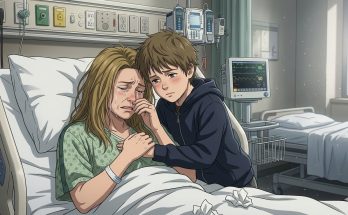


One Comment on “LAST PART 5-My daughter was fifteen when she finally looked”