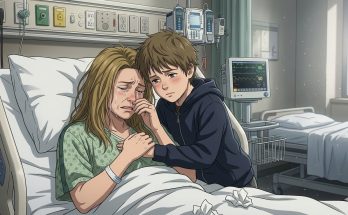
I did not sleep much that night.
Not because I was afraid.
Because I was angry.
There is a particular kind of anger that comes from learning somebody rearranged your life without telling you.
Even if they loved you.
Even if they believed they were helping.
Even if they are dead.
Richard had somehow placed me at Hartley’s eleven years ago.
A handwritten sign.
A back-oven position.
A note telling Margaret not to explain.
And I had walked straight into the job believing I had chosen it myself.
That bothered me more than I expected.
The next morning, I called Margaret before seven.
She answered immediately.
“You’re up early.”
“I bake for a living.”
“Fair.”
“I want the original employee file.”
There was a pause.
“Investigators have it.”
“Good.”
“I have a scanned copy.”
“Bring it.”
“To your house?”
“Yes.”
“Coffee?”
“Yes.”
“Pie?”
“No.”
She laughed.
“Now I know you’re upset.”
Margaret arrived at eight-thirty.
Daniel came ten minutes later.
Thomas too.
I had not invited Melissa.
Not because I was punishing her.
Because this part concerned Richard and me.
That distinction mattered now.
Margaret placed a folder on my dining table.
“No surprises hidden in the lining.”
“Thank you.”
I opened it.
My employment application.
My tax forms.
My emergency contact.
Richard.
Then a copy of the handwritten sign I remembered from the bakery window.
BAKER NEEDED. EARLY SHIFT. ASK INSIDE.
I touched the page.
“That was real.”
“Yes.”
“Who put it up?”
Margaret turned to the next document.
A note.
Richard’s handwriting.
MARGARET — DISPLAY THIS ONLY FROM 4:45 TO 6:15 A.M. CAROL DRIVES PAST ON TUESDAYS AFTER CHURCH PANTRY VOLUNTEERING.
I stared.
“He knew my route.”
Daniel winced.
“Dad knew everybody’s route.”
That was true.
Richard was the kind of man who knew which grocery store had cheaper coffee by ten cents and which road flooded first during storms.
Still.
“This is manipulation.”
Margaret nodded.
“Yes.”
No excuse.
I appreciated that.
I read further.
If she stops, offer the oven position. She hates customer-facing work. Do not mention me.
I almost laughed.
The man knew me.
Too well.
I looked at Margaret.
“You knew he was engineering this.”
“Yes.”
“Why did you agree?”
“Because he told me you needed work.”
“I did.”
“And because he told me you were one of the best pie bakers he knew.”
“That was true too.”
“And because…”
She stopped.
“What?”
“He said being at Hartley’s might eventually answer questions neither of you were ready to ask.”
There it was.
The part I hated.
“Did you know about St. Catherine’s?”
“Some.”
“How much?”
“That Leonard had been involved in illegal placements.”
“Did you know about me?”
“No.”
“Daniel?”
“No.”
“Richard?”
“Only that Leonard might have been his biological father.”
I looked toward my son.
Daniel was quiet.
Thomas sat near the window.
I continued.
“So Richard placed me there because of his own identity.”
Margaret shook her head.
“Not only that.”
She turned one page.
Another note.
CAROL KNOWS RUTH KEPT RECIPES AT HARTLEY’S YEARS AGO. SHE DOES NOT KNOW RUTH ALSO KEPT RECORDS HERE.
I stared.
“My mother kept records at the bakery?”
“Yes.”
“Where?”
“The basement.”
Of course.
Everything ended up in that basement.
Margaret continued.
“Ruth used the bakery after hours while she traced families. My mother Anna helped her.”
I sat back.
“So Richard knew my mother had worked from Hartley’s.”
“Yes.”
“And he wanted me nearby.”
“Yes.”
“Why not simply tell me?”
Margaret looked down.
“Because you asked him not to.”
That stopped me.
“What?”
Daniel frowned.
“Mom?”
I stared at Margaret.
“I never knew any of this.”
“No.”
“Then how could I ask him not to tell me?”
Margaret reached into the folder.
“One more page.”
I groaned.
“Of course.”
But this one was not Richard’s handwriting.
It was mine.
My breath stopped.
A note.
Dated fourteen years earlier.
My handwriting.
Richard,
If Ruth left anything behind, I do not want to know right now. I have spent enough of my life cleaning up other people’s grief. Please leave my mother’s secrets buried unless they directly affect Daniel.
I stared at it.
I remembered writing it.
Not this situation.
But the conversation.
After my mother died, Richard found a locked drawer in her desk.
He asked whether I wanted him to force it open.
I had said no.
I had been exhausted.
My mother had just died.
My brother and I had fought over funeral arrangements.
I wanted peace.
So I wrote Richard a note.
Because he kept asking.
Daniel whispered:
“You did tell him.”
“Yes.”
My anger shifted.
Not disappeared.
Shifted.
I looked at Margaret.
“He still should have told me when he learned Daniel was involved.”
“Yes.”
“Or when he learned about St. Catherine’s.”
“Yes.”
“Or when he arranged the job.”
“Yes.”
No excuses.
Good.
Then Thomas said:
“Maybe he thought he was respecting one instruction while violating another.”
I looked at him.
“That sounds exactly like Richard.”
Daniel almost smiled.
I did too.
Because Richard had always been capable of creating extremely complicated solutions to very simple emotional problems.
Margaret turned another page.
“This is the part I think he wanted you to discover eventually.”
I read.
RUTH LEFT A LIST OF THE FAMILIES SHE NEVER LOCATED.
My heart tightened.
“How many?”
“Seven.”
“She found thirty-two.”
“Yes.”
“Seven remained?”
“Yes.”
“Richard found four.”
I looked up.
“He continued her work?”
“Quietly.”
Thomas nodded.
“He contacted me once about it.”
I stared at my brother.
“You knew?”
“One piece.”
“You people are impossible.”
Thomas smiled.
“Fair.”
Margaret continued.
“Richard believed Hartley’s could become a permanent archive resource.”
I frowned.
“A bakery?”
“Not the public storefront.”
“The business profits.”
“Yes.”
That made more sense.
She handed me a typed proposal Richard had apparently written.
Nothing fancy.
One page.
HARTLEY FAMILY RECORDS PROJECT
- Independent archive.
- Professional genealogists.
- Legal support for record requests.
- Genetic counseling referrals.
- Privacy-first contact rules.
- No forced reunions.
- No public release without consent.
I stared at it.
My mother’s philosophy.
But professionalized.
The exact thing I had independently suggested to Emily.
Daniel looked over my shoulder.
“Dad thought of it too.”
“Yes.”
I felt something in my chest soften.
Not because Richard had been right about everything.
He hadn’t.
But because this was not simply a dead man arranging my life for revenge or money.
He had been trying, badly and secretly, to build something useful from what our families had done.
I hated the secrecy.
I understood the goal.
Both things could be true.
Then I reached the bottom.
Funding recommendation: 10% of annual Hartley distributions until all seven unresolved cases are closed or transferred to a permanent nonprofit.
I looked at Margaret.
“Did Leonard approve this?”
“No.”
“Did Richard?”
“He never had authority.”
“So it was just an idea.”
“Yes.”
Good.
Not another dead man’s command.
A proposal.
Choice.
I sat back.
“I like it.”
Daniel smiled.
“You do?”
“Yes.”
“But we don’t use victim records as leverage.”
“No.”
“We don’t force anybody to make contact.”
“No.”
“We hire professionals.”
“Yes.”
“And the bakery does not become some tourist attraction about scandal.”
Margaret laughed.
“Absolutely not.”
“People come for pie.”
“Exactly.”
Thomas raised his coffee.
“Now we’re getting somewhere.”
Then Daniel asked the harder question.
“Mom, are you keeping the bakery share?”
I looked toward the folder.
Twenty-five percent.
Maybe.
Pending attorneys.
Claims.
Trust conditions.
The number itself had stopped mattering.
“I don’t know yet.”
“What would make you keep it?”
I thought.
“If owning it gives me power to make the records safer.”
Margaret nodded.
“And if it doesn’t?”
“I sell or donate the interest.”
Daniel looked surprised.
“You wouldn’t keep the money?”
“I didn’t say that.”
He laughed.
“I am still paying property taxes.”
Good.
We all laughed.
Then I became serious.
“But I will not let Leonard Hartley buy forgiveness through me.”
Margaret’s expression softened.
“Neither will I.”
That mattered.
Because Hartley’s was hers emotionally.
Maybe mine legally.
But the history belonged to many people.
At noon, Officer Reyes called.
The forensic comparison on the threatening envelope was complete.
Rachel Moore’s print was real.
But there was more.
She had admitted touching the envelope.
Not because she wrote it.
Because she found it inside Margaret’s sewing room and moved it before leaving.
Another assumption corrected.
Rachel was not the author.
“Then who wrote it?” I asked.
Reyes answered:
“We have a partial print from a second person.”
“Who?”
“George Harper.”
I closed my eyes.
Of course.
Then Reyes continued.
“But George says he didn’t write it either.”
I almost laughed.
“Do you believe him?”
“We found handwriting samples.”
“And?”
“Not a match.”
“Then why was his print there?”
“He claims he found the note at Northfield two days before Thanksgiving and took it to Melissa’s house because he thought Richard had left it.”
I frowned.
“Why leave it on her desk?”
“He says he panicked when Rachel came in.”
That sounded stupid enough to be true.
“So the note may have been older?”
“Yes.”
“How old?”
“The paper appears recent. Ink too.”
“Then somebody wrote it recently.”
“Yes.”
“Who had access to Northfield?”
“George. Thomas. Peter. Michael. And one other person.”
My stomach tightened.
“Who?”
“Dorothy.”
I sighed.
“Does her handwriting match?”
“No.”
“Peter?”
“No.”
“Michael?”
“No.”
“Thomas?”
“No.”
“Then?”
Officer Reyes paused.
“We found one more entry in the gate logs.”
“What name?”
“Patricia Harper.”
The room went still.
I looked toward Daniel.
“Patricia?”
“Yes.”
“When?”
“The night before Thanksgiving.”
Melissa’s mother.
The woman who had admitted opening an account in my name.
The woman who said she was protecting people.
Again.
“Do you have a handwriting comparison?”
“We’re obtaining one.”
“Fine.”
No conclusions.
Then Reyes said:
“Carol, there is another reason I called.”
I braced myself.
“What?”
“George has agreed to release the letter Leonard wrote him.”
“The one promising him a bakery share?”
“Yes.”
“Anything important?”
“It includes a paragraph about Richard.”
My stomach tightened.
“What does it say?”
“I think you should hear it directly.”
Of course.
That afternoon, we met at the attorney’s office.
George was there.
For the first time since Thanksgiving, I really looked at him.
He seemed smaller.
Not physically.
Morally exhausted.
Patricia sat beside him but did not touch him.
Melissa was present this time.
So was Daniel.
George slid a copied letter across the table.
“Carol.”
I didn’t take it immediately.
“Did you take my mother’s platter?”
“Yes.”
“Did you know the ledger might be hidden in it?”
“I suspected.”
“Did you take Richard’s things?”
“Some.”
“Why?”
“I was looking for that ledger.”
“Did you disable Melissa’s camera?”
George shook his head.
“No.”
“Did you write the threatening note?”
“No.”
“Did you leave it?”
“Yes.”
“Why?”
“Because I found it inside Unit 317 and thought Richard had written it for you.”
I stared.
“You couldn’t recognize my husband’s handwriting?”
“It wasn’t handwriting. Block letters.”
Fair.
“Why not hand it to me?”
He looked ashamed.
“Because I was afraid.”
Everyone in this family had made fear into a hobby.
I took the Leonard letter.
The first part concerned money.
George had transported files.
Leonard had promised a small trust interest in exchange for continued silence.
Dirty.
Clear.
Then I reached the paragraph Reyes mentioned.
Richard Carter has begun asking questions about his birth. If he ever learns the truth, do not threaten him. He is my son.
My hand froze.
Leonard had written it.
Not speculation.
Not Ruth’s theory.
A direct statement.
He is my son.
Daniel leaned closer.
“So Leonard believed Dad was his.”
“Yes.”
I continued.
I have already done enough damage to him. He was never supposed to be placed with the Carters permanently. Beatrice changed the plan after Elizabeth refused the arrangement.
Elizabeth Cole.
Richard’s likely biological mother.
Then:
If Richard discovers what happened, tell him I am sorry before you tell him anything else.
I lowered the letter.
George looked at me.
“Richard read that part.”
“What?”
“In 2001.”
“So he knew Leonard called him his son.”
“Yes.”
“And he still refused the letter from my mother?”
“Yes.”
“Why?”
George answered:
“Because he said he already had a mother.”
Eleanor.
My eyes filled.
Of course.
“He didn’t want another identity?”
“He said paperwork could explain where he came from. It could not replace who raised him.”
Richard.
Again.
Then George continued.
“He asked me not to tell Daniel.”
I looked at my son.
Daniel nodded slowly.
“I understand.”
That surprised me.
“You do?”
“Yes.”
“Why?”
“Because Dad didn’t know what any of it meant yet.”
He touched Richard’s letter from the carving case.
“And because he probably didn’t want blood to become bigger than life.”
I nodded.
That sounded right.
Not perfect.
But right.
Then Patricia spoke.
“I wrote the threatening note.”
The room froze.
George turned toward her.
“What?”
Officer Reyes, sitting near the door, said nothing.
He already knew or suspected.
I stared at Patricia.
“You wrote STOP DIGGING, CAROL?”
“Yes.”
“Why?”
Tears filled her eyes.
“Because George had gone back to Northfield.”
“That explains George. Not me.”
“I thought if you kept digging, everything would come out at once.”
“It did.”
“I know.”
“So you threatened me.”
“I was trying to scare you away.”
“From my own life.”
“Yes.”
No excuse.
At least not this time.
Daniel looked disgusted.
Melissa whispered:
“Mom.”
Patricia turned toward her daughter.
“I was afraid George would be charged.”
“He still might be.”
“I know.”
“I was afraid you would learn about Margaret.”
“We did.”
“I was afraid Melissa would lose her marriage.”
Melissa stared at her.
“That was mine to face.”
Patricia started crying.
“I know.”
Then she looked at me.
“And I was afraid you would hate me.”
I answered quietly.
“I don’t hate you.”
Her face crumpled.
“That’s worse.”
Maybe.
“I don’t trust you.”
She nodded.
“That I deserve.”
“Yes.”
Officer Reyes asked Patricia to confirm details for the record.
She did.
No grand arrest.
No dramatic handcuffs.
The note was threatening, but the legal consequences would be handled properly.
Real life was slower than revenge.
I was beginning to prefer it.
As we left the attorney’s office, Daniel walked beside me.
“So that’s it?”
“No.”
He laughed.
“I should have known better.”
“I mean the mysteries.”
“We still have unresolved records.”
“True.”
“Margaret’s exact parentage still needs confirmation.”
“Yes.”
“Richard’s too.”
“Yes.”
“George’s.”
“Yes.”
“And the seven families Grandma Ruth never located.”
“Yes.”
Daniel sighed.
“So not it.”
“But the family secrets are almost done.”
He looked at me.
“Almost?”
I smiled.
“There is one person I haven’t talked to.”
“Who?”
“Peter Winters.”
Daniel frowned.
“Why him?”
“Because Harold was his brother.”
“So?”
“He helped Richard gather records.”
“Yes.”
“He came to Hartley’s every November.”
“Yes.”
“And he knew I worked there.”
Daniel stopped walking.
“Right.”
“I want to know why he kept watching me.”
“Mom…”
“Public place.”
He smiled.
“Good.”
“Daylight.”
“Excellent.”
“You can come.”
“Even better.”
Peter agreed to meet us at Hartley’s the next morning.
Not the basement.
The front counter.
Margaret made coffee.
I brought nothing.
No letters.
No folders.
Peter sat across from me.
“You finally asked.”
“Asked what?”
“Why I came every November.”
I stared.
“You knew I would.”
“Yes.”
“Why?”
He looked toward the kitchen window.
“Because Ruth asked me to.”
My mother again.
“When?”
“Before she died.”
“What did she ask?”
“To make sure you stayed at Hartley’s.”
My anger flickered.
“Everyone seems very invested in where I work.”
Peter nodded.
“I told her I wouldn’t manipulate you.”
“Good.”
“She changed the request.”
“To what?”
“Watch.”
“Watch what?”
“You.”
“For what?”
Peter smiled sadly.
“To see whether you were happy.”
That stopped me.
“What?”
“Ruth knew Richard had discovered some of the Hartley records.”
“But she was dead before I started working here.”
“Yes.”
“So?”
“She expected Richard might eventually bring you close to the bakery.”
My mother had known my husband too well.
Peter continued.
“She told me if you seemed unhappy, I was to give you her letter and tell you everything.”
I stared.
“You had another letter?”
“No.”
Thank God.
“I gave mine to Richard years ago. He incorporated parts into what he left you.”
“So why didn’t you tell me?”
Peter looked embarrassed.
“Because every November I came in and watched you bake.”
“And?”
“You looked happy.”
I almost laughed.
“That was your standard?”
“Ruth’s.”
“What if I had looked miserable?”
“I would have interrupted.”
I shook my head.
“Ridiculous.”
“Yes.”
“But sweet.”
Peter smiled.
“Yes.”
Then he became serious.
“There is something else.”
I gave him a look.
He raised both hands.
“Not a secret child.”
“Good start.”
“Not money.”
“Better.”
“Not a hidden room.”
“Excellent.”
Daniel laughed.
Peter continued.
“It’s about why Richard chose the back oven position.”
I frowned.
“I hate customer service.”
“Yes.”
“That was part of it.”
“What was the other part?”
Peter looked through the glass into Hartley’s kitchen.
“The back oven is directly above the old records room.”
I stared.
“So?”
“Richard believed the floor vent carried sound.”
“What kind of sound?”
“Conversation.”
My skin prickled.
“Who was he expecting me to hear?”
Peter looked toward Margaret.
“No one specific.”
“Then why?”
“He thought if anybody ever came back looking for the old records, they might talk in the basement.”
I sat back.
“That is absurd.”
Peter smiled.
“Yes.”
“Did it ever happen?”
“No.”
“Then Richard’s elaborate plan achieved nothing.”
Peter shook his head.
“It achieved one thing.”
“What?”
“You learned every Hartley family recipe.”
I frowned.
“So?”
Margaret smiled.
“So you became indispensable.”
I stared at both of them.
Then understood.
Richard wasn’t only positioning me near records.
He was giving me a place inside the bakery strong enough that, if the ownership question ever surfaced, I wouldn’t simply be “the widow claiming a trust.”
I had eleven years of work there.
Relationships.
Skill.
A life.
He had tried to give me standing before he gave me information.
Still manipulative.
Still secretive.
But less sinister than I feared.
I looked toward the kitchen.
My oven.
My counters.
My rolling pin.
Maybe Richard hadn’t placed me inside Hartley’s to discover some final shocking secret.
Maybe he had put me there because he thought one day I might need to decide what the place became.
And he wanted me to know it first.
Not as an owner.
As a baker.
That mattered.
Peter finished his coffee.
Then he placed one small item on the table.
A brass nameplate.
CAROL CARTER — HEAD BAKER
I stared.
“We don’t use nameplates.”
“We did once.”
“Whose was this?”
“Yours.”
“What?”
“Richard ordered it eleven years ago.”
I almost laughed.
“Of course he did.”
“He told Margaret not to give it to you until you chose to stay.”
“I stayed eleven years.”
Peter smiled.
“Exactly.”
I picked it up.
Head Baker.
Not owner.
Not victim.
Not widow.
Not mother excluded from Thanksgiving.
Something I had earned.
I liked that much better.
Then Daniel’s phone rang.
He checked the screen.
Dr. Morris.
The genetic counselor.
His face changed.
“Mom.”
“What?”
“She has the supplemental results.”
Margaret sat straighter.
“For me?”
“Yes.”
Peter looked toward us.
Daniel answered.
After a few minutes, he put the phone on speaker.
Dr. Morris spoke carefully.
“We were able to complete additional relationship analysis using the samples already provided and a verified relative sample supplied through the investigation.”
My heart pounded.
“Margaret?”
“Yes.”
Margaret grabbed my hand.
Dr. Morris continued.
“The earlier half-sibling prediction between Margaret and Daniel was correct.”
Margaret exhaled.
“Shared father?”
“Yes.”
“Leonard Hartley?”
Dr. Morris paused.
“We obtained a verified biological descendant sample from Leonard Hartley’s family line.”
Dorothy.
Likely.
“And?”
“The results strongly support Leonard Hartley as the biological father of both Margaret and Daniel.”
Silence.
Daniel looked at Margaret.
“Sister.”
She laughed through tears.
“Half-sister.”
I smiled.
Then Dr. Morris continued.
“There is one more result.”
Of course.
“Richard?”
Daniel asked.
“Yes.”
My chest tightened.
“How?”
“A preserved medical sample was located from a prior hospital procedure, and legal authorization was obtained for limited kinship testing.”
I stopped breathing.
“And?”
“Richard Carter was also biologically related to Leonard Hartley as a son.”
Daniel covered his face.
Three.
Richard.
Daniel.
Margaret.
All Leonard’s biological children.
My husband had raised his biological half-brother as his son without ever knowing it for most of his life.
Strange.
But not shameful.
Dr. Morris continued:
“This means Richard and Daniel were biological half-siblings, but socially and legally they were father and son.”
Daniel looked at me.
I reached for his hand.
“And that is how they lived.”
“Yes,” Dr. Morris said gently.
“Exactly.”
Then:
“Margaret and Richard were also half-siblings.”
Margaret started crying.
“I had a brother.”
“Yes.”
“You knew him.”
I looked at her.
“Very well.”
She laughed through tears.
“Was he annoying?”
“Extremely.”
Daniel smiled.
“Accurate.”
The room filled with something different.
Not shock.
Recognition.
A family tree finally becoming clearer.
Messy.
But clearer.
Then Dr. Morris added:
“There is no genetic indication that Margaret is biologically related to Patricia Harper.”
Good.
One false ledger finally put to rest.
“And Samuel Bennett is Michael’s biological father as previously confirmed.”
Samuel had his answer.
“And Michael is Emily’s biological father as previously confirmed.”
Daniel squeezed my hand.
No change there.
Then Dr. Morris said:
“That concludes the requested relationships.”
No final hidden surprise.
No impossible twin.
No mysterious thirteenth baby.
Just results.
Verified.
I almost wanted to applaud.
After the call ended, Margaret looked at me.
“So.”
“So.”
“We share Daniel.”
I smiled.
“Apparently.”
“And Richard was my brother.”
“Yes.”
She wiped her eyes.
“I wish I’d known.”
“So do I.”
Then she looked toward the bakery ovens.
“What do we do now?”
I thought about Ruth.
Richard.
Eleanor.
Anna.
The women in the records.
The children.
The seven families still unresolved.
The twenty-five percent trust.
The bakery.
And Thanksgiving.
“We stop hiding.”
Margaret nodded.
“We stop guessing.”
“Yes.”
“We protect privacy.”
“Yes.”
“We tell people what belongs to them.”
“Yes.”
Then I looked at the brass nameplate.
“And we bake.”
Margaret laughed.
“That too.”
I pinned the nameplate to my apron.
CAROL CARTER — HEAD BAKER
It felt right.
But the story still wasn’t finished.
Because later that afternoon, Daniel called me from Melissa’s house.
“Mom.”
“Yes?”
“Emily wants to talk to Michael.”
I closed my eyes.
That moment had been coming.
“Does Daniel want her to?”
“He says it’s her choice.”
Good.
“And Michael?”
“He’s terrified.”
Also good, in a way.
People should be careful with moments that important.
“What does Emily want from me?”
Daniel paused.
“She wants you there.”
I looked at the bakery.
At Margaret.
At my apron.
At the ovens.
Then I said:
“I’ll come.”
Because some doors should be opened gently.
And the next one belonged to my granddaughter.
PART 25 — EMILY MEETS THE MAN WHO GAVE HER HIS DNA
Emily chose the library.
Not Melissa’s house.
Not mine.
Not Hartley’s.
A library meeting room with glass walls and a little round table in the middle.
Public.
Quiet.
Neutral.
I was proud of her before she even walked in.
Michael arrived first.
He looked like a man heading into court.
Hands in his pockets.
Shoulders tight.
No gifts.
No dramatic speech prepared.
Good.
Then Daniel came with Emily.
Melissa waited outside.
That had been Emily’s choice too.
Daniel opened the door.
Emily stepped inside.
Michael stood.
Nobody spoke.
For a few seconds, they simply looked at each other.
And now that I knew, I could see it.
The eyes.
That little lift of the left eyebrow.
The shape around the mouth.
But I also saw Daniel in her.
Not biologically.
In the way she held herself when nervous.
In the way she rubbed her thumb against the side of her index finger.
Daniel did that.
Richard had done it too.
People inherit more than genes.
Emily sat.
Michael waited until she did before sitting across from her.
Daniel took the chair beside her.
I stayed near the wall.
Emily had asked me to be present.
Not to run the conversation.
That distinction mattered.
Finally, she said:
“So.”
Michael nodded.
“So.”
“You’re my biological father.”
His face tightened.
“Yes.”
“And you knew for four years.”
“Yes.”
“Did you want to tell me?”
Michael looked at Daniel before answering.
Then back at Emily.
“Yes.”
“Why didn’t you?”
“Because I was a coward.”
No excuses.
Emily seemed almost surprised.
Michael continued.
“I was also afraid that telling you would destroy your family.”
She looked toward Daniel.
“My family got destroyed by people not telling the truth.”
Michael lowered his eyes.
“Yes.”
That was the whole story in one sentence.
Emily asked:
“Did you love my mom?”
Michael looked uncomfortable.
“No.”
Melissa probably deserved to hear that answer herself someday.
But this was Emily’s conversation.
“It was one night.”
“Yes.”
“Did you know she was married?”
Michael nodded.
“Yes.”
Emily’s expression hardened.
“So you both knew.”
“Yes.”
Michael did not soften it.
He did not blame alcohol.
He did not say things were complicated.
He simply sat inside what he had done.
Emily looked at Daniel.
“Did you know they were having problems then?”
Daniel answered:
“Yes.”
“Were you a bad husband?”
The question hit him.
I almost interrupted.
I didn’t.
Daniel thought before answering.
“I wasn’t perfect.”
“Did you cheat?”
“No.”
“Did you hit Mom?”
“No.”
“Did you abandon her?”
“No.”
“Then her cheating wasn’t your fault.”
Daniel’s eyes filled.
“No.”
Emily looked back at Michael.
“So don’t tell me Dad caused it.”
“I won’t.”
“Good.”
Then she asked the question I knew had been waiting behind all the others.
“Do you want to be my father?”
Michael went completely still.
Daniel did too.
I stopped breathing.
Michael’s answer took a long time.
“I don’t think I get to walk into this room and claim that word.”
Emily stared at him.
“Why?”
“Because Daniel has spent seventeen years earning it.”
Daniel looked down.
Michael continued.
“I would like to know you.”
“If I want that.”
“If you want that.”
“And if I don’t?”
“I’ll respect it.”
Emily nodded.
“What would I call you?”
Michael gave a small smile.
“Michael seems safe.”
She almost smiled back.
Then:
“Do you have other kids?”
“No.”
“Are you married?”
“No.”
“Why were you dating Aunt Rachel?”
Michael closed his eyes briefly.
That one hurt.
“I met Rachel while looking into the St. Catherine’s records.”
“So you used her?”
“At first, I told myself I wasn’t.”
“That means yes.”
Michael nodded.
“Yes.”
Emily looked disgusted.
“Does she know?”
“Yes.”
“Is she still talking to you?”
“No.”
“Good.”
Michael accepted that too.
Then Emily asked:
“Why did Grandpa Richard notice?”
Michael looked toward me.
“Because your grandfather noticed everything.”
I smiled despite myself.
“Unfortunately true.”
Michael continued.
“He saw a picture of you and me at your school concert.”
Emily frowned.
“I don’t remember you being there.”
“I was sitting with Rachel.”
“You were watching me?”
Michael looked ashamed.
“Yes.”
“That’s creepy.”
“Yes.”
I nearly laughed.
Not because it was funny.
Because Michael kept refusing every easy escape.
Emily noticed too.
She leaned back.
Then asked:
“Did Grandpa hate you?”
Michael shook his head.
“No.”
“Really?”
“He was furious.”
“That sounds more believable.”
“He told me I had helped create a situation I had no right to run from.”
“That also sounds like Grandpa.”
Daniel smiled faintly.
Michael continued.
“But he also told me something else.”
“What?”
“He said if the DNA came back and I was your biological father, I had one job.”
Emily waited.
“Don’t make your existence about my guilt.”
Her expression changed.
Michael said:
“He told me you were a child, not a consequence.”
Daniel covered his mouth.
I looked away.
Richard.
Again.
Flawed in so many ways.
But sometimes he found the exact sentence that mattered.
Emily whispered:
“He said that?”
“Yes.”
Michael reached into his pocket.
Then stopped.
“May I give you something?”
Emily looked at him.
“What?”
“A copy of a note Richard wrote me.”
She nodded.
“Okay.”
He placed the folded photocopy on the table.
Not the original.
Good.
Emily opened it.
I could see Richard’s handwriting.
She read silently.
Then her eyes filled.
Daniel touched her shoulder.
She didn’t pull away.
After a moment, she handed the note to him.
He read it.
Then gave it to me.
Only three lines.
MICHAEL,
IF THE TEST SAYS EMILY IS YOURS BIOLOGICALLY, REMEMBER SHE IS NOT SOMETHING YOU GET TO CLAIM.
SHE IS SOMEONE YOU GET TO ASK.
I swallowed hard.
There it was again.
Choice.
The lesson everybody in this family had apparently needed fifty years to learn.
Emily folded the note.
Then she looked at Michael.
“I don’t know what I want yet.”
“That’s okay.”
“I might want to see you again.”
“Okay.”
“I might change my mind.”
“Okay.”
“You’re not going to push?”
“No.”
Emily nodded.
Then she asked:
“Can I ask one weird question?”
Michael smiled nervously.
“Sure.”
“Do you hate raisins?”
He blinked.
“What?”
“Raisins.”
“Yes.”
Emily’s eyes widened.
“I hate raisins.”
Daniel laughed.
I laughed.
Even Michael did.
For the first time, the room felt less like a courtroom.
Emily pointed at Daniel.
“Dad loves raisins.”
Daniel shrugged.
“Because raisins are good.”
“They’re dead grapes.”
“They’re concentrated grapes.”
“They’re disgusting.”
Michael laughed harder.
And for one minute, biology was harmless.
Just raisins.
Just a tiny similarity.
Nothing that needed to replace anybody.
After the meeting, Emily asked Daniel to walk her to the car.
Michael stayed behind.
He looked at me.
“Carol.”
“Yes?”
“I’m sorry.”
“For which part?”
He almost smiled.
“Fair.”
Then he became serious.
“For being at those Thanksgivings.”
My smile disappeared.
“You knew I wasn’t there.”
“Yes.”
“You knew why?”
“Not at first.”
“When did you know?”
“The second year.”
“And you still came.”
He nodded.
“Why?”
“I wanted to see Emily.”
“You could have found another way.”
“I know.”
“You allowed Melissa’s lie to become convenient for you.”
“Yes.”
That answer mattered.
I had no interest in forgiving everybody in one afternoon.
“I’m not ready to tell you it’s okay.”
“You shouldn’t.”
“But if Emily chooses to know you, I won’t stand in the way.”
Michael’s eyes filled.
“Thank you.”
“Don’t thank me.”
I looked toward the parking lot where Daniel was hugging his daughter.
“Thank her.”
That evening, I returned to Hartley’s.
Margaret was closing.
She tossed me an apron.
“You working?”
“I thought I owned twenty-five percent.”
“Exactly. Put on the apron.”
I laughed.
I tied it around my waist.
Then we baked.
No investigators.
No police.
No surprise relatives.
Just flour.
Butter.
Nutmeg.
Normal work.
After an hour, Margaret leaned against the counter.
“I’ve been thinking.”
“That’s dangerous lately.”
She smiled.
“About the records project.”
“What about it?”
“I want to do it.”
“So do I.”
“Not under the Hartley name.”
I looked at her.
“Why?”
“Because the people harmed by this shouldn’t have to walk into something named after the family that helped hurt them.”
She was right.
“What would we call it?”
Margaret shrugged.
“Something neutral.”
I thought about my mother.
Choice.
Truth.
No forced reunions.
Then I said:
“Open Door.”
Margaret smiled.
“Open Door Family Records Project.”
“Yes.”
“I like it.”
“Good.”
Then she asked:
“And the bakery?”
“What about it?”
“You really want to keep working mornings?”
“Yes.”
“You know owners don’t usually arrive at five.”
“Then owners are lazy.”
She laughed.
I rolled another crust.
And for the first time, Hartley’s didn’t feel like Leonard’s bakery.
Or Beatrice’s hiding place.
Or Richard’s investigation.
It felt like the place where I worked.
Mine in the simplest possible way.
Three weeks passed.
The investigation continued.
George cooperated.
Patricia accepted responsibility for the false account and threatening note.
Attorneys handled the identity theft.
Nobody pretended there wouldn’t be consequences.
Melissa moved into a small apartment.
She and Daniel began counseling separately before they attempted anything together.
Emily stayed mostly with Daniel.
She met Michael once more.
For coffee.
Without me.
Good.
Thomas came to my house every Sunday morning.
The first time, he brought flowers.
I told him never to do that again because flowers meant I had to find a vase.
The second time, he brought cinnamon rolls.
Better.
We talked about Ruth.
Mostly ordinary things.
Her terrible singing voice.
Her obsession with clipping coupons.
The way she could stretch leftovers into three meals.
That was how I wanted to know my brother.
Not through a ledger.
Through stories.
Then one morning, Margaret called.
“Carol.”
“No.”
She laughed.
“I haven’t told you anything yet.”
“If you say ‘we found another document,’ I’m hanging up.”
“No documents.”
“Excellent.”
“We got approval.”
“For what?”
“Open Door.”
I stopped rolling dough.
“The project?”
“Yes.”
“Our attorneys worked with the investigators. The historical records can be transferred to an independent nonprofit archive once the legal review is complete.”
My eyes filled.
“And the names?”
“Protected.”
“Contact only with consent?”
“Yes.”
“Professional genealogists?”
“Yes.”
“Genetic counselors?”
“Yes.”
“No surprise relatives showing up with pie boxes?”
“Very specific policy.”
“Put it in writing.”
She laughed.
“I will.”
I smiled.
My mother had spent decades doing this work from the shadows.
We were finally going to do it in daylight.
Then Margaret said:
“One more thing.”
I pointed the rolling pin at the phone.
“You promised.”
“Not a document.”
“What?”
“We found one of Ruth’s seven unresolved families.”
I went still.
“Alive?”
“The daughter is.”
“Does she want contact?”
“She wants information.”
“Then give her information.”
“Exactly.”
No reunion forced.
No dramatic doorstep.
Just choice.
Ruth would have approved.
Six weeks later, Emily turned eighteen.
Daniel had a small dinner.
Not fourteen people.
Eight.
And this time, he called me himself.
“Mom?”
“Yes?”
“Emily wants you at dinner Saturday.”
I smiled.
“Is that an invitation?”
“Yes.”
“Did Melissa tell you I’d probably say no?”
He laughed.
“No.”
“Did anyone tell your family I hate birthdays?”
“No.”
“Are there secretly sixteen people coming?”
“Eight.”
“Then yes.”
He paused.
“Really?”
“Yes.”
I heard him exhale.
“Good.”
Then:
“Mom?”
“Yes?”
“Can you bring pie?”
I smiled.
“Now we’re negotiating.”
Saturday evening, I arrived carrying one sweet potato pie.
Daniel opened the door.
No shock.
No gravy boat in his hand.
Just my son.
“Hi, Mom.”
“Hi.”
He hugged me.
Inside, Emily ran toward me.
“Grandma!”
I hugged her.
Melissa was there too.
She stood near the dining room.
We were not suddenly best friends.
We were not pretending nothing happened.
But when our eyes met, she said:
“Carol.”
“Melissa.”
Then:
“I’m glad you came.”
I believed her.
That was new.
At the center of the dining table sat my mother’s gravy boat.
White porcelain.
Gold rim.
Empty for now.
Waiting.
I touched it as I passed.
Emily leaned toward me.
“You okay?”
“Yes.”
And I was.
Not healed completely.
Not finished with every consequence.
But okay.
Then Daniel raised his glass.
“I want to say something.”
Everyone looked at him.
He glanced at me first.
Then Emily.
Then Melissa.
“Our family has spent a very long time believing silence keeps people together.”
He paused.
“It doesn’t.”
Nobody moved.
“So tonight, nobody has to pretend.”
He looked at Emily.
“You get to choose what relationship you have with Michael.”
She nodded.
He looked at Melissa.
“We get to choose whether our marriage can be rebuilt.”
Melissa nodded through tears.
Then he looked at me.
“And Mom…”
“Yes?”
“You get to choose whether you ever spend Thanksgiving with us again.”
I smiled.
“Very generous.”
He laughed.
“But you are invited.”
“I know.”
“How?”
“Because you asked.”
That was the difference.
Then Emily cut the pie.
She gave me the first slice.
I handed it back.
“Birthday girl first.”
She smiled.
“No.”
“Why?”
“Because you made it.”
And maybe I should have argued.
But I didn’t.
I took the slice.
Extra nutmeg.
My mother’s recipe.
Mine now.
At the center of the table, Daniel finally filled the gravy boat.
And I looked around at the people sitting there.
Not everybody was forgiven.
Not everybody stayed married.
Not every mystery had a neat ending.
But nobody at that table had been erased.
And for the first time in years—
neither had I.
Two parts remained.
And the next one would decide what happened when Thanksgiving came around again.
PART 26 — THE THANKSGIVING I WAS ACTUALLY INVITED TO
Eleven months later, Daniel called me on a Tuesday evening.
Not a text.
Not a message passed through Melissa.
A call.
“Mom?”
“Yes?”
“I’m calling early.”
“How early?”
“Ridiculously early.”
I smiled.
“Go on.”
“Thanksgiving is at my house this year.”
I said nothing.
He continued.
“I want you there.”
Still nothing.
Then he added:
“But I’m asking. Not assuming.”
That mattered.
“What time?”
“Three.”
“How many people?”
“Ten.”
“Ten?”
“Exactly ten.”
“No surprise cousins?”
“No.”
“No mystery ninety-year-old Hartleys?”
He laughed.
“No.”
“No people secretly related to other people sitting beside them?”
“Mom.”
“I’m checking.”
He laughed harder.
“Ten people.”
“Who?”
He listed them.
Daniel.
Emily.
Melissa.
Patricia.
George.
Thomas.
Margaret.
Michael.
Rachel.
And me.
I paused.
“That is an ambitious table.”
“Yes.”
“Are you sure?”
“No.”
I laughed.
“Good answer.”
Then he became serious.
“Everyone agreed.”
“Agreed to what?”
“That nobody uses Thanksgiving to force a reconciliation.”
I liked that.
“No surprise announcements?”
“No.”
“No DNA reports between the mashed potatoes?”
“Absolutely not.”
“No envelopes?”
“Banned.”
I smiled.
“And if someone finds a hidden key?”
“We throw it into the yard.”
“Now you’re learning.”
Then Daniel asked:
“So?”
“So what?”
“Will you come?”
I let him wait.
Not as punishment.
Because I wanted to hear myself answer.
“Yes.”
His voice softened.
“Really?”
“Yes.”
“Good.”
Then:
“Mom?”
“Yes?”
“Can you bring the sweet potato pie?”
I smiled.
“Extra nutmeg?”
“Family recipe.”
I almost corrected him.
Then stopped.
Maybe it was a family recipe now.
Just not in the way Melissa had once pretended.
“Yes.”
“I’ll bring it.”
Thanksgiving morning, I woke at four-thirty.
Old habits.
Hartley’s ovens were already warm when I arrived.
But things had changed.
A new brass plaque hung beside the front counter.
HARTLEY’S BAKERY
Underneath, smaller:
Home of the Open Door Family Records Project
Nothing dramatic.
Nothing exploitative.
No wall of scandal.
Just a small notice directing people to a separate office upstairs.
The project had already helped three families access records.
Two chose contact.
One did not.
Nobody argued with the one who chose no.
That was the point.
Margaret arrived at five.
She carried coffee.
“Morning, partner.”
“Head baker.”
“Twenty-five-percent partner.”
“Head baker.”
She laughed.
Thomas came in at six with cinnamon rolls.
Completely unnecessary in a bakery.
He said they were tradition.
Apparently siblings could invent traditions late.
I let him.
At seven-thirty, Emily came through the back door.
“Grandma!”
I looked at her.
“What are you doing here?”
“Helping.”
“You don’t bake.”
“I can learn.”
She tied an apron badly.
I fixed it.
“Michael coming?”
“No.”
“Daniel?”
“No.”
“Melissa?”
“No.”
I raised an eyebrow.
“So why are you here?”
Emily shrugged.
“Because I wanted to spend part of Thanksgiving with you before dinner.”
That answer landed deep.
Three years earlier, she had believed I wanted to be alone.
Now she had gotten up before sunrise because she wanted time with me.
I handed her a rolling pin.
“Fine.”
She looked terrified.
“What do I do?”
“Don’t ruin my crust.”
“Helpful.”
I laughed.
And we worked.
At eleven, Emily asked:
“Grandma?”
“Yes?”
“Do you forgive Mom?”
I kept rolling.
“Some days.”
She frowned.
“What does that mean?”
“It means forgiveness isn’t a light switch.”
She waited.
“Sometimes I remember her apologizing.”
I pressed the dough.
“Sometimes I remember eating alone.”
Emily looked down.
“Is she still sorry?”
“Yes.”
“How do you know?”
“Because she stopped asking me to make her feel better about it.”
Emily thought about that.
“That’s good?”
“Yes.”
“Why?”
“Because remorse that demands immediate forgiveness is often just another form of selfishness.”
Emily was quiet.
Then:
“Dad says they’re not getting divorced.”
I looked at her.
“He told you?”
“They told me together.”
“And?”
“They’re staying separated another six months.”
That sounded sensible.
“They still go to counseling.”
“Good.”
“Mom has her own apartment.”
“I know.”
“Dad says they’re trying to build something new instead of pretending the old thing didn’t break.”
I stopped rolling dough.
“That sounds very wise.”
“Grandpa Richard?”
“No.”
She smiled.
“Therapist.”
“Even better.”
At two-thirty, I changed into my good coat.
The same one I had worn the year before.
But this time, I wasn’t carrying four boxes.
One pie.
One dish.
One invitation I had actually received.
Emily rode with me.
When we reached Daniel’s house, I stood at the bottom of the front steps for a moment.
She looked at me.
“You okay?”
“Yes.”
“Really?”
I smiled.
“Ask me again after dinner.”
She laughed.
Then the door opened.
Daniel.
This time there was no shock on his face.
He smiled.
“Mom.”
“Daniel.”
He came down the steps and took the pie.
Then stopped.
“May I?”
I laughed.
“Yes, you may carry the pie.”
He kissed my cheek.
Inside, I heard voices.
Ten people.
Exactly ten.
I counted.
Old habits.
Thomas was helping George with drinks.
Those two had a strange relationship now.
Cousins by upbringing.
Connected through history.
No longer hiding behind it.
George had accepted a plea arrangement related to the identity fraud and stolen records.
Restitution.
Probation.
Cooperation with the investigation.
No dramatic prison sentence.
No magical escape either.
Consequences.
Patricia was in the kitchen.
She saw me.
“Carol.”
“Patricia.”
She looked nervous.
“I made the mashed potatoes.”
“Good.”
“I didn’t put any documents in them.”
I stared at her.
Then laughed.
She laughed too.
Progress.
Not trust.
But progress.
Margaret arrived carrying rolls.
Michael came separately.
He and Emily greeted each other with a small hug.
Not “Dad.”
Not yet.
Maybe never.
That was Emily’s decision.
Rachel came last.
She no longer spoke to Michael socially.
But she had agreed to attend for Emily.
That was enough.
Melissa stood near the dining room.
She looked at me.
“Carol.”
“Melissa.”
“Thank you for coming.”
“Thank you for inviting me.”
She nodded.
Simple.
No tears.
No performance.
Good.
The table was smaller this year.
Ten chairs.
No strangers.
No lies about who had been invited.
And in the center sat my mother’s gravy boat.
White porcelain.
Gold rim.
Daniel had polished it.
I noticed immediately.
He saw me looking.
“Too much?”
“No.”
He smiled.
Then dinner began.
For ten minutes, nobody mentioned St. Catherine’s.
That might have been the greatest miracle of the entire year.
Thomas told a ridiculous story about Ruth getting thrown out of a grocery store after accusing the manager of changing coupon rules.
I laughed until my stomach hurt.
“That sounds like her.”
“She was banned for two weeks.”
“She still went back.”
“Three days later.”
Of course.
Margaret told us Open Door had located another family.
The daughter had requested medical history only.
No contact.
Everyone respected it.
Patricia talked about volunteer work she had started doing at a local legal aid office.
Not because that erased anything.
It didn’t.
But I noticed.
George was quieter.
He looked at me once.
“I owe you an apology.”
The table fell silent.
I held up my hand.
“Not at Thanksgiving.”
He nodded.
“Okay.”
“We can talk another day.”
“Okay.”
That was new too.
We did not need to turn every meal into a courtroom.
Then Daniel carved the turkey.
He wasn’t as good as Richard.
I told him so.
“Mom.”
“What?”
“Dad had forty years of practice.”
“And still cut the breast too thick.”
Everyone laughed.
Daniel shook his head.
“I missed this.”
The words slipped out naturally.
Then he stopped.
I knew what he meant.
Not the criticism.
Me.
I looked at him.
“I missed this too.”
Melissa lowered her eyes.
I noticed.
But I did not make the moment about her guilt.
That was growth too.
Then Emily stood.
“I want to say something.”
Everyone looked at her.
Daniel smiled nervously.
“You promised no surprise announcements.”
“It’s not an announcement.”
“Good.”
Emily looked at me.
“Last Thanksgiving, I thought Grandma didn’t want to be with us.”
My throat tightened.
“And I spent a long time being angry about that.”
Melissa looked down.
Emily continued.
“Then I learned a lot of adults had made a lot of decisions for other people.”
She looked around the table.
“About family.”
“About secrets.”
“About truth.”
“And even about who gets invited.”
Nobody moved.
“So this year, I wanted one rule.”
Daniel frowned.
“You added a rule?”
“Yes.”
“Without asking?”
Emily smiled.
“Okay, I learned something.”
We laughed.
Then she said:
“My rule is that nobody speaks for anyone who is sitting right there.”
The table went quiet.
If Daniel wants something, ask Daniel.
If Melissa wants something, ask Melissa.
If Grandma wants to come, ask Grandma.
If Michael wants a relationship, ask Emily.
If somebody wants space, believe them.
Simple.
Impossible, apparently, for several generations of our family.
I raised my glass.
“I’ll drink to that.”
Everyone did.
After dinner, I brought out the pie.
Melissa stood to help.
Then stopped.
“May I?”
I looked at her.
“Yes.”
She carried the plates.
I sliced.
She handed them around.
Nothing dramatic.
But I noticed the difference.
A year ago, she had been ordering my pie while pretending I didn’t exist.
This year, we were serving it together.
That did not erase what happened.
It did mean something had changed.
Melissa took one bite.
Then looked at me.
“Extra nutmeg.”
“Yes.”
She smiled sadly.
“I never should have called it my family recipe.”
I set down the knife.
“It became your family’s tradition.”
She looked surprised.
“That isn’t the same as owning the recipe.”
“No.”
“But maybe you don’t have to steal something to belong to it.”
Her eyes filled.
“Thank you.”
I nodded.
That was enough.
After dessert, people drifted toward the living room.
I stayed behind.
I began clearing plates.
Daniel came back.
“Mom, leave those.”
“I have hands.”
“You’re a guest.”
I stopped.
Guest.
Not worker.
Not delivery driver.
Not invisible baker.
Guest.
I put the plate down.
“You’re right.”
He smiled.
Then he handed me a small box.
I stared at it.
“No.”
“What?”
“We banned envelopes.”
“It isn’t an envelope.”
“What is it?”
“Open it.”
I gave him a look.
“Daniel.”
“I promise there is no birth certificate inside.”
I opened the box.
A little brass plaque.
Not Hartley’s.
Not a trust document.
Just four words.
CAROL’S CHAIR — ALWAYS HERE
I stared.
“Absolutely not.”
His face fell.
“You hate it?”
“It is sentimental nonsense.”
Emily shouted from the living room:
“She loves it!”
“I heard that!”
Daniel laughed.
I turned the plaque over.
On the back, he had engraved:
Ask her anyway.
That changed it.
Not always assumed.
Always welcome.
But still asked.
I ran my thumb across the words.
“I like the back better.”
“I knew you would.”
Then I hugged him.
No speech.
No apology.
Just my son.
By eight, I was ready to leave.
Thomas hugged me.
Margaret kissed my cheek.
Michael thanked me for the pie.
Patricia asked whether we could have coffee sometime.
I said yes.
Not because everything was forgotten.
Because I was ready.
George said goodnight.
Melissa walked me to the door.
She hesitated.
“Carol?”
“Yes?”
“I know you don’t owe me an answer.”
“Okay.”
“Do you think we can ever be family again?”
I thought carefully.
“We are family.”
Her eyes filled.
“That’s not the same as being close.”
“No.”
“Could we be?”
“Maybe.”
She nodded.
“Maybe is enough.”
Good answer.
Then she stepped aside.
No hug requested.
No emotional demand.
She was learning too.
Daniel walked me to my car.
The air smelled like wood smoke.
“Good Thanksgiving?”
I pretended to think.
“Turkey was dry.”
“Mom.”
“Pie was excellent.”
“Mom.”
I smiled.
“Yes.”
“Really?”
“Yes.”
He looked relieved.
Then:
“Next year?”
“We just finished this one.”
“I’m asking early.”
“Ask me next November.”
He laughed.
“Fair.”
I got into the car.
Then looked back at the house.
The windows glowed.
Ten people inside.
Some related by blood.
Some by marriage.
Some by adoption.
Some by mistakes nobody had chosen.
Some by forgiveness still unfinished.
But every chair had a person who knew why they were there.
No fake invitations.
No invented refusals.
No invisible mother baking traditions for a table that pretended she didn’t exist.
I drove home.
And when I entered my kitchen, I placed my mother’s gravy boat in the china cabinet.
Not hidden.
Not packed away.
Front shelf.
Gold rim facing outward.
For years I thought getting that gravy boat back would be the victory.
It wasn’t.
The victory was much simpler.
I had my voice back.
My son had learned to ask.
My granddaughter knew she had choices.
My brother had found his way to my coffee table.
And next Thanksgiving—
if I sat at Daniel’s table—
it would be because I had said yes.
Not because someone had decided for me.
There was only one part left.
And it would begin one year later, at five in the morning, when I walked into Hartley’s and found a single pie order waiting beside my oven—
with my own name written on the ticket.
PART 27 — FINAL PART: THE PIE WITH MY NAME ON IT
One year later, at five in the morning, I walked into Hartley’s and found a single pie order waiting beside my oven.
I almost ignored it.
Thanksgiving week at Hartley’s had become controlled chaos.
Ninety-seven pies.
Forty-three dinner rolls.
Twenty-one pumpkin breads.
And one young assistant baker who apparently believed six teaspoons and six tablespoons were interchangeable.
I had bigger problems than one order ticket.
Then I saw the name.
CUSTOMER: CAROL CARTER
I stopped.
Margaret was standing near the mixer pretending very badly not to watch me.
I picked up the ticket.
“Margaret.”
“Yes?”
“What is this?”
“What is what?”
“You are seventy-two years old. You are too old to lie this badly.”
She laughed.
“Read the order.”
I did.
One sweet potato pie.
Extra nutmeg.
Then:
DELIVERY: 9:00 A.M.
My stomach tightened.
The address was mine.
I looked at Margaret.
“I did not order myself a pie.”
“No.”
“Then who did?”
She nodded toward the bottom.
There was a customer note.
I read it.
Please have Carol bake this one herself.
Underneath:
Family recipe. It’s a tradition.
I stared.
That sentence.
The sentence that had started everything.
Once, Melissa had written those words on a bakery ticket while excluding me from the table where my recipe was being served.
Now somebody had written them again.
But beneath them was one additional line.
And please tell her the baker is invited too.
I laughed.
“Daniel.”
Margaret smiled.
“Daniel.”
I shook my head.
“That boy has become very pleased with himself.”
“He prepaid.”
“Cancel it.”
Margaret gasped theatrically.
“You would reject a paying customer?”
“He is buying my pie and having it delivered to my house.”
“Correct.”
“Where I am already going.”
“Correct.”
“That makes no sense.”
Margaret shrugged.
“Family traditions rarely do.”
I looked at the ticket again.
Then smiled.
“Fine.”
I tied my apron.
“Give me the sweet potatoes.”
A lot had changed in a year.
Hartley’s still looked mostly the same from the street.
Same brick storefront.
Same striped awning.
Same bell over the door.
But upstairs, Open Door had grown from two borrowed rooms into a real organization.
Independent board.
Archivists.
Genealogists.
Legal advisors.
Counselors.
No Hartley family member controlled the records alone.
Including me.
Especially me.
We had made that rule first.
People came looking for answers.
Sometimes they found parents.
Sometimes siblings.
Sometimes only names.
And sometimes they discovered information and decided they wanted nothing more.
We respected that too.
Ruth had understood it decades before us.
Finding somebody didn’t create a relationship.
It created a choice.
Open Door had now resolved five of the seven cases my mother never finished.
Two remained.
We did not call them failures.
We called them open.
Because sometimes that was the most honest answer available.
George completed his restitution requirements.
He and Patricia were still married.
I didn’t understand their marriage.
Thankfully, it wasn’t mine to understand.
Patricia and I had coffee about once a month.
Trust had returned slowly.
Not completely.
Maybe it never would.
But she stopped explaining herself every five minutes.
That helped.
Rachel became one of Open Door’s volunteer advisors after learning the full story of her mother.
She did not reconcile with Michael.
Also not my business.
Michael and Emily had settled into something neither of them tried to name.
They had lunch occasionally.
Sent birthday messages.
Argued about movies.
And apparently shared a genetic hatred of raisins.
She still called him Michael.
She still called Daniel Dad.
Nobody corrected her.
Daniel and Melissa had moved back into the same house six months earlier.
Separate bedrooms at first.
Counseling continued.
They were rebuilding.
Slowly.
Melissa never asked me to tell her I had forgiven her.
That was probably the biggest reason I eventually did.
Not completely.
Some memories still hurt.
But enough.
Enough to sit together.
Enough to laugh.
Enough to begin again.
And Thomas?
My brother had become impossible.
He came to my house every Sunday.
Never brought flowers again.
Usually brought cinnamon rolls.
Once he showed up empty-handed.
I nearly sent him home.
We had lost decades.
We couldn’t recover them.
So we stopped trying.
We used the days we had.
At eight forty-five, I removed Daniel’s pie from the oven.
Perfect crust.
Deep orange filling.
Extra nutmeg.
I boxed it myself.
Then Margaret appeared beside me holding my good coat.
“You’re delivering.”
“I gathered.”
“Your route leaves in five minutes.”
“I own twenty-five percent of this place.”
“And?”
“I should have people.”
“You do.”
“Then send one.”
“No.”
I narrowed my eyes.
“Margaret.”
She smiled.
“Some deliveries belong to the baker.”
I knew that line wasn’t hers.
“Did Daniel tell you to say that?”
“No.”
“Richard?”
Her smile softened.
“No.”
“Ruth?”
“No.”
“Then who?”
“Me.”
I put on my coat.
“Finally. Somebody alive taking responsibility for their own words.”
Margaret laughed.
I picked up the pie.
And at eight fifty, I left Hartley’s.
Exactly two years after the morning I had climbed another set of steps carrying four pies to a Thanksgiving dinner I had been told didn’t exist.
Except this time—
I was going home.
When I turned onto my street, cars were already parked outside.
Too many cars.
I slowed down.
“No.”
Daniel had promised.
No surprises.
Then I noticed something.
Nobody was inside my house.
They were outside.
On my lawn.
Daniel.
Emily.
Melissa.
Thomas.
Margaret had apparently driven behind me.
Patricia.
George.
Rachel.
Michael.
Even Dorothy.
Ninety-three now.
Still sharp enough to insult everybody equally.
A long table had been set beneath a rented canopy.
I parked.
Daniel came toward me.
“What did you do?”
He smiled.
“Before you get angry—”
“That is never a promising beginning.”
“This isn’t Thanksgiving dinner.”
I looked at the table.
“Then why are there fourteen chairs?”
Fourteen.
Exactly fourteen.
My chest tightened.
Daniel saw me notice.
“That part was Emily’s idea.”
Emily stepped forward.
“Grandma?”
“What?”
“Two years ago, fourteen chairs meant somebody had been left out.”
I looked at her.
“So?”
“So I wanted fourteen chairs again.”
She pointed toward the table.
“But this time nobody lied about them.”
I counted.
Fourteen people.
Everyone knew.
Everyone invited.
Including me.
Then I noticed the final chair.
Empty.
At the head of the table.
My throat tightened.
“Who is that for?”
Emily answered.
“Grandpa.”
Richard.
My eyes filled.
Then Thomas touched the chair beside it.
“And Ruth.”
Another empty place.
Two chairs.
Not pretending dead people were still here.
Just remembering the people whose choices had shaped everything.
I looked away before anybody saw me cry.
They saw anyway.
Families are annoying that way.
Melissa approached me.
“Carol?”
“Yes?”
“Can I take the pie?”
I looked at her.
Two years earlier, she had ordered four of them from me without knowing—or pretending not to know—what each one cost me emotionally.
Today she was asking.
I handed her the box.
“Yes.”
She smiled.
“Thank you.”
Then she stopped.
“I made something.”
That frightened me more than any secret ledger.
“What?”
“Sweet potato pie.”
I stared.
“You made pie?”
“Yes.”
“From whose recipe?”
“Yours.”
“Did you follow it?”
“Mostly.”
I closed my eyes.
“Melissa.”
“I used less nutmeg.”
“Then it isn’t my recipe.”
Everyone laughed.
She did too.
Then she said:
“I thought maybe you could taste it.”
“Why?”
“To tell me what I did wrong.”
I looked at her.
“Now that sounds like family.”
We ate outside.
Not Thanksgiving dinner.
Breakfast.
Coffee.
Eggs.
Biscuits.
Cinnamon rolls from Thomas.
Two sweet potato pies for absolutely no sensible reason.
At one point Dorothy complained that my crust was too thick.
I told her she was welcome to leave.
She asked for another slice.
I liked her more after that.
Then Daniel tapped his coffee cup.
“No speeches,” I warned.
“One.”
“Short.”
“Very.”
He looked at me.
“Two years ago, Mom arrived at my house carrying pies because she’d discovered we had lied to her.”
Melissa lowered her eyes.
Daniel continued.
“She came expecting to get one thing back.”
He pointed toward the middle of the table.
My mother’s gravy boat.
White porcelain.
Gold rim.
Filled with gravy.
“But she got a lot more than that.”
“That is an understatement,” I said.
Everyone laughed.
Daniel smiled.
“We learned who Dad was.”
He looked at Margaret.
“Who my sister was.”
Then Thomas.
“Who Mom’s brother was.”
Michael.
“Who Emily’s biological father was.”
Then Melissa.
“And who we had become when fear was allowed to make decisions for us.”
The table quieted.
Daniel looked back at me.
“But the biggest thing Mom got back wasn’t the gravy boat.”
I already knew.
“Her choice.”
My eyes filled.
“Yes.”
Daniel raised his coffee.
“To asking.”
Emily lifted hers.
“To answering honestly.”
Margaret added:
“To verifying.”
That made everyone laugh.
I raised my cup last.
“To fewer envelopes.”
The loudest cheer of the morning.
After breakfast, people began leaving.
Eventually only Daniel and I remained.
We carried dishes into my kitchen.
He washed.
I dried.
Richard and I used to do it the opposite way.
I thought about that.
Not painfully.
Just remembered.
Daniel handed me a plate.
“Mom?”
“Yes?”
“Can I ask something?”
“You just did.”
He rolled his eyes.
“Next Thanksgiving.”
I laughed.
“You people are obsessed.”
“Your house or mine?”
I dried the plate.
Then thought about it.
“Mine.”
His eyebrows lifted.
“Really?”
“Yes.”
“How many people?”
“I don’t know.”
“Fourteen?”
“No.”
“Ten?”
“Maybe.”
“Eight?”
“Daniel.”
He laughed.
“Okay.”
Then I added:
“But we’re doing invitations properly.”
“How?”
“Everyone gets asked directly.”
“Yes, ma’am.”
“Nobody answers for their spouse.”
“Agreed.”
“Nobody claims someone prefers to be alone unless that person actually said so.”
“Definitely.”
“And nobody orders pies.”
Daniel frowned.
“What?”
“If I’m hosting, I’m baking.”
He smiled.
“Deal.”
Then he hugged me.
This time neither of us needed to ask.
Some permissions had already been given.
After Daniel left, I carried the gravy boat into the dining room.
For years, it had represented what was taken from me.
My mother’s china.
My place at the table.
My family’s honesty.
But objects are funny things.
They hold whatever meaning we give them.
I placed it inside the cabinet.
Front shelf.
Then I noticed something behind it.
A folded piece of paper.
My heart stopped.
“No.”
I pulled it out.
Opened it.
Emily’s handwriting.
I laughed before reading.
Grandma,
Relax. This is not a secret family document.
I laughed harder.
I just wanted to say thank you for teaching me that family isn’t about knowing everything.
It’s about being allowed to know what belongs to you.
My eyes filled.
And thank you for never making me choose between Dad and Michael.
Love, Emily.
Then beneath it:
P.S. Your pie is better than Mom’s. Please don’t tell her I said that.
I folded the note.
Then reconsidered.
“No more secrets.”
I took out my phone.
I photographed the last line.
And sent it directly to Melissa.
Three dots appeared almost immediately.
Then her reply:
I KNEW IT.
I laughed so hard I had to sit down.
That afternoon, I made tea.
One cup.
Not because I was lonely.
Because one cup was what I wanted.
There was a difference.
I sat by the window and thought about the woman I had been two years earlier.
Standing at Hartley’s.
Apron tied.
Reading an order ticket twice.
Four pies.
Fourteen chairs.
A Thanksgiving my son said wasn’t happening.
Back then I thought the worst part was being excluded.
It wasn’t.
The worst part was having someone else write my answer for me.
Carol doesn’t want to come.
Carol prefers to be alone.
Carol understands.
Nobody had asked Carol.
That changed.
Not perfectly.
Families rarely change perfectly.
But enough.
Now my son called.
My granddaughter asked.
My daughter-in-law listened.
My brother knocked before entering.
Even Open Door was built around the same principle.
Ask.
Then respect the answer.
I finished my tea.
At four, my phone rang.
Daniel.
“Mom?”
“Yes?”
“Did everybody leave?”
“Yes.”
“You okay?”
I looked around my quiet house.
My house.
My choice.
“Yes.”
“Want company?”
There it was.
The question.
I smiled.
“Not tonight.”
“Okay.”
No guilt.
No wounded silence.
No “after everything we’ve done for you.”
Just okay.
Then he said:
“Love you, Mom.”
“I love you too.”
I hung up.
The house went quiet again.
And this time—
the quiet did not mean I had been forgotten.
It meant I had chosen it.
I looked toward the china cabinet.
The white gravy boat caught the late-afternoon light, its gold rim shining.
Two years ago, I thought I was walking up my son’s front steps to reclaim a piece of china.
I know better now.
I was reclaiming something much more valuable.
My place.
My voice.
My right to hear the truth.
And my right to decide what happened after I heard it.
My mother had spent half her life trying to return choices to people whose choices had been stolen.
In the end, she returned mine too.
So if you ask me what happened to the woman who spent three Thanksgivings eating alone while her pies sat on someone else’s table—
I’ll tell you.
She stopped accepting invitations nobody actually made.
She stopped believing explanations nobody had asked her to confirm.
She stopped confusing silence with peace.
And when the people she loved finally learned to ask her what she wanted—
she answered.
Sometimes yes.
Sometimes no.
And both answers were respected.
That was the inheritance Ruth left me.
Not Hartley’s.
Not twenty-five percent.
Not a ledger.
Not even the gravy boat.
Choice.
And that turned out to be the one family recipe worth passing down.