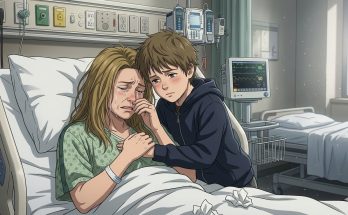
Sandra said she wanted to testify.
Not bargain.
Not negotiate.
Not ask what would happen to her trust.
Testify.
When Officer Bennett told me, I thought I had misheard him.
“What exactly did she say?”
He checked his notes.
“She said, ‘I don’t want Dad’s money if taking it means pretending I was less responsible than I was.’”
I looked down at Arthur’s wedding ring hanging against my chest.
That sentence sounded like the first thing Sandra had said all day that Arthur would have wanted to hear.
Not because it cleared her.
Because it didn’t.
Mr. Katz sat beside me in the command vehicle outside Mercer Tool.
He looked exhausted.
His tie was crooked now.
Arthur would have noticed.
Probably fixed it.
Then insulted the knot.
“What happens if Sandra testifies?” I asked.
“Depends on what she admits.”
“Could she go to prison?”
“Yes.”
He didn’t soften it.
“Could Roy?”
“Yes.”
“Diane?”
“Yes.”
“James?”
“Almost certainly faces serious exposure.”
I nodded.
“And the trusts?”
“Arthur gave the trustees discretion after full cooperation and restitution.”
“So cooperation doesn’t guarantee money.”
“No.”
“Good.”
Mr. Katz looked at me.
“You really don’t care who gets it.”
“I care that Arthur finally stopped using money to solve family problems.”
Katz smiled faintly.
“He said something similar.”
“Of course he did.”
Roy and Sandra were brought to a secure interview facility.
I did not go immediately.
Federal investigators wanted formal statements first.
No family conversations that could contaminate memories.
No rehearsing.
No aligning stories.
That mattered.
For once, everyone would speak separately.
Sandra first.
Her attorney sat beside her.
The interview was recorded.
I did not watch live.
I didn’t want to.
But hours later, after investigators approved limited disclosure, Bennett told me what she had admitted.
More than I expected.
Sandra admitted taking money from Margaret.
She admitted the gambling debt.
She admitted accepting medication from Samuel Pierce without knowing what it was.
She admitted continuing to give it even after Margaret said she wanted control of her own pills back.
She admitted forging Arthur’s signature on the first $48,000 check.
And the second.
She admitted taking cash from Arthur’s safe to pay James.
She admitted lying about Margaret’s hospital room.
About the syringe.
About returning after Pierce left.
About the envelope.
About knowing Pierce altered records.
About keeping quiet because Roy’s forged and genuine signatures could be used against him.
She admitted knowing Victor Hale’s name for years.
Knowing Jonathan Warren frightened Arthur.
Knowing Harold Pike had been part of the old cover-up.
She admitted all of it.
But the thing that surprised investigators most was what she refused to admit.
Murder.
Not because she was protecting herself.
Because she said:
“I don’t know who intended Mom to die, and I won’t say I do just because it makes my story cleaner.”
When Bennett told me that, I closed my eyes.
That was the first truly responsible thing Sandra had done.
Not turning suspicion into certainty.
Not making someone else carry every part of the blame.
Arthur had finally reached her.
Maybe Margaret had too.
Roy’s interview was next.
His confession was uglier in a different way.
Roy admitted signing blank business documents when he was young because Arthur trusted him and Roy wanted access to company perks without doing much of the work.
He admitted knowing Sandra moved money from Margaret’s accounts.
Not all of it.
Enough.
He admitted staying quiet after seeing Sandra take Margaret’s letter.
He admitted taking Arthur’s pills from hospice.
He explained why.
He thought he was protecting his father after Sandra told him the bottle had been switched.
He admitted keeping the bottle instead of turning it over.
Why?
Because Sandra never came to collect it.
And because Roy became frightened that possessing it made him look guilty.
So he hid it in the kitchen drawer.
Then forgot it was there.
Until Arthur found it.
Typical Roy.
Fear first.
Thinking later.
He also admitted the hospice papers.
That part made me angry all over again.
Roy and Sandra had brought Arthur documents they believed would make estate administration easier.
At least that was their phrase.
In reality, one document would have given Roy broad control over property if Arthur lost capacity.
Another would have allowed Sandra to access financial accounts.
Arthur was medicated.
They tried anyway.
Roy claimed he believed Arthur understood.
Sandra admitted she knew he was drifting in and out.
Neither document was validly signed.
Arthur let the pen fall.
Then opened one eye after they left.
Helen. First Tuesday.
I finally understood why that moment mattered so much.
It was not when Arthur began planning.
The plan was older.
It was when he decided his children were no longer entitled to the benefit of every doubt.
Later that evening, I saw them.
Roy first.
He sat across from me in a plain conference room.
No polished funeral suit.
No crooked tie.
No swagger.
Just Roy.
He looked at Arthur’s ring around my neck.
Then looked down.
“I’m sorry.”
I said nothing.
He swallowed.
“I know that doesn’t fix anything.”
“No.”
“I know saying Dad loved you won’t undo calling you the nurse like it was an insult.”
“No.”
“I know measuring the garage makes me look like exactly what I was.”
“What were you?”
He took a long time.
“Entitled.”
That was better than greedy.
Greed is wanting.
Entitlement is believing wanting makes something yours.
Roy continued.
“I thought Dad had already decided who mattered.”
“What does that mean?”
“Mom.”
I frowned.
“She was always the real wife.”
There it was.
The wound beneath the insult.
“I thought you were temporary.”
“Nine years?”
“I know how stupid that sounds.”
“It sounds cruel.”
He nodded.
“It was.”
I waited.
Roy stared at his hands.
“When Mom died, Dad changed.”
“I know.”
“He stopped talking to us about her.”
“Because he was guilty.”
“I know that now.”
“But back then, I thought he was erasing her.”
“And when he married me?”
“I thought you finished it.”
That hurt.
Not because I was surprised.
Because it explained so much.
“You thought loving me meant loving Margaret less.”
“Yes.”
“And Arthur?”
“He tried to tell me it didn’t.”
“But?”
“I didn’t want to hear it.”
I touched the ring.
Margaret’s words came back.
Love is not a chair with only one seat.
Roy had lived as if it were.
He had spent nine years defending a chair nobody was trying to take.
“I found her letter.”
Roy looked up.
“The one to me?”
“The one to whoever Arthur loved after her.”
His face changed.
“She wrote that?”
“Yes.”
“What did she say?”
“That if Arthur loved again, she hoped the woman loved him loudly.”
Roy looked away.
His eyes filled.
“Mom wrote that?”
“Yes.”
He cried then.
Quietly.
Not for money.
Not for himself.
For his mother.
Maybe for the first time, he understood that his loyalty to Margaret had become something she never asked him to carry.
After a while, he said:
“Can I read it someday?”
“Yes.”
That surprised him.
“You’d let me?”
“It belongs to the truth.”
Not to me.
Not to Sandra.
Not even Arthur.
He nodded.
Then he said:
“I don’t care about the trust.”
I watched him carefully.
“Are you sure?”
“No.”
That answer made me almost smile.
“At least you’re learning.”
He laughed weakly.
“I care.”
He admitted it.
“Of course I care.”
“I’ve spent most of my adult life expecting Dad to eventually fix things.”
“Bills.”
“Business mistakes.”
“Legal messes.”
“Everything.”
“And now?”
Roy looked at me.
“Maybe his last gift is not fixing this one.”
That was the first time I thought Roy might actually change.
Not because he apologized.
Because he understood what Arthur had stopped doing.
Saving him.
Sandra came in later.
She looked worse.
Eyes swollen.
No makeup.
Hair tied back.
She stood in the doorway for several seconds.
Then sat.
No hug.
No performance.
Just silence.
Finally:
“I took the silver.”
I almost laughed.
“After everything today, that is what you start with?”
“Yes.”
“Why?”
“Because it was the first thing I did that you saw.”
Fair.
“Where is it?”
“My basement.”
“I know.”
She looked surprised.
“Arthur knew.”
“Yes.”
“He told Mr. Katz.”
“Yes.”
“Do you want it back?”
“No.”
“What?”
“I want Margaret’s things returned to Melissa eventually.”
Sandra stared.
“Not me?”
“No.”
She nodded slowly.
That hurt her.
Good.
Some consequences should.
“I stole your key too.”
“No.”
She frowned.
“What?”
“The key at the funeral wasn’t mine.”
Her face changed.
“You found out.”
“Yes.”
“Dad mailed Melissa’s key.”
“Yes.”
Sandra almost laughed.
“He really did set us all up.”
“No.”
She looked at me.
“He predicted you.”
That was different.
Sandra looked down.
“I think that’s worse.”
“Probably.”
Silence.
Then she said:
“I hated you.”
“I know.”
“Not because you were a nurse.”
“I know.”
She looked up.
“Do you?”
“Yes.”
“Then why?”
“Because Arthur became gentler with me than he was with you.”
Her face collapsed.
That was it.
Not younger woman.
Not nurse.
Not inheritance.
The gentleness.
Arthur had spent decades with his children carrying guilt and disappointment.
With me, he had entered a different chapter.
Older.
Sicker.
Tired of fighting.
Sandra saw tenderness and interpreted it as theft.
She whispered:
“He used to look at Mom that way.”
“I know.”
“And then he looked at you that way.”
“Yes.”
“It felt like he gave you something that belonged to her.”
“No.”
“I know that now.”
She wiped her face.
“Mom said that too, didn’t she?”
“Yes.”
“How?”
I told her.
Love is not a chair with only one seat.
Sandra cried.
Then laughed once through it.
“She always said things like that.”
“I would’ve liked her.”
Sandra nodded.
“She would’ve liked you.”
That surprised me more than anything.
“Why do you say that?”
“Because you tell people no.”
I almost smiled.
Apparently Margaret and Sandra agreed on one thing.
Then Sandra’s expression changed.
“Helen.”
“What?”
“There’s something I didn’t tell investigators yet.”
My body tightened.
“Then you should have.”
“I remembered after.”
“What?”
“Last Tuesday.”
Arthur’s final confrontation with James and Diane.
“What about it?”
“Dad called me afterward.”
My pulse jumped.
“When?”
“Late afternoon.”
“What did he say?”
“He asked whether I remembered something from childhood.”
“What?”
“A green tin.”
I frowned.
“No idea.”
Sandra continued.
“Mom kept one in the pantry.”
“What was inside?”
“Cash.”
Roy had told me Margaret helped Sandra financially.
“Emergency money?”
“Yes.”
“But Dad asked about a childhood tin?”
“Yes.”
“Why?”
“He asked where it went after Mom died.”
“What did you tell him?”
“That I took it.”
Of course.
“How much?”
“Not much by then.”
“What did you do with it?”
“I kept the tin.”
“Where?”
“In my attic.”
“Why does it matter?”
“I don’t know.”
“What did Arthur say?”
Sandra swallowed.
“He said, ‘Good. Don’t open the bottom.’”
My stomach tightened.
False bottom.
Of course.
“Did you?”
“No.”
“Why?”
“Because Dad sounded strange.”
“Strange how?”
“Afraid.”
Arthur had just confronted James.
Learned more about Diane.
Maybe he suddenly remembered something Margaret had hidden decades earlier.
“Where is the tin?”
Police still had access to Sandra’s house.
The attic was searched.
Green metal tin.
Old flour logo.
Inside:
A few yellowed bills.
Buttons.
Receipts.
Then the false bottom.
Under it—
a small folded map.
Mercer Tool & Die.
Hand-drawn.
Margaret’s handwriting.
One section circled.
OLD FURNACE ROOM.
Mr. Katz looked at the transmitted image.
“Was that part of the plant searched?”
Officer Bennett checked.
No.
Not yet.
Why would Margaret hide a map to a furnace room?
Sandra whispered:
“Mom hated that room.”
“Why?”
“Too hot.”
“That cannot be the reason.”
“She also said Dad never went there.”
My pulse jumped.
A place nobody expected Arthur to use.
A place emotionally invisible.
Margaret’s favorite kind of hiding place.
Search teams entered the old furnace wing.
Long abandoned.
Rust.
Dust.
Brick.
Nothing obvious.
Then behind an old maintenance panel they found a metal tube.
Inside:
Documents.
A photograph.
And one sealed letter.
Not to Arthur.
Not to Roy.
Not to Sandra.
To:
MY CHILDREN.
My chest tightened.
Margaret had written directly to them.
Twenty-six years ago.
Maybe before she became sick.
Maybe after Thomas died.
Investigators preserved it.
Roy and Sandra were allowed to hear the letter later with counsel present.
I sat with them.
Not because I belonged to the letter.
Because both asked me to stay.
Margaret wrote:
Roy and Sandra,
If you are reading this, then your father finally stopped protecting you from something you need to know.
Roy closed his eyes.
Sandra cried immediately.
Margaret continued:
I love you both.
That is why I am writing this while I am still angry enough to be clear.
Your uncle Thomas is dead.
The police say accident.
I do not believe them.
Your father does not either.
My pulse jumped.
This letter was written shortly after Thomas’s death.
Arthur and Margaret both knew.
Margaret continued:
Your father wants time.
I agreed.
That was my decision too.
Do not ever let anyone tell you Arthur forced my silence.
He did not.
I chose it.
Roy started crying.
Sandra covered her mouth.
This mattered.
Margaret was taking ownership of her own mistake.
We thought we could protect you first and tell the truth second.
We were wrong.
My throat tightened.
How many years before Arthur finally repeated the same lesson?
Margaret continued:
Roy, some documents carry your signature.
Some are yours.
Some are not.
You were careless.
Carelessness is not innocence.
Roy lowered his head.
Sandra:
You took money you had no right to take.
You let fear turn one lie into ten.
Fear is not innocence either.
Sandra sobbed.
Then:
But neither of you should spend your lives believing the worst thing you did is the only thing you are.
I closed my eyes.
Arthur had used almost the same words to me about himself.
One mistake should not erase every good thing.
But love should not erase the mistake.
Margaret continued:
If your father and I fail to fix this, you may someday inherit the consequences.
Not the money.
The consequences.
Roy looked at Sandra.
Neither spoke.
Then:
Do not spend your life asking which parent failed you more.
We both failed.
We both loved you.
Both can be true.
I cried then.
So did they.
The final paragraph:
And if Arthur someday loves someone after me, do not punish her for surviving a life I did not get to finish.
Sandra made a sound.
Small.
Broken.
Margaret continued:
She will not be stealing my place.
There is no place to steal.
People are not furniture.
Despite everything, I laughed through tears.
Margaret really hated the chair metaphor.
Then:
If she is kind to him, be kind to her.
If she is not, protect him.
But judge her for what she does.
Not for arriving after I am gone.
Love,
Mom
Nobody spoke.
Roy stared at me.
Sandra could barely breathe.
I did not say:
See?
I did not need to.
Their mother had done it for me twenty-six years ago.
Then Officer Bennett entered.
His face told me the furnace room had given us more than the letter.
“What?”
I asked.
“There was a photograph inside the tube.”
“Of what?”
He placed a copy on the table.
Margaret.
Thomas.
Arthur.
And a fourth person.
Young.
Very young.
Maybe nineteen.
I stared.
“Who is she?”
Roy went pale.
Sandra whispered:
“No.”
“What?”
Neither answered.
“Who?”
Sandra looked at the photograph.
“That’s Mom.”
“I know Margaret.”
She shook her head.
“Not her.”
She pointed to the young woman beside Thomas.
“She was our half-sister.”
The room went silent.
“What?”
Roy covered his face.
Sandra whispered:
“Her name was Laura.”
Arthur had another child?
No.
Sandra corrected me before I could ask.
“Mom’s daughter.”
My stomach dropped.
“Before Arthur?”
“Yes.”
“Did Arthur know?”
“Yes.”
“Where is Laura?”
Neither answered.
Finally Roy whispered:
“We were told she died.”
My skin chilled.
“When?”
“Twenty-five years ago.”
One year after Thomas.
“How?”
Sandra looked terrified.
“Car accident.”
Of course.
Another accident.
Officer Bennett said quietly:
“There’s a note on the back.”
Margaret’s handwriting.
LAURA KNOWS WHERE THOMAS KEPT THE SECOND BOOK.
My heartbeat changed.
Second book.
And beneath that:
IF ANYTHING HAPPENS TO HER, IT WAS NOT AN ACCIDENT.
No one breathed.
Twenty-five years ago, Margaret had already suspected the story would repeat.
Thomas.
Then Laura.
I looked at Roy.
“You said Laura died.”
“That’s what Mom told us.”
“Did you see a funeral?”
“No.”
“Body?”
“No.”
“Death certificate?”
“We were kids.”
Sandra whispered:
“Mom stopped saying Laura’s name after that.”
Officer Bennett looked at the photograph.
“We’re checking.”
Databases.
Old records.
Death certificate.
Laura Bell.
Age twenty.
Vehicle accident.
Signed by—
I already knew before Bennett said it.
Dr. Samuel Pierce.
Impossible.
Pierce was younger then, but practicing.
Another death certificate.
Another accident.
Another Bell family member connected to the same network.
Then Bennett looked up.
“There’s a problem.”
“What?”
“The Social Security number on Laura’s death record was used again.”
My skin went cold.
“When?”
“Years later.”
“Meaning?”
“Either identity theft…”
A pause.
“…or Laura Bell may not have died.”
Roy stared.
Sandra stopped crying.
And I suddenly understood why Margaret’s old letter to her children had been hidden with the photograph.
Why Arthur’s last Tuesday had reopened family secrets beyond Thomas.
Why James and Diane were only part of what he discovered.
Somewhere inside Arthur’s twenty-six-year cleanup, there might still be another living witness.
Margaret’s daughter.
Roy and Sandra’s half-sister.
Laura.
And if she was alive, she might know where Thomas Bell’s second book had been hidden all these years.
PART 27 — LAURA BELL WAS NEVER DEAD
Laura Bell.
Margaret’s first daughter.
Roy and Sandra’s half-sister.
Declared dead twenty-five years ago.
And yet her Social Security number had been used years later.
For several seconds, nobody in the room spoke.
Roy stared at the old photograph.
Sandra stared at nothing.
I looked at Officer Bennett.
“Can you tell when her number was used?”
He nodded.
“First confirmed activity was seventeen years ago.”
“Where?”
“New Mexico.”
“Employment?”
“Yes.”
“Name?”
“Not Laura Bell.”
“What name?”
“Laura Bennett.”
Officer Bennett’s eyebrows rose.
“Not related.”
“Good.”
He continued.
“Then another employment record fourteen years ago in Arizona.”
“Same name?”
“No.”
“Laura Jensen.”
Mr. Katz frowned.
“She changed identities.”
“Maybe.”
“Or someone used the number.”
“Exactly.”
No assumptions.
That lesson had become automatic now.
Sandra whispered:
“Mom knew.”
Everyone looked at her.
“What?”
“She knew Laura was alive.”
Roy turned sharply.
“No.”
“Yes.”
“How?”
Sandra looked at the photograph.
“I remember something.”
Roy laughed bitterly.
“Of course you do.”
She ignored him.
“After Laura supposedly died, Mom started getting postcards.”
My pulse jumped.
“From where?”
“Different states.”
“What did they say?”
“Almost nothing.”
“Examples?”
Sandra closed her eyes.
“One said, ‘Still moving.’”
Another:
“‘I’m okay.’”
Then:
“‘Don’t tell him.’”
My skin chilled.
“Who was ‘him’?”
Sandra shook her head.
“I always thought Arthur.”
Roy stared at her.
“Why would Laura hide from Dad?”
“I don’t know.”
“Did Arthur know about the postcards?”
“No.”
“You’re sure?”
Sandra hesitated.
“No.”
There.
Not sure.
I asked:
“Who collected the mail?”
“Mom.”
“Could she have hidden them?”
“Yes.”
“Did you ever see a return address?”
“No.”
“Postmarks?”
“Some.”
“Do you remember any?”
Sandra frowned.
“Santa Fe.”
Officer Bennett immediately wrote it down.
New Mexico.
Where Laura’s Social Security number resurfaced seventeen years ago.
Another connection.
Roy whispered:
“Why would Mom tell us Laura died if she knew she was alive?”
Evelyn answered quietly.
“To protect her.”
Everyone turned.
“You knew Laura?”
“Yes.”
“How?”
“She worked at Mercer Tool for one summer.”
My stomach tightened.
“What did she do?”
“File room.”
Mr. Katz leaned forward.
“Records?”
“Yes.”
“Vendor files?”
“Some.”
“Payroll?”
“Some.”
“She had access.”
“Yes.”
“And Thomas’s second book?”
Evelyn nodded slowly.
“She may have found it.”
“What was it?”
“Not a ledger.”
“What then?”
“A contact book.”
Names.
Numbers.
Meetings.
People Thomas suspected.
“Why call it a book?”
“Because Thomas called everything a book.”
I almost smiled.
Arthur would have liked him.
“What was in it?”
“I never saw the whole thing.”
“Who did?”
“Thomas.”
“Margaret.”
“And Laura?”
“I think so.”
“Why would Laura become involved?”
Evelyn’s face changed.
“Because she overheard something.”
“What?”
“Victor and Warren arguing.”
“When?”
“After Thomas died.”
My skin chilled.
“Where?”
“Mercer Tool.”
“Laura was there?”
“Yes.”
“Why?”
“She came looking for Margaret.”
“What did she hear?”
Evelyn shook her head.
“I only know what Margaret told me later.”
“What?”
“That Laura heard Warren say Thomas should never have been allowed to keep copies.”
Officer Bennett leaned forward.
“Anything else?”
“She heard Victor say someone else had seen the records.”
“Who?”
“Laura thought they meant her.”
My stomach tightened.
“So she ran.”
“Not immediately.”
“What happened first?”
“Margaret hid her.”
“Where?”
Evelyn looked toward the old family photograph.
“At the lake.”
Lake Briar.
Again.
“Which cabin?”
“Margaret’s mother’s cabin.”
The one Arthur later put in Melissa’s trust.
My chest tightened.
So that property had protected Laura decades before it protected evidence.
“How long?”
“Several weeks.”
“Then?”
“Laura disappeared.”
“On her own?”
Evelyn hesitated.
“With help.”
“Whose?”
“I don’t know.”
Sandra whispered:
“Mom.”
Probably.
Maybe Arthur too.
I asked:
“Why fake Laura’s death?”
Evelyn looked at me.
“To make Victor stop looking.”
“Did it work?”
“For a while.”
“Who created the death certificate?”
“Pierce.”
There it was.
Again.
Pierce had falsified Laura’s death years before Margaret’s.
Meaning he was already working with Warren and Victor long before Margaret died.
That mattered.
Officer Bennett was immediately calling investigators handling Pierce.
Then Mr. Katz said:
“Wait.”
“What?”
“If Laura’s death was falsified twenty-five years ago, there must be supporting records.”
“Police report.”
“Funeral record.”
“Insurance.”
“Maybe.”
“And who handled them?”
We started checking.
Police report signed by Harold Pike.
Of course.
Vehicle recovered burned.
No body conclusively identified.
Dental confirmation supposedly used.
Dentist listed:
Dr. Alan Reeve.
Deceased now.
But the dental chart had been supplied through Jonathan Warren’s office.
Mr. Katz closed his eyes.
“They built the whole death.”
Yes.
Not one fake paper.
A system.
Vehicle.
Report.
Dental record.
Certificate.
Enough documents that nobody would question the absence of a funeral.
Roy whispered:
“Dad knew?”
I looked at him.
“Maybe not then.”
Sandra said:
“Mom never told him.”
“How do you know?”
“Because when Dad talked about Laura later, he called it the worst thing Margaret ever survived.”
My chest tightened.
Arthur believed Laura died.
That meant Margaret may have hidden the truth even from him.
Why?
Because Arthur protected family.
And Margaret had learned that anyone Arthur loved could become leverage.
Maybe she thought not knowing was safer.
The irony was brutal.
Arthur later did exactly the same thing to me.
Evelyn whispered:
“Margaret learned compartmentalization before Arthur did.”
Yes.
From survival.
Officer Bennett’s phone rang.
Investigators had located one of Laura’s employment records.
Arizona.
Employer:
Sagebrush Assisted Living.
Seventeen years ago.
Then another.
Santa Fe Community Pharmacy.
Fourteen years ago.
Then a tax record ten years ago.
Oregon.
Different surname.
Then nothing.
“What happened after ten years ago?”
No activity under that Social Security number.
Could mean death.
Could mean another identity.
Could mean she finally obtained legitimate new documentation.
Then Bennett said:
“There is one recent hit.”
Everyone froze.
“How recent?”
“Six months ago.”
My pulse jumped.
“Where?”
“Here.”
Silence.
“What do you mean here?”
“This county.”
My stomach dropped.
“What kind of hit?”
“Utility service.”
“Name?”
He read:
Laura Bennett.
Address:
Millbrook.
I stood.
“Millbrook?”
The diner.
Storage facility.
Arthur’s old route.
Everything seemed to converge there.
“What address?”
A small cottage on Birch Lane.
Three miles from Millbrook Storage.
Officer Bennett immediately sent local units.
No rushing inside.
Verify occupancy.
Observe first.
Then he looked at me.
“Arthur may have found her.”
My heart pounded.
Six months ago.
The same time Arthur found Carolyn.
The same time he reopened everything.
Maybe the blue box led him to Laura.
Maybe Laura led him to James.
Maybe the last Tuesday was the end of a chain Arthur had been rebuilding for months.
Roy whispered:
“Why wouldn’t Dad tell us?”
Sandra answered before anyone else.
“Because he didn’t trust us.”
Roy flinched.
No one corrected her.
Then my phone buzzed.
Unknown number.
A photograph.
An old woman sitting on a porch.
Gray hair.
Thin.
Alive.
Underneath:
YOU ARE LOOKING FOR LAURA.
My heart stopped.
Another message:
STOP SENDING POLICE TO HER HOUSE.
Officer Bennett leaned over.
“How would they know?”
Maybe cameras.
Maybe someone watching.
Then a third message:
SHE WILL SPEAK TO HELEN.
ONLY HELEN.
Of course.
Bennett said:
“No.”
I almost smiled.
“We’ve done this before.”
“And the answer remains no.”
Then another message arrived.
ARTHUR SAID YOU WOULD ARGUE.
Mr. Katz laughed.
Bennett looked offended.
Another:
HE ALSO SAID BENNETT WOULD SAY NO.
I stared at Officer Bennett.
He stared at me.
“I dislike your husband posthumously.”
“Many people do.”
Then:
TELL HIM TO CHECK THE BLUE MAILBOX.
Bennett immediately called the officers already near the cottage.
Blue mailbox at property.
Inside:
A sealed envelope.
Arthur’s handwriting.
OFFICER BENNETT — LET HELEN CHOOSE.
Bennett closed his eyes.
Mr. Katz was openly laughing now.
“I hate both Mercers.”
The envelope was documented and read by officers.
Arthur wrote:
If Laura is alive and asking for Helen, she has a reason.
Do not send Helen alone.
Do not let Laura know how many officers are nearby.
And for once, Bennett, stop saying no before people finish the sentence.
Bennett muttered something impolite.
Then Arthur continued:
Laura has spent twenty-five years running from men who used authority as camouflage.
A wall of uniforms will not make her feel safe.
Give Helen five minutes.
If Laura wants to leave, let her.
If she wants police, bring them.
If she wants Katz, God help her.
Mr. Katz nodded.
“Fair.”
Arthur ended:
Trust Helen’s judgment.
She has better instincts than I did.
Bennett folded the note.
“I’m going to regret this.”
Probably.
An hour later, I stood at the end of Birch Lane.
Not alone.
Bennett and two plainclothes officers stayed out of direct sight.
Mr. Katz remained in the car.
The cottage was small.
White siding.
Blue mailbox.
Porch swing.
Nothing dramatic.
I walked up alone.
The woman in the photograph was waiting.
She opened the door before I knocked.
“Mrs. Mercer.”
“Helen.”
She studied me.
Then:
“You look older than Arthur’s pictures.”
I almost laughed.
“He had optimistic photography.”
She smiled.
“Come in.”
I did.
The house smelled like tea and cedar.
No clutter.
No photographs visible.
A person who spent years disappearing probably learned not to decorate with evidence.
She sat across from me.
“I’m Laura.”
I believed her face before I believed the name.
Margaret’s eyes.
Same shape.
Same directness.
“You knew Arthur?”
“Yes.”
“When?”
“Six months ago.”
“He found you.”
“No.”
She smiled faintly.
“I found him.”
That surprised me.
“How?”
“Carolyn.”
Of course.
The hidden women had found one another.
“Why contact Arthur?”
“Because Margaret was gone.”
“Your mother.”
Laura’s face softened.
“Yes.”
“Did you know she died?”
“Immediately.”
“How?”
“Carolyn sent word.”
“Why didn’t you come back?”
Laura looked at me for a long time.
“Because the people who killed Thomas were still powerful.”
“And you thought they killed Margaret too.”
“Yes.”
“Did you know Pierce gave her medication?”
“Not until Carolyn found me years later.”
“When?”
“Ten years ago.”
“Then why wait?”
“Because we still had no safe way to prove the whole network.”
“What changed six months ago?”
“Arthur found Margaret’s blue box.”
I nodded.
“And Carolyn told him I was alive.”
“Yes.”
“What did Arthur say when he saw you?”
Laura’s eyes filled.
“He cried.”
My throat tightened.
“Did he know your death was fake?”
“No.”
“He believed you died for twenty-five years.”
“Yes.”
“Did he blame himself?”
“Immediately.”
Of course.
“What did you tell him?”
“That Mom made the decision.”
“To hide you?”
“Yes.”
“With your consent?”
“Yes.”
“You were twenty.”
“Old enough to be terrified.”
Fair.
“Why didn’t Margaret tell Arthur?”
Laura looked at me.
“Because Arthur couldn’t keep a secret from people he loved if he believed they were suffering.”
That sounded contradictory.
She explained:
“He would have gone looking for me.”
“Which would expose you.”
“Yes.”
“He would have tried to rescue me.”
“Yes.”
“And Margaret knew Victor would follow.”
“Yes.”
So she let Arthur grieve a living daughter to keep Laura alive.
Terrible.
Maybe necessary.
Maybe not.
But her choice.
I asked:
“Where did you go?”
“First New Mexico.”
“Then Arizona?”
She nodded.
“Then Oregon.”
“Different names.”
“Yes.”
“Legal?”
“Some later.”
I didn’t ask for details.
Not my role.
“What is Thomas’s second book?”
Laura looked toward the kitchen.
Then back.
“Why do you think it still exists?”
“Margaret’s note.”
She smiled faintly.
“Mom never trusted one copy.”
Apparently hereditary.
“What is it?”
“A pocket address book.”
“Names?”
“Not just names.”
“What else?”
“Dates Thomas met people.”
“Phone numbers.”
“Account numbers.”
“License plates.”
“Personal notes.”
“Did it identify Victor?”
“Yes.”
“Warren?”
“Yes.”
“Pike?”
“Yes.”
“James and Diane?”
Laura nodded.
“Arthur?”
My chest tightened.
“Yes.”
I swallowed.
“What does it say about Arthur?”
Laura watched me carefully.
“Do you really want to know?”
“Yes.”
“Even if it hurts him?”
“Yes.”
Something in her expression softened.
“Then Arthur was right about you.”
My eyes filled unexpectedly.
She stood.
Went to the kitchen.
Returned with a small leather book.
No drama.
No hidden wall.
Just an old book wrapped in a dish towel.
She placed it on the table.
“Thomas gave this to me three days before he died.”
I stared.
“You’ve had it twenty-six years?”
“Yes.”
“Why not give it to Arthur six months ago?”
“Because I wanted to know what he remembered first.”
My skin chilled.
“You tested him.”
“Yes.”
“Why?”
“Because Mom spent years protecting Arthur from the full truth.”
“What truth?”
“That Thomas suspected Arthur too.”
My stomach tightened.
Victor had said Margaret initially suspected Arthur.
We knew.
Laura continued.
“Thomas did not think Arthur was part of Victor’s network.”
“Then?”
“He thought Arthur was being deliberately kept ignorant by James.”
“That fits.”
“But he also wrote one thing.”
She opened the book.
Found a page.
Pointed.
A.M. — WARNED ONCE. DID NOTHING.
My chest hurt.
“When?”
“Months before Thomas died.”
“Warned about what?”
“Fake vendors.”
“Who warned him?”
“Thomas.”
Silence.
Arthur had been warned.
He failed to act.
Before the murder.
Before the settlement.
Before every excuse.
“What happened?”
“Arthur thought Thomas was angry at James.”
“Why?”
“They disliked each other.”
“So Arthur dismissed it as family conflict.”
“Yes.”
There it was.
The earliest failure.
Not signing.
Not silence after murder.
Not protecting Roy.
Just not listening.
A warning.
Ignored.
The smallest choice.
Maybe the most expensive.
Laura continued.
“Thomas wrote that Arthur promised to review vendor files.”
“Did he?”
“No.”
“How do you know?”
“Thomas checked.”
I looked at the line again.
WARNED ONCE. DID NOTHING.
Arthur had never told me that.
Even in his final letters.
Maybe he planned to.
Maybe he didn’t remember.
Maybe this was the page he never found.
“Did Arthur know this book existed?”
“Yes.”
“When?”
“Last Tuesday.”
My heart jumped.
“You showed him.”
“Yes.”
“What did he do when he read that?”
Laura’s face softened.
“He sat down.”
“What did he say?”
“Nothing for a long time.”
“Then?”
“He said, ‘That was before Thomas died.’”
“Yes.”
“He said, ‘I could have stopped it earlier.’”
My throat tightened.
Maybe.
Maybe not.
We cannot know.
But Arthur would carry it as if certainty existed.
“What did you tell him?”
“That Victor was responsible for Victor.”
“Warren was responsible for Warren.”
“James for James.”
“Arthur for Arthur.”
Margaret’s lesson.
Responsibility layered.
Not transferred.
“What did Arthur say?”
Laura smiled sadly.
“He said Helen would say the same.”
I looked away.
“Why keep the book after that?”
“Arthur asked me to.”
“Why?”
“He said there was still one name he didn’t understand.”
“What name?”
Laura flipped toward the back.
One page.
Initials.
C.M.
Beside it:
BANK / TRUST / BELL FUNDS.
I frowned.
“Who is C.M.?”
Laura shook her head.
“Arthur didn’t know.”
“Thomas?”
“Apparently did.”
“Any clue?”
A phone number.
Old.
No longer active.
Business address.
I read it.
Mercer Community Bank.
My stomach tightened.
Arthur’s family bank.
“C.M. worked there?”
“Probably.”
“What role?”
Unknown.
Then Laura said:
“Arthur believed C.M. was the person who moved money after Thomas died.”
“Victor’s money?”
“Some.”
“Bell family money?”
“Yes.”
“Margaret’s?”
“Yes.”
“Why does that matter?”
Laura looked directly at me.
“Because part of Thomas’s estate disappeared.”
“How much?”
“Almost nine hundred thousand dollars.”
My breath caught.
Twenty-six years ago, huge money.
“Where did it go?”
“That is what Thomas was investigating before he died.”
I stared.
We thought Thomas confronted Victor about bribery.
Land deals.
Mercer Tool.
Maybe there was another motive.
Money from Thomas himself.
“Did Margaret inherit?”
“She should have.”
“Did she?”
“Only part.”
“Who controlled the estate?”
Laura opened another page.
C.M. — EXECUTOR CONTACT.
My skin chilled.
“C.M. may have handled Thomas’s estate.”
“Yes.”
“Who was executor?”
“Margaret.”
I frowned.
“Then why need C.M.?”
“Bank administrator.”
Trust department maybe.
Officer Bennett entered only after I signaled.
I told him enough.
He immediately began checking historical bank employees.
Mercer Community Bank.
Twenty-six years ago.
C.M.
Trust department.
One result.
Charles Mercer.
My stomach dropped.
“Another Mercer?”
Laura closed her eyes.
“You found him.”
“Who is Charles?”
She looked at me.
“Arthur’s father.”
Silence.
Arthur’s father.
The man whose oak desk hid evidence.
The man dead thirty-four years?
No.
Timeline problem.
Thomas died twenty-six years ago.
Arthur’s father supposedly died thirty-four years ago.
So not him.
Bennett rechecked.
Different Charles Mercer.
Arthur’s cousin.
Senior vice president at Mercer Community Bank.
Roy and Sandra had never mentioned him.
“Alive?”
Bennett checked.
“Yes.”
Age eighty-seven.
Retired.
Living in assisted care.
Laura whispered:
“He’s the one Arthur never found.”
My pulse jumped.
“Arthur searched?”
“For six months.”
“He knew C.M. was Charles?”
“Last Tuesday he thought so.”
“Did he contact him?”
“No.”
“Why?”
“He ran out of time.”
The words hurt.
Cancer.
Arthur died before the last door opened.
I looked at the little book.
Twenty-six years.
Thomas had one more name.
One more financial trail.
Maybe the oldest one.
“What did Charles do?”
Laura shook her head.
“I only know Mom hated him.”
“Why?”
“He told her Thomas’s estate was insolvent.”
“But it wasn’t?”
“Thomas owned land.”
“Partnership interest.”
“Accounts.”
“Where did they go?”
“That is the question.”
Officer Bennett arranged contact with Charles Mercer’s care facility.
He was cognitively intact enough for conversation.
Investigators would handle formal questioning.
But then staff said something strange.
Charles had a visitor.
Regularly.
Once a month.
For the last six months.
My pulse changed.
“Who?”
Visitor log.
Arthur Mercer.
I closed my eyes.
Of course.
First Tuesday?
No.
Different dates.
Arthur had been seeing Charles too.
The secret monthly visits were bigger than Mr. Katz’s office.
Sometimes Daniel drove him.
Sometimes other people.
Arthur had spent his final months tracing the oldest money.
“What did they talk about?”
Unknown.
Then the facility said Arthur had left something in Charles’s room after his last visit.
A sealed envelope.
Marked:
FOR HELEN — AFTER LAURA.
My eyes filled.
Arthur had gotten there before us again.
Not because he knew everything.
Because he knew exactly which question would come next.
The envelope was preserved and read remotely.
Helen,
If Laura gave you Thomas’s book, then she trusts you.
Do not waste that.
My throat tightened.
Charles Mercer knows where Thomas’s missing estate went.
I stared.
Arthur continued:
He did not steal it.
That surprised everyone.
He hid it.
“Why?”
The letter answered.
Margaret asked him to.
Laura stood.
“What?”
Her face went white.
“My mother?”
Arthur wrote:
After Thomas died, Margaret realized Victor would seize anything he could reach through partnership claims.
She asked Charles to move part of Thomas’s assets into a private trust outside the estate.
Mr. Katz frowned.
“Potentially improper, depending on structure.”
Arthur continued:
It may have been legally questionable.
It was morally intended to keep the money away from Victor.
There it was again.
Nothing clean.
No saints.
“What happened to the trust?” I whispered.
Arthur wrote:
Charles says Margaret gave him one instruction.
Do not release it to Roy.
Do not release it to Sandra.
Do not release it to Arthur.
Laura stared.
“Then who?”
Arthur continued:
Hold it until Laura comes home.
The room went completely still.
Thomas’s missing estate.
Not stolen.
Hidden for Laura.
Margaret’s daughter.
The daughter officially dead.
The trust had been waiting twenty-five years.
Laura sat down slowly.
“No.”
I looked at her.
“What?”
“I don’t want it.”
Nobody had even told her the amount yet.
Arthur’s letter did.
Current value, after decades of conservative investment:
$6.8 million.
Laura covered her face.
“No.”
I understood.
Money attached to death rarely feels like wealth.
It feels like weight.
Arthur continued:
Laura may refuse it.
That is her right.
If she does, the trust converts to the Margaret Bell Foundation.
My throat tightened.
Same foundation Arthur would later give the house to.
He had connected Thomas’s hidden estate to Margaret’s future work.
Then:
Helen, do not persuade Laura either way.
I almost smiled.
“Bossy even dead.”
Laura laughed through tears.
Arthur continued:
This is not your decision.
Your job is only to make sure nobody takes the choice from her again.
That line silenced me.
Yes.
Choice.
Laura had spent twenty-five years having choices made around her.
Hide.
Run.
Change names.
Stay dead.
Arthur wanted the final decision to belong to her.
The letter ended:
Charles also knows one thing I could not verify.
Ask him who convinced Margaret to fake Laura’s death.
Laura stared.
“What?”
She thought Margaret made the plan.
Maybe not alone.
Officer Bennett arranged the call.
Charles Mercer appeared on video later that afternoon.
Very old.
Thin.
Sharp eyes.
He looked at Laura and immediately cried.
“Little Laura.”
She covered her mouth.
“You knew I was alive.”
“Yes.”
“For twenty-five years?”
“Yes.”
“Why didn’t you tell Arthur?”
“Margaret made me swear.”
Laura shook her head.
“She made everyone swear.”
Charles smiled sadly.
“She was good at that.”
I asked:
“Who helped Margaret fake Laura’s death?”
Charles looked at me.
“You must be Helen.”
“Yes.”
“Arthur talked about you.”
“Apparently everybody heard a lot.”
He smiled.
Then became serious.
“Margaret didn’t create Laura’s death alone.”
“Who helped?”
Charles hesitated.
“Harold Pike.”
The retired police chief.
Laura went pale.
“What?”
Why would Pike help hide Laura?
He had helped cover Thomas’s murder.
He worked with Victor.
Charles continued.
“Pike came to Margaret.”
“When?”
“Two days after Laura disappeared from the lake cabin.”
“Why?”
“He said Victor was looking for her.”
“Why warn Margaret?”
“Because Pike had started regretting Thomas.”
My stomach tightened.
Pike had not become good.
But guilt had started cracking him early.
“What did he offer?”
“To create a death record.”
“Why?”
“So Victor would stop searching.”
“Did Victor know Pike helped?”
“No.”
That changed Pike’s story slightly.
Still corrupt.
Still part of murder cover-up.
But also the man who later helped save Laura.
Responsibility layered.
Again.
“What did Margaret give Pike in exchange?”
Charles looked away.
“Nothing.”
“Then why help?”
“He said Thomas’s face wouldn’t leave him alone.”
Silence.
Not redemption.
But maybe the beginning of regret.
Charles continued.
“Pike arranged the burned car.”
“Pierce signed the certificate.”
“Warren supplied dental paperwork.”
I froze.
“Warren helped fake Laura’s death too?”
“Yes.”
“How?”
“He didn’t know Laura was alive.”
“What?”
“Pike told him the body was unrecoverable.”
“So Warren thought Laura actually died?”
“Yes.”
My skin chilled.
Pike used Warren’s own system against him.
A fake death built by corrupted institutions—but this time to protect someone.
The same machinery.
Different purpose.
Terrible and ingenious.
“Did Victor believe it?”
“Yes.”
“Then Laura escaped.”
“Yes.”
“With whom?”
Charles looked at Laura.
“Your mother.”
Laura started crying.
“Mom drove me?”
“Part way.”
“I don’t remember.”
“You were terrified.”
“Where did she take me?”
“New Mexico.”
“Who met us?”
Charles hesitated.
Then:
“Evelyn.”
Evelyn covered her mouth.
“I forgot.”
Not literally.
Trauma.
Fear.
Years.
She had helped Laura disappear before Arthur later helped Evelyn disappear.
The women had saved each other in a chain Arthur only discovered decades later.
Then Charles said:
“There was one more person.”
My stomach tightened.
“Who?”
“Arthur.”
Laura stared.
“No.”
Charles nodded.
“Arthur drove the second car.”
“No.”
“He knew?”
“Not that you were alive.”
“What?”
Charles explained.
“Margaret told him they were moving evidence out of state.”
Arthur drove without knowing Laura was hidden in Evelyn’s vehicle ahead.
Again.
Compartmentalization.
Margaret protected Laura even from Arthur while using Arthur to help the escape.
Laura laughed through tears.
“That is insane.”
“Yes.”
Charles smiled sadly.
“It was also your mother.”
Then he looked at me.
“Arthur found out six months ago.”
“I know.”
“He was furious.”
“At Margaret?”
“At himself.”
Of course.
“He told me he had spent twenty-five years grieving a daughter he could have protected.”
“What did you tell him?”
“That if Margaret had told him, he would have gone after Victor.”
True.
“And Arthur?”
“He said, ‘Exactly.’”
I closed my eyes.
He finally understood why Margaret hid Laura.
It was the same reason he later hid things from me.
Not lack of trust.
Too much certainty about what love would make someone do.
Charles continued:
“Arthur asked me to hold the trust until Laura chose.”
“And if she never came?”
“Foundation.”
Laura stared at the floor.
Then asked:
“Did Mom ever visit you?”
“Every year until she became too sick.”
My throat tightened.
Margaret had maintained Laura’s future quietly.
“Did she ask about the money?”
“Never.”
“What did she ask?”
Charles smiled.
“Whether you were alive.”
Laura began sobbing.
That was all.
Not investment returns.
Not legal structure.
Alive.
Then Charles said:
“She left one thing with me.”
Of course.
“What?”
“A letter.”
“For Laura?”
“Yes.”
“Where?”
Charles opened a drawer beside his chair.
Staff assisted.
Old envelope.
LAURA.
Margaret’s handwriting.
Laura whispered:
“I don’t know if I can.”
I remembered Arthur’s instruction.
Do not persuade her.
So I said nothing.
She looked at me.
“You’re not going to tell me to open it?”
“No.”
“Why?”
“Because Arthur told me not to take choices from you.”
Laura laughed through tears.
“Sounds like he learned something.”
“Yes.”
Finally.
She chose to open it.
Margaret’s letter began:
My Laura,
If you are reading this, then either I became brave enough to bring you home or I died before I could.
Laura covered her mouth.
Margaret continued:
I am sorry I made your life disappear to save it.
There may never be a sentence that explains what that cost you.
Then:
Arthur does not know.
Do not hate him for that.
This was my decision.
I knew if he knew you were alive, he would come for you.
And Victor would follow him.
Laura cried harder.
Then:
Someday Arthur may understand why I chose silence.
If he does, tell him I am sorry I taught him the wrong lesson.
My chest tightened.
The wrong lesson.
Margaret knew.
She had hidden Laura successfully.
But Arthur learned from it that concealment could protect people.
Then he used silence again and again.
Until it became destructive.
Margaret continued:
Hiding you saved your life.
That does not mean hiding truth saves every life.
Do not let Arthur turn one successful secret into a religion.
I almost laughed through tears.
Arthur had.
For years.
Then:
If I am gone, you owe your brother and sister nothing simply because we share blood.
You may meet them.
You may not.
You may forgive.
You may not.
Choice belongs to you.
Laura closed her eyes.
Then the final lines:
Thomas loved you.
Arthur loved you even when he believed you were dead.
And I loved you enough to make a choice I still do not know was right.
If you can forgive me, thank you.
If you cannot, I understand.
Love,
Mom
Laura folded the letter.
Nobody spoke.
After a long time, she said:
“I want the trust to go to the foundation.”
No hesitation.
Mr. Katz said:
“You do not have to decide now.”
“I know.”
“Arthur specifically said not to pressure you.”
“I’m not pressured.”
She looked at the old photograph of Thomas.
“I spent twenty-five years learning that money tied to fear becomes another cage.”
Then she looked at me.
“I want enough to live quietly.”
“If the trust permits?”
“Whatever is lawful.”
“And the rest?”
“Foundation.”
Her choice.
Not mine.
Not Margaret’s.
Not Arthur’s.
Laura’s.
Then Officer Bennett’s phone rang.
He listened.
His expression changed.
“What?”
I asked.
“Harold Pike wants to amend his statement.”
Of course.
“What now?”
“He says Charles Mercer is telling the truth about Laura.”
Good.
“And?”
“He says he helped fake her death.”
We knew.
“But he says he did it because Margaret gave him something.”
Charles frowned.
“You said nothing.”
Pike apparently disagreed.
“What did Margaret give him?”
Bennett listened.
Then looked at Laura.
“A copy of Thomas’s second book.”
The little address book on the table.
Laura went still.
“What?”
Pike had had a copy for twenty-five years.
“Where is it?”
Bennett continued listening.
Then:
“He says he gave it to someone.”
“Who?”
Pike’s answer came through.
“Arthur.”
My heart stopped.
“When?”
“Eight years ago.”
The year Arthur reopened Thomas’s murder.
The year of the Millbrook unit.
So Arthur had already seen a copy of Thomas’s second book.
Why did he act surprised on the last Tuesday?
Maybe because Laura’s original had something Pike’s copy didn’t.
“What was missing from Pike’s copy?”
Laura flipped through the original.
Then stopped.
One page near the back had been added later.
Different ink.
Different date.
Written by Thomas the morning of his death.
Only three words:
ASK MARGARET ABOUT HELEN.
I stopped breathing.
No.
Thomas Bell wrote my name twenty-six years ago.
Long before Arthur’s heart attack.
Long before I met any of them.
“That’s impossible.”
Laura stared.
“Maybe not.”
“How could Thomas know me?”
Then Charles Mercer whispered from the screen:
“Your maiden name.”
My stomach tightened.
“What about it?”
He said a name.
My mother’s family name.
Bell.
No.
Not that Bell.
Couldn’t be.
Charles continued:
“Thomas knew your mother.”
Silence.
I stared.
“How?”
“They grew up together.”
My skin went cold.
“Where?”
“Millbrook.”
No.
I had grown up near Millbrook.
But my mother never spoke about Thomas Bell.
Then Charles said:
“Thomas and your mother were cousins.”
The room vanished around me.
Margaret’s family.
Thomas.
Laura.
And me.
Not by marriage.
By blood.
Distant blood.
But blood.
I whispered:
“What?”
Charles looked at me gently.
“Margaret was your mother’s second cousin.”
My heart pounded.
Arthur had married a woman distantly related to Margaret without either of us knowing?
Maybe Arthur knew later.
Thomas’s note:
ASK MARGARET ABOUT HELEN.
But twenty-six years ago I would have been young.
Why my name?
Charles continued:
“Thomas knew your mother had worked briefly at Mercer Community Bank.”
My stomach tightened.
“What did she do?”
“Records clerk.”
“And?”
“She saw something.”
Of course.
“What?”
Charles looked toward Laura’s little book.
“Transfers from Thomas Bell’s accounts.”
My breath caught.
“Did my mother help Charles hide the estate?”
Charles shook his head.
“No.”
“She caught me doing it.”
Silence.
“And Thomas knew?”
“Yes.”
“What did he ask Margaret?”
“To find out whether your mother would keep quiet.”
My chest tightened.
“What did she do?”
Charles smiled sadly.
“She did not keep quiet.”
That sounded like my mother.
“What happened?”
“She confronted me.”
“Then?”
“I told her Margaret had authorized the transfers.”
“Did she believe you?”
“No.”
“What did she do?”
“She made copies.”
My skin chilled.
Copies.
Always copies.
“Where are they?”
Charles shook his head.
“I never knew.”
Then Laura whispered:
“Thomas did.”
Everyone turned.
She flipped to another page.
H.B. — BANK COPIES / YELLOW HOUSE.
My heart stopped.
H.B.
My mother’s initials.
Yellow house.
My old house.
The yellow kitchen.
Arthur’s cassette had told me:
THINK ABOUT THE YELLOW KITCHEN.
We thought it was only a clue about where I taught Margaret to hide things.
Maybe it was literal too.
My mother’s copies.
Hidden in the house I later inherited.
The house I sold six years ago.
Arthur had known.
Maybe.
My stomach dropped.
“What did Arthur put in my old house?”
Mr. Katz whispered.
Maybe nothing.
Maybe something had been there long before Arthur entered my life.
Something my mother hid.
Evidence Thomas knew about.
Evidence Margaret knew about.
And somehow Arthur’s final plan had been guiding me toward it from the beginning.
The yellow kitchen.
The house sold six years ago.
The current owners had no idea.
Officer Bennett was already searching property records.
Then Laura said:
“Wait.”
She looked at Thomas’s book.
“There’s another line.”
“What?”
Under H.B. — BANK COPIES / YELLOW HOUSE:
NOT IN WALL.
UNDER SUNSHINE.
My pulse jumped.
Sunshine.
I had painted the kitchen yellow.
But that happened much later.
Unless the kitchen had always been yellow.
It had.
My mother loved yellow.
I kept the color when I inherited it.
Under sunshine.
Floor?
Window?
A tile?
Then I remembered an old decorative sun carved into the breakfast nook bench.
My mother refused to replace it.
I had left it when I sold the house.
My skin went cold.
“The breakfast bench.”
Officer Bennett looked at me.
“What?”
“There’s a carved wooden sun beneath the seat.”
“Original?”
“Yes.”
“Could something be hidden behind it?”
“Yes.”
Then my phone buzzed.
Unknown number.
One photograph.
My old yellow kitchen.
Taken today.
The carved sun missing from the bench.
The compartment behind it empty.
Under the photograph:
YOU ARE ALWAYS ONE STEP BEHIND, HELEN.
My stomach dropped.
Another message:
BUT YOUR MOTHER LEFT SOMETHING BETTER THAN COPIES.
Then:
SHE LEFT A NAME.
And one final line:
ASK ARTHUR’S LAWYER WHY HIS FATHER KNEW HELEN BRIGGS BEFORE ARTHUR EVER DID.
PART 28 — WHY MR. KATZ’S FATHER KNEW MY NAME
ASK ARTHUR’S LAWYER WHY HIS FATHER KNEW HELEN BRIGGS BEFORE ARTHUR EVER DID.
I read the message twice.
Then I looked at Mr. Katz.
He was already looking at me.
Not confused.
That was the problem.
“You know something.”
His face changed.
“Helen—”
“You know.”
“Not what you think.”
“That sentence has had a terrible day.”
Officer Bennett stepped between us slightly.
“Martin?”
Mr. Katz removed his glasses.
For the first time since Arthur’s will reading, he looked less like a lawyer and more like a son who had just discovered his father left him one final secret.
“My father had a file.”
My stomach tightened.
“What file?”
“Your mother’s.”
Silence.
“My mother was never his client.”
“I know.”
“Then why did Edward Katz have a file about her?”
“I didn’t know until three months ago.”
“Arthur found it.”
Mr. Katz nodded.
Of course.
Arthur again.
“What was in it?”
“Not much.”
“Martin.”
He sighed.
“A letter.”
“From my mother?”
“Yes.”
“To your father?”
“Yes.”
“When?”
“Twenty-six years ago.”
The same year Thomas Bell died.
My pulse quickened.
“What did she say?”
“I never read the whole thing.”
“Why?”
“Arthur asked me not to.”
I stared at him.
“You obeyed?”
“Yes.”
“Everyone else in this story opens envelopes they were explicitly told not to open, and you chose this one moment to develop discipline?”
Despite everything, Bennett almost smiled.
Mr. Katz did not.
“Arthur said the letter belonged to you.”
My anger softened slightly.
“Where is it?”
“Safe.”
“What safe?”
“My office.”
“The office Diane tried to enter.”
“Yes.”
“Was that what she wanted?”
“I don’t think so.”
“But maybe Warren knew.”
“Maybe.”
Officer Bennett immediately called to secure Mr. Katz’s office again.
No one entered.
No one touched anything until we arrived.
I looked at Laura.
She sat at the little cottage table holding Thomas’s second book.
My distant relative.
Margaret’s daughter.
A woman declared dead for twenty-five years.
And apparently my mother had been hiding evidence for the same family before I even knew Arthur existed.
“What was my mother involved in?”
Laura shook her head.
“I only know Thomas trusted her.”
“Why?”
“Because she refused money.”
That sounded like my mother.
“What money?”
“Charles offered her some.”
Charles Mercer, the bank administrator who hid part of Thomas’s estate.
“He tried to pay her?”
“To keep quiet about the transfers.”
“Did Margaret know?”
“Eventually.”
“And Thomas?”
“Yes.”
“What did my mother do?”
Laura smiled faintly.
“She told Charles that if he handed her another envelope, she would staple it to his forehead.”
I laughed.
Actually laughed.
That was my mother.
Not the violence.
The specificity.
Then my throat tightened.
She had died years before Arthur and I married.
I had never known any of this.
Why hadn’t she told me?
Maybe the same reason everyone else kept things from people they loved.
Fear.
Protection.
Or maybe she thought it was over.
It never was.
We returned to Mr. Katz’s office under police escort.
The building felt different now.
This was where Roy and Sandra had walked in believing Friday would be about a house.
Where Arthur’s voice first filled the room.
Where Helen’s shoebox opened.
Where the entire story began unfolding.
Margaret, the secretary, met us at the door.
“No Diane?”
Mr. Katz asked.
“No.”
“Anyone else?”
“No.”
“The safe?”
“Untouched.”
His father’s old office was still under evidence control.
Twenty-seven archived boxes lined one wall.
The graduation photograph had been removed.
The forged Thomas Bell transfer had already been secured.
Mr. Katz knelt beside an old floor safe.
He entered the combination.
Inside were several envelopes.
One had my maiden name.
HELEN BRIGGS.
My hands went cold.
Not Mercer.
Briggs.
A life before Arthur.
Mr. Katz held it out.
“This is yours.”
I looked at Bennett.
He nodded.
Photographed first.
Documented.
Then I opened it.
My mother’s handwriting.
Helen,
If Edward Katz ever gives you this letter, then something I hoped would stay buried has come back.
I stopped.
Even my mother was writing from the past now.
I continued.
You may be angry that I did not tell you.
You have every right.
My eyes filled.
Apparently all the dead people in my life anticipated my anger accurately.
My mother wrote:
When you were twenty-three, I worked for six months at Mercer Community Bank.
I remembered.
Not clearly.
She had changed jobs often after my father died.
Bank.
Insurance office.
School cafeteria.
Wherever she could find steady work.
I had been in nursing school then.
Barely home.
She continued:
I found transfers involving the Bell estate.
At first I thought they were clerical mistakes.
They were too large.
Too deliberate.
So I asked Charles Mercer.
He told me they were authorized.
I asked for documentation.
He told me to stop asking.
I could almost hear her.
That would have guaranteed she asked harder.
Then:
Thomas Bell came to see me two days later.
He knew I had found the transfers.
He asked whether I had copied them.
I had.
Laura leaned closer.
Thomas knew.
My mother continued:
Thomas told me his business partner, Victor Hale, had been moving money through shell companies and that people were beginning to disappear inside paperwork.
I did not understand what he meant then.
I do now.
My stomach tightened.
Then:
Thomas asked me to give the copies to Margaret if anything happened to him.
I agreed.
Three weeks later, Thomas was dead.
I stopped.
Three weeks?
We had thought the copies connected to events immediately surrounding Thomas’s death.
Apparently my mother had been involved before.
I kept reading.
The day after his funeral, Margaret came to the yellow house.
My old house.
The house I later inherited.
The kitchen.
The carved sun.
She came to my mother.
Not years later.
Then:
I gave her the copies.
So the compartment beneath the carved sun may not originally have held those copies.
Margaret already had them.
I continued.
Margaret told me Thomas had hidden another recording.
She did not know where.
She asked me one question:
“If Arthur comes asking, do I tell him?”
My chest tightened.
My mother had been asked whether Arthur should know.
What did she say?
I read:
I told her yes.
Immediately.
No hesitation.
That was my mother.
Margaret did not agree.
My breath caught.
She said Arthur would go after Victor before she had enough proof.
I told her that hiding things from your husband because you know he will act is still lying to your husband.
Laura looked down.
Margaret had apparently received that lesson from more than one woman.
My mother continued:
Margaret said sometimes lies keep people alive.
I told her sometimes.
But not forever.
My throat tightened.
That sentence could have been the title of Arthur’s entire life.
Not forever.
Then:
We argued.
She left angry.
Two days later, she came back.
She apologized.
She gave me a small envelope.
And asked me to hide it somewhere no man would look.
I stared.
The carved sun.
Under sunshine.
“What was in the envelope?”
I read faster.
I did not open it.
I hid it behind the carved wooden sun beneath the breakfast bench.
There.
The compartment.
The one now empty.
The unknown person who sent me the photograph had already removed it.
My mother wrote:
Margaret told me if Thomas’s death was ever questioned, the envelope would prove one thing:
Arthur did not know enough when everyone later claimed he did.
My heart stopped.
Proof concerning Arthur’s knowledge.
Twenty-six years hidden inside my old kitchen.
And now gone.
Mr. Katz leaned closer.
“What exactly?”
I kept reading.
Margaret said the envelope contained a letter Thomas wrote to Arthur.
A warning.
My chest tightened.
We already had Thomas’s note:
A.M. — WARNED ONCE. DID NOTHING.
Laura’s second book said Arthur had been warned about fake vendors.
Maybe this letter was the warning itself.
It could show exactly what Arthur was told.
How specific.
How vague.
How much he reasonably should have understood before Thomas died.
My mother continued:
Years later, if anyone asks whether Arthur knew Victor Hale was a criminal before Thomas died, that letter will matter.
I do not know what it says.
I only know Margaret was afraid Arthur would blame himself for more than he actually knew.
My eyes filled.
Even then.
Margaret already understood how Arthur carried guilt.
Then:
I left the envelope there.
I never told you.
I am sorry.
Why not?
The answer came next.
Because when Thomas died, someone followed me home.
My skin chilled.
A black sedan.
Of course.
My mother wrote:
Three nights in a row.
I stopped sleeping.
I changed your nursing-school emergency contact from the house number to your aunt’s.
I told you it was because the phone bill was too high.
It was not.
I remembered that.
I had complained for weeks.
Then:
A man called.
He said my daughter was beautiful in her white nursing uniform.
My stomach dropped.
They had watched me.
Before Arthur.
Before Helen Mercer.
Before anyone knew I would matter to this story.
I kept reading through shaking hands.
He said if I wanted you to become an old nurse someday, I would forget Thomas Bell.
I closed my eyes.
That was why she never told me.
Not shame.
Not indifference.
Me.
I hated the reason.
I understood it too.
My mother wrote:
So I stopped asking questions.
I kept the envelope.
I raised you.
I told myself that was enough.
Maybe it was cowardly.
Maybe it was motherhood.
Maybe it was both.
My tears fell.
Layered responsibility.
Even my mother knew it.
Then:
Years later, Edward Katz contacted me.
He said he had found evidence Warren used his office after Thomas died.
He was afraid for Martin.
I was afraid for you.
We became two parents protecting adult children who had no idea they were being protected.
Mr. Katz sat down.
His eyes filled.
Our parents had known each other.
Not socially.
Through fear.
My mother continued:
Edward asked me to create a record of what I knew and let him keep it.
This letter is that record.
So Edward Katz knew Helen Briggs long before Arthur Mercer did.
Not because my mother was part of Victor’s network.
Because she was another frightened witness.
Then:
If Helen ever becomes involved, give this to her.
Do not give it to Arthur unless Margaret agrees.
I looked at Mr. Katz.
“Your father honored that.”
“For twenty-six years.”
My mother continued:
And Helen, if you are reading this because Arthur somehow dragged you into Mercer family trouble, I hope you charge him for your time.
I laughed through tears.
“Mom.”
Then:
You were always terrible at staying out of other people’s emergencies.
That was also true.
The last paragraph:
There is one thing I did not tell Edward.
I made a copy of Margaret’s envelope before I hid it.
My heart stopped.
“What?”
I read again.
I told Margaret I had not opened it.
That was true.
But later I held it to the kitchen window and traced the writing through the paper.
Mr. Katz laughed softly.
“Resourceful.”
Very.
My mother wrote:
I copied Thomas’s letter by hand.
I kept that copy somewhere Victor’s men searched once and then never checked again.
My pulse jumped.
Where?
Then:
Your father’s grave.
I stopped breathing.
My father had died before all this?
Yes.
Years earlier.
She had hidden the copy at his cemetery plot.
Under what?
My mother explained.
Inside the hollow base of the artificial-flower vase.
Not buried with him.
Accessible.
Simple.
A place men searching houses and bank files would ignore.
My father’s grave was still there.
Millbrook Cemetery.
I looked at Bennett.
He was already making calls.
Then my mother’s final lines:
Helen, if you find Thomas’s warning, read the whole thing.
Not the sentence that makes Arthur look guilty.
Not the sentence that makes him look innocent.
The whole thing.
I lowered the letter.
Even my mother had learned the lesson this family needed.
The whole sentence.
Officer Bennett arranged a documented retrieval.
No grave disturbance.
The flower vase was removable.
Investigators reached the cemetery.
Old metal base.
Corroded.
Still intact.
Inside—
a plastic tube.
My mother’s handwriting.
THOMAS → ARTHUR.
Twenty-six years.
Waiting beside my father.
The copy was photographed and read.
Thomas had written:
Arthur,
James is approving vendors I believe are tied to Victor Hale.
That was specific.
Not merely family anger.
My chest tightened.
Thomas continued:
I cannot prove Victor is committing crimes through Mercer Tool.
Important.
He did not know for certain.
But the invoices are false or badly supported.
I have asked James twice.
He tells me to stay out of Mercer business.
Arthur, this is your business.
My eyes closed.
Arthur had been warned.
Clearly enough that he should have looked.
Thomas continued:
I am asking you to audit the vendor files yourself.
Not James.
Not Diane.
You.
That hurt.
A direct request.
Laura’s book:
WARNED ONCE. DID NOTHING.
Maybe Arthur had promised.
Then Thomas wrote:
If I am wrong, I will apologize.
If I am right, we have a serious problem.
No accusation of murder.
No knowledge yet of the full network.
Just suspicious vendors.
Then came the sentence that mattered.
I do not believe Margaret is in danger.
My breath caught.
At that stage Thomas did not think the threat had reached his sister.
He continued:
I do believe James is hiding something because he is protecting Diane.
There.
James and Diane.
Thomas already suspected the internal family problem.
Then:
Do not confront Victor yet.
Review quietly first.
That changed the interpretation.
Arthur had not been told:
Victor is a killer.
Report him now.
He had been told:
Audit suspicious vendors quietly.
Still important.
Still ignored.
But not the same as knowing what came later.
Thomas ended:
Call me after you look.
T.B.
Date:
Four months before Thomas died.
Arthur had four months.
He did not do the audit.
That was his failure.
But Warren’s later claim—that Arthur knowingly allowed a criminal network to operate before Thomas died—was not supported by this letter.
The truth was more ordinary.
More painful.
Arthur was busy.
Trusted his brother.
Dismissed a warning.
Put it off.
And months later, Thomas was dead.
That was enough guilt for any decent person to carry.
But it was not conspiracy.
Mr. Katz said quietly:
“This helps establish what Arthur actually knew at that point.”
“Yes.”
Bennett nodded.
“Still doesn’t erase his later silence.”
“No.”
I was grateful.
Nothing erased anything.
It simply put each mistake in its correct place.
Then Bennett’s phone buzzed.
The unknown sender from my old yellow house had been traced partially.
Not enough for a location.
But the photograph metadata survived.
Taken on a phone registered to—
Melissa Caldwell.
Everyone went still.
“No.”
Sandra said it over the call.
“No.”
Melissa was at the cabin with police when later messages arrived.
Could someone have used her phone earlier?
Officer Bennett immediately verified.
Melissa’s current phone was physically with her.
Different device ID.
Old phone.
Registered under her account.
She had reported it lost eight months ago.
Where?
Sandra whispered:
“Grandpa’s house.”
My skin chilled.
Melissa lost an old phone at Arthur’s house eight months ago.
Who found it?
Arthur?
Roy?
Sandra?
Daniel?
Someone else?
Then Laura looked at Thomas’s book.
“What happened eight months ago?”
The blue box was found around then.
Arthur’s deeper investigation accelerated.
Maybe someone took Melissa’s old phone and used it to communicate anonymously.
Someone following Arthur’s plan?
Or Warren?
Then another message arrived from the same unknown number.
GOOD.
YOU FOUND THOMAS’S LETTER.
I stared.
This person wanted us to find evidence.
Not destroy it.
Another message:
NOW YOU KNOW ARTHUR FAILED BECAUSE HE DIDN’T LOOK.
NOT BECAUSE HE KNEW.
My pulse jumped.
Whoever this was knew the letter’s contents.
Another:
THAT IS WHAT MARGARET WANTED HELEN TO UNDERSTAND.
Laura whispered:
“Who is sending these?”
Then:
ONE LAST PLACE.
NO POLICE NEEDED THIS TIME.
Bennett laughed.
“Absolutely not.”
The next message included a photograph.
A nursing pin.
Old.
Mine.
My graduation pin.
I had not seen it in decades.
My stomach dropped.
“Where did they get that?”
Then I remembered.
After nursing school, I gave it to my mother.
When she died, I thought it was lost.
Another message:
YOUR MOTHER GAVE THIS TO MARGARET.
I stared.
Why?
Then:
MARGARET GAVE IT TO ARTHUR.
My heart stopped.
Arthur had my nursing pin before we married?
Another:
ARTHUR KEPT IT FOR NINE YEARS.
AND ON HIS LAST TUESDAY, HE GAVE IT TO ME.
I gripped the phone.
“Who are you?”
I typed.
The answer came after almost a minute.
Someone in the room inhaled sharply.
Because the name on the screen was not unknown anymore.
DANIEL PRICE.
I stared.
Daniel.
But he was with Carolyn under protection.
Bennett immediately contacted the secure location.
Daniel was there.
His phone had been surrendered.
He denied sending anything.
Then another message:
NOT THAT DANIEL.
My skin went cold.
What did that mean?
Then:
ASK MR. KATZ WHAT ARTHUR CALLED THE SECOND DRIVER.
Mr. Katz went pale.
“Oh.”
“What?”
He looked at me.
“Arthur once mentioned another driver.”
“When?”
“Last Tuesday.”
“Name?”
“He didn’t give one.”
“What did he call them?”
Mr. Katz swallowed.
“Danny.”
I stared.
Not Daniel Price.
Danny.
Another person.
“Who?”
Katz said:
“Arthur said, ‘Danny will take me from here.’ I assumed he meant Daniel.”
But he hadn’t.
The final message arrived.
A photograph.
A woman holding my nursing pin.
Late sixties.
Gray hair.
Familiar somehow.
Very familiar.
I stared.
Then my chest went cold.
She had my mother’s mouth.
My mother’s eyes.
And beneath the photograph:
MY NAME IS DANIELLE BRIGGS.
YOUR MOTHER WAS MY SISTER.
I stopped breathing.
My aunt.
A woman I had been told died when I was a child.
And the last line said:
HELEN, ARTHUR DIDN’T FIND ME ON THE LAST TUESDAY.
I FOUND HIM.
BECAUSE YOUR MOTHER MADE ME PROMISE TWENTY-SIX YEARS AGO THAT IF THE MERCER FAMILY EVER CAME BACK FOR YOU—
I WOULD FINALLY TELL YOU WHAT SHE KNEW.
PART 29 — THE AUNT I WAS TOLD HAD DIED
DANIELLE BRIGGS.
YOUR MOTHER WAS MY SISTER.
For several seconds, I forgot everyone else was in the room.
Officer Bennett.
Mr. Katz.
Laura.
Roy and Sandra on the phone.
All of them became background.
Because I knew the name.
Not well.
Not from memory exactly.
From family photographs.
One woman standing beside my mother at a picnic.
Dark hair.
Wide smile.
A cigarette between two fingers.
Danielle.
Aunt Danny.
I had been seven when my mother told me she died.
Pneumonia.
That was the story.
Simple.
Final.
Except apparently nothing in my family had ever been simple or final.
I typed:
WHERE ARE YOU?
The answer came immediately.
CLOSE.
Bennett said, “No.”
I looked at him.
“I haven’t asked anything.”
“You are thinking loudly.”
Mr. Katz said:
“He has a point.”
I ignored both.
Another message arrived.
I WILL COME TO YOU.
NO NEED TO MOVE.
That was different.
Less like a trap.
More like someone who had spent years anticipating suspicion.
Then:
ASK LAURA IF SHE REMEMBERS A WOMAN CALLED DANNY AT THE LAKE.
I looked at Laura.
Her face had already changed.
“You remember her.”
Laura nodded slowly.
“Barely.”
“What?”
“When Mom hid me at Lake Briar, there was a woman.”
“What did she do?”
“Drove supplies.”
“Food?”
“Clothes.”
“Documents.”
Laura’s eyes widened.
“She smoked peppermint cigarettes.”
My chest tightened.
I remembered that smell.
Peppermint and smoke.
A childhood memory I had not touched in decades.
“Aunt Danny.”
Laura nodded.
“She never told me her last name.”
Of course not.
“What happened to her?”
“I don’t know.”
“How long did she help?”
“Maybe two weeks.”
“Then?”
“She disappeared.”
Another message arrived.
LAURA REMEMBERS.
GOOD.
I stared at the screen.
Whoever this woman was, she was watching us closely enough to respond.
Bennett said:
“We need location.”
Then another message:
I AM WALKING IN.
Everybody turned toward the door.
Officer Bennett moved first.
Two officers took position.
Then the front bell downstairs rang.
Margaret, the secretary, called up.
“There’s a woman here.”
Bennett went down.
Minutes later, she entered.
The woman from the photograph.
Late sixties.
Gray hair.
Brown cardigan.
No purse.
Hands visible.
And pinned to her sweater—
my nursing pin.
I stood.
She stopped.
For one long moment, neither of us spoke.
Then she said:
“You look exactly like Marianne when you’re angry.”
My mother.
My throat tightened.
“You’re supposed to be dead.”
She gave a tired smile.
“So is half the cast.”
Mr. Katz actually laughed.
Bennett did not.
“Identification.”
Danielle nodded.
“Of course.”
She handed over documents.
Not Briggs.
Current legal name:
Danielle Brooks.
She submitted fingerprints.
Background.
Everything.
No argument.
No drama.
While officers verified her identity, she sat across from me.
I remained standing.
“Why did my mother tell me you died?”
“She didn’t.”
That stopped me.
“What?”
“Your grandmother did.”
My stomach tightened.
“My mother never corrected her.”
“No.”
“Why?”
“Because I asked her not to.”
Of course.
The pattern.
Fake deaths.
Hidden relatives.
Protection through disappearance.
I was getting very tired of it.
“Why did you disappear?”
Danielle looked at Laura.
“Because I helped her.”
Laura stared.
“What?”
“I was part of the escape.”
“Mom told me Evelyn helped.”
“She did.”
Danielle nodded.
“So did I.”
“You drove supplies.”
“Yes.”
“Why?”
“Marianne asked me.”
My mother.
“What did she know?”
Danielle looked at me carefully.
“Enough.”
“That word has ruined my week.”
She almost smiled.
“Fair.”
I sat.
“Start at the beginning.”
Danielle sighed.
“There are several beginnings.”
“Pick the one with my mother.”
She nodded.
“Marianne found the Bell transfers at Mercer Community Bank.”
“I know.”
“She copied them.”
“I know.”
“Thomas contacted her.”
“Yes.”
“After Thomas died, Margaret came to the yellow house.”
“Yes.”
Danielle looked surprised.
“You found Marianne’s letter.”
“Yes.”
“And Thomas’s warning?”
“Yes.”
She nodded slowly.
“Good.”
“What don’t I know?”
Danielle looked at Laura.
“That Marianne became more involved after Thomas died.”
My stomach tightened.
“How?”
“Margaret needed someone Victor didn’t know.”
“Victor knew my mother.”
“Barely.”
“He had followed her.”
“Yes.”
“But he didn’t know you.”
“No.”
“So Mom used you.”
Danielle flinched at the word.
“She asked.”
“Did you agree?”
“Yes.”
“What did you do?”
“I carried copies.”
“To whom?”
“Edward Katz.”
Mr. Katz went still.
“My father?”
Danielle nodded.
“Once.”
“What did you give him?”
“Bank transfer records.”
Mr. Katz looked toward the archive boxes.
His father had more evidence than even he knew.
“What else?”
“I delivered a packet to Carolyn Reese.”
“Before Margaret died?”
“Yes.”
Carolyn had known Margaret earlier than we thought.
“What packet?”
“Medication notes.”
My stomach tightened.
“Margaret already suspected Pierce?”
“Not Pierce specifically.”
“Then what?”
“She was documenting symptoms.”
“How did my mother get involved in that?”
“Marianne had been a medical secretary before the bank.”
I remembered.
Briefly.
She knew enough terminology to organize records, not diagnose.
Danielle continued.
“She told Margaret to write down every pill, every dose, every symptom.”
That may have helped create the trail Carolyn later followed.
“What happened after Laura disappeared?”
Danielle looked toward her.
“Margaret asked me to help get Laura out of state.”
“Why you?”
“Because Victor didn’t know I existed.”
“And Mom?”
“Stayed home.”
“Why?”
“To make it look normal.”
My chest tightened.
The yellow house.
My mother pretending life was ordinary while her sister helped hide a young woman from Victor Hale.
“How did you get Laura out?”
“Evelyn drove the first car.”
“Arthur drove another without knowing.”
“Yes.”
“And you?”
“I drove Laura after the state line.”
Laura stared at her.
“You?”
Danielle smiled sadly.
“You slept almost the whole way.”
Laura’s eyes filled.
“I thought it was Evelyn.”
“She handed you to me at a truck stop.”
“Where did you take me?”
“Santa Fe.”
That explained the first postmark.
“Who met you?”
“A friend of Marianne’s.”
“Name?”
“Ruth Mendoza.”
Officer Bennett wrote it down.
“Alive?”
“I don’t know.”
He would check.
I asked:
“Why fake your own death afterward?”
Danielle looked at me.
“Because Victor learned someone else had helped Laura disappear.”
“How?”
“I made a mistake.”
“What mistake?”
“I used my real name at a motel.”
“Victor found it.”
“Yes.”
“What happened?”
“A man came to my apartment.”
“Who?”
“Harold Pike.”
My stomach tightened.
“Pike?”
“He warned me.”
Again.
Pike, corrupt and guilty, occasionally helping people escape the very network he served.
“What did he say?”
“That Victor knew there was another woman.”
“Did Pike know who you were?”
“Yes.”
“How?”
“Marianne told him.”
I stared.
“Why trust Pike?”
“She didn’t.”
“Then why?”
“Because Pike was already helping fake Laura’s death.”
Right.
A narrow piece of cooperation.
No full trust.
“What did Pike suggest?”
“That I disappear too.”
“Another fake death?”
“No.”
“Then?”
“Just leave.”
“But Grandma told me you died.”
“Because I never came back.”
My mother must have let the story solidify.
Maybe easier than explaining.
“Where did you go?”
“Colorado.”
“Name change?”
“Eventually.”
“Did you ever speak to my mother again?”
Danielle’s face broke.
“Yes.”
“How often?”
“Once a year.”
My throat closed.
“She told me you were dead.”
“I know.”
“While talking to you.”
“Yes.”
I stood.
Anger arrived before grief.
“You both let me believe you were dead for fifty years.”
“Helen—”
“No.”
She stopped.
“I was a child.”
“Yes.”
“I grieved you.”
“I know.”
“I kept one picture.”
Danielle’s eyes filled.
“I know.”
“How would you know?”
“Marianne told me.”
That made it worse.
I walked to the window.
Nobody interrupted.
After a while, Danielle said:
“You don’t have to forgive that.”
Good.
No speech about protection.
No demand for understanding.
I turned.
“Why come back now?”
“Arthur.”
Of course.
“When did he find you?”
“He didn’t.”
“You found him.”
“Yes.”
“How?”
“Marianne left instructions.”
My pulse jumped.
“Where?”
“With Edward Katz.”
Mr. Katz frowned.
“My father?”
Danielle nodded.
“He had a second letter.”
“Not in Helen’s file?”
“No.”
“Where?”
“Different client name.”
“What name?”
“Danny Brooks.”
Her current name.
Mr. Katz started checking archival indexes.
There it was.
A thin file.
Never digitized.
Created twenty-six years ago.
My mother had arranged a future contact path for Danielle.
“What did the instructions say?”
Danielle answered from memory.
“If Arthur ever begins asking about Thomas Bell again, contact him only after he has found Laura.”
My skin chilled.
My mother had anticipated Arthur reopening the past.
“Why after Laura?”
“Because Laura could confirm which parts Margaret told Arthur and which she hid.”
“That matters.”
“Yes.”
“So when Arthur found Laura six months ago…”
“I contacted him.”
“How?”
“Through Mr. Katz’s office.”
Mr. Katz frowned.
“I never saw the message.”
“Your secretary did.”
Margaret appeared in the doorway.
“What?”
Danielle looked at her.
“I called and said I had information about Marianne Briggs.”
Margaret thought.
Then her face changed.
“Danny B.”
“Yes.”
“You called four months ago.”
“Yes.”
“I gave the message to Arthur because he was here.”
Mr. Katz stared.
“You bypassed me.”
Margaret shrugged.
“He said it was personal.”
Of course.
“What happened?”
Danielle smiled faintly.
“He called that night.”
“What did he say when you told him who you were?”
“That Helen would kill him.”
I almost smiled.
“He wasn’t wrong.”
“Then?”
“He asked what Marianne knew.”
“What did you tell him?”
“Everything I’m telling you.”
“Did you tell him Thomas knew my mother?”
“Yes.”
“Did you tell him about the yellow house?”
“Yes.”
“That’s why he recorded the clue.”
“Yes.”
“Why not tell me then?”
Danielle looked at the nursing pin.
“Because Arthur asked for time.”
I laughed bitterly.
“Of course he did.”
She shook her head.
“Not to hide.”
“Then why?”
“To verify.”
That mattered.
“What?”
“Whether Marianne’s copies were still in the house.”
“How could he know?”
“He sent someone.”
My stomach tightened.
“Daniel?”
“No.”
“Who?”
“Me.”
I stared.
“You entered my old house?”
“With permission.”
“Whose?”
“Current owner.”
“How?”
“I told them I used to know your mother and had left something behind.”
“Did they let you search?”
“Only the breakfast nook.”
“The carved sun.”
“Yes.”
“Was the envelope still there?”
“When I went four months ago, yes.”
My heart jumped.
“So you saw Thomas’s original warning.”
“Yes.”
“And?”
“I left it.”
“Why?”
“Arthur wanted it untouched.”
“Until?”
“Until Warren moved.”
So the recent photograph of the empty compartment meant someone took it after Danielle checked.
“Who?”
“I don’t know.”
“You sent the anonymous messages.”
“Yes.”
“Why?”
“Arthur told me to.”
Of course.
“Using Melissa’s lost phone?”
“Yes.”
“How did you get it?”
“Arthur found it under his recliner eight months ago.”
I almost laughed.
Of course.
“He kept it?”
“He said old phones are useful because nobody thinks they matter.”
“That man.”
Danielle smiled.
“He gave it to me on the last Tuesday.”
“So you were Danny.”
“Yes.”
“The second driver.”
“Yes.”
“You picked him up from Mr. Katz’s office.”
“Yes.”
“Where did you take him?”
“First to James.”
“We know.”
“Then Diane.”
“Yes.”
“Then?”
Danielle looked at me.
“To Charles.”
The bank cousin.
“Then Laura?”
“No.”
“Melissa?”
“Later.”
“How long were you driving Arthur that day?”
“Almost seven hours.”
A dying man.
Seven hours.
My anger rose.
“He was barely strong enough to walk.”
“I know.”
“You let him do this?”
Danielle’s face hardened.
“You think I could stop Arthur Mercer?”
Fair.
Still angry.
“What was the final stop?”
She touched my nursing pin.
“Your mother’s grave.”
My breath caught.
“Why?”
“He wanted to retrieve Thomas’s copied warning.”
“But he left it there.”
“Yes.”
“So what did he do?”
“He read it.”
Arthur had finally seen exactly what Thomas warned him about four months before the murder.
“What happened?”
Danielle’s eyes filled.
“He cried.”
Of course.
“What did he say?”
“That he remembered the letter.”
My chest tightened.
“He remembered?”
“Yes.”
“He had forgotten?”
“Not completely.”
“What did he remember?”
“Thomas telling him James was making bad vendor decisions.”
“That is less specific.”
“Yes.”
“He did not remember the words Victor Hale.”
“No.”
“So when he saw the copied letter…”
“He realized Thomas had named Victor.”
My stomach dropped.
Arthur had not merely ignored a vague concern.
Thomas had specifically named Hale.
Even if he couldn’t prove crimes.
Arthur should have looked.
“What did Arthur say?”
Danielle whispered:
“‘I had his name in my hand before Thomas died.’”
That would have crushed him.
“Then?”
“He said something I didn’t understand.”
“What?”
“‘Helen must know before they turn me into either a monster or a saint.’”
My throat tightened.
That was exactly what everyone had been doing.
Victor tried to make Arthur monster.
Roy and Sandra wanted saint.
Arthur wanted neither.
Just accurate.
“What happened next?”
“We went to Melissa.”
“The folder.”
“Yes.”
“Then Mercer Tool?”
“Yes.”
“Arthur hid the box for me.”
“Wedding ring and letter?”
“Yes.”
“And the payroll safe?”
“He checked it.”
My pulse jumped.
“Were Diane’s tapes there then?”
“Yes.”
“So Warren took them later.”
“Yes.”
“Did Arthur leave anything else?”
Danielle went quiet.
There.
“What?”
“He recorded one final conversation.”
“With who?”
“Me.”
“Why?”
“Because Marianne had told me something Arthur didn’t know.”
My stomach tightened.
“What?”
Danielle reached into her cardigan pocket.
Bennett immediately raised a hand.
She stopped.
“It’s a recorder.”
It was documented and collected.
Small digital device.
Arthur’s voice.
Last Tuesday.
Danielle’s.
Bennett copied it.
Then played.
Arthur sounded tired.
Very tired.
“Tell me again.”
Danielle:
“Marianne knew Thomas had warned you.”
Arthur:
“I know that now.”
“No. Before Thomas died.”
Silence.
Arthur:
“What?”
Danielle continued:
“Marianne saw you with the letter.”
Long pause.
Arthur:
“When?”
“Kitchen table.”
“Which house?”
“Your old Mercer house.”
Arthur breathed heavily.
“I remember.”
My chest tightened.
Danielle on the recording said:
“She asked whether you were going to review the vendors.”
Arthur:
“I told her yes.”
“Did you?”
Silence.
Then Arthur:
“No.”
That was painful.
Clear.
No excuses.
Danielle:
“Why?”
Arthur:
“Because James came to me first.”
My stomach tightened.
“What did James say?”
Arthur answered:
“He said Thomas was trying to break up the company.”
“He said Victor was a legitimate vendor connection.”
“He said Diane made a bookkeeping error and Thomas was using it to humiliate her.”
Family conflict.
Arthur believed his brother.
Then:
“I told myself I would look after quarter-end.”
Danielle:
“You didn’t.”
Arthur:
“No.”
“Then Thomas died.”
Long silence.
“Yes.”
Arthur sounded broken.
Then:
“Marianne knew I had been warned.”
“Yes.”
“Why didn’t she tell me later?”
“She thought you remembered.”
I closed my eyes.
That was devastating in its simplicity.
Margaret assumed Arthur remembered the full warning.
Arthur remembered only the general dispute.
For decades, both carried different versions.
Arthur thought he had failed to notice.
Margaret thought he had knowingly failed to act.
Maybe that fed their argument.
Their silence.
Their guilt.
Arthur asked:
“Did she hate me for it?”
Danielle answered:
“No.”
“Did she blame me?”
“Yes.”
Silence.
Both could be true.
Arthur whispered:
“Fair.”
Then Danielle said:
“She wrote something about that.”
“What?”
“I don’t have it.”
“Who does?”
“My sister left it with someone.”
“Who?”
Danielle paused.
“Your first nurse.”
My heart stopped.
Arthur:
“Helen?”
“No.”
Another nurse?
Danielle continued:
“The woman who cared for you before Helen.”
I stared at Mr. Katz.
Arthur had a nurse before me?
After an earlier surgery maybe.
“Name?”
On the recording, Danielle said:
“Ruth Gallagher.”
I did not know her.
Arthur did.
His voice changed.
“Ruth is alive?”
“Yes.”
“Where?”
“St. Catherine’s retirement community.”
My skin chilled.
Arthur had one more witness.
One more woman holding Margaret’s words.
The recording continued.
“What did Margaret give her?”
“A sealed statement.”
“For who?”
“For Arthur.”
“When?”
“After Thomas died.”
“Why a nurse?”
“Because Margaret knew Arthur trusted medical people to keep instructions.”
I almost laughed.
That was true.
“What did the statement say?”
“I never read it.”
Arthur:
“Then why does Helen need it?”
Danielle:
“Because Marianne told me Margaret wrote down the one thing she could never say to Arthur’s face.”
Silence.
Arthur whispered:
“What?”
Danielle:
“Why she forgave you.”
The recording ended.
I sat very still.
After all the ledgers.
Deaths.
Money.
Threats.
Forged papers.
The thing Arthur still wanted most was not proof.
It was Margaret’s reason.
Why she forgave him.
Danielle looked at me.
“Arthur wanted to go see Ruth that day.”
“What stopped him?”
“He couldn’t.”
My throat tightened.
“Too sick?”
She nodded.
“He collapsed in the car.”
My chest hurt.
“Where?”
“Outside St. Catherine’s.”
“Did you call an ambulance?”
“He refused.”
“Of course.”
“He made me drive him home.”
“You should’ve ignored him.”
“I know.”
“Then?”
“He told me you would find Ruth.”
“He assumed a lot.”
“Yes.”
“Did he give you her address?”
“Yes.”
Danielle handed it to Bennett.
St. Catherine’s Retirement Community.
Forty minutes away.
Ruth Gallagher.
Age ninety.
Still alive.
Officer Bennett made contact.
Ruth agreed to speak.
Then asked one question:
“Is Helen with you?”
My throat tightened.
“Yes.”
Ruth’s old voice came through speaker.
“So Arthur finally told her.”
“No.”
I said.
“He died.”
Silence.
Then:
“Oh.”
Not surprise.
Grief.
“He was stubborn.”
“Yes.”
“Did he suffer?”
“Not at the end.”
“Good.”
Then Ruth said:
“I have something for you.”
“Margaret’s statement?”
“Yes.”
“Why keep it twenty-six years?”
“Because Margaret told me Arthur would ask when he was ready.”
“He never did.”
“No.”
“He came close.”
“When?”
“Three weeks ago.”
My chest tightened.
Last Tuesday.
“He was outside.”
“Yes.”
“He couldn’t come in.”
“No.”
“Did you see him?”
“From the window.”
That hurt.
Arthur had made it to the building.
Too weak to walk inside.
“What did he do?”
“He waved.”
My eyes filled.
“Then?”
“Your aunt came in.”
Danielle nodded.
“What did Ruth give you?”
“Nothing.”
“I told her Arthur wanted Helen to receive it personally.”
Good.
For once someone didn’t transport another envelope.
Ruth continued:
“Margaret was very clear.”
“What did she write?”
Ruth’s voice softened.
“You should come hear it.”
Bennett opened his mouth.
I looked at him.
He sighed.
“I know.”
Mr. Katz smiled.
We drove.
St. Catherine’s was quiet.
No drama.
No police convoy inside.
Just me.
Bennett nearby.
Mr. Katz.
Danielle.
Ruth Gallagher was tiny.
White hair.
Sharp blue eyes.
She looked at me for five seconds.
Then smiled.
“You’re prettier than Arthur described.”
I almost laughed.
“He was blind.”
“He was in love.”
That shut me up.
Ruth held an old envelope.
ARTHUR.
Margaret’s handwriting.
But Ruth gave it to me.
“He never came for it.”
“Why not send it?”
“Because Margaret said he had to choose to ask.”
“He almost did.”
“Yes.”
“And then?”
“Maybe he decided it belonged to you.”
My hands shook.
I opened it.
Margaret wrote:
Arthur,
If Ruth gives you this, then enough time has passed that you are finally ready to hear something without arguing.
I smiled through tears.
Arthur would have argued with the first sentence.
Margaret continued:
You failed Thomas.
The words were direct.
No softening.
You should have read his letter carefully.
You should have audited James.
You should have believed me sooner.
You should have gone to police the morning after Thomas died no matter what Victor threatened.
My throat tightened.
Then:
I failed Thomas too.
I agreed to wait.
I helped hide Laura.
I chose our children over immediate truth.
Some of those choices may have saved people.
Some may have made everything worse.
I no longer know which is which.
That was the most honest sentence yet.
Margaret continued:
But I forgive you.
Not because you were innocent.
Not because I think your reasons were good enough.
Not because you suffered.
I forgive you because I watched you become the kind of man who could finally admit what he did without demanding that I call it love.
My eyes blurred.
That was Arthur’s entire final plan.
No demand to be called good.
Just accurate.
Margaret continued:
If we survive this, we tell the truth together.
If I do not, you tell it without me.
Do not make me into the reason you stay silent.
My chest hurt.
Then:
And Arthur—
if you ever love again, do not turn your guilt into a wall around that woman.
She will not owe me grief.
She will not owe you absolution.
Let her have her own life.
I could barely read.
Margaret’s final lines:
If that woman happens to be Helen Briggs, try listening the first time.
Ruth laughed when I gasped.
“She knew?”
Not that Arthur would marry me.
But she had noticed.
Arthur had mentioned me.
She trusted my stubbornness.
Margaret ended:
She has the annoying habit of being right after people have already decided not to listen.
Love,
Margaret
I laughed and cried at the same time.
Danielle covered her face.
Mr. Katz looked out the window.
Even Bennett suddenly found the ceiling interesting.
I folded the letter.
There was no murder evidence inside.
No trust.
No secret account.
Just forgiveness.
And somehow it felt heavier than every ledger.
Then Ruth said:
“There’s something else.”
Of course.
“What?”
“Margaret gave me a second envelope.”
I almost laughed.
“Why am I not surprised?”
Ruth smiled.
“This one wasn’t for Arthur.”
“For who?”
“She didn’t know.”
“What does that mean?”
“She wrote:
FOR THE PERSON WHO FINALLY MAKES THEM TELL THE TRUTH.”
My chest tightened.
Ruth handed it to me.
No name.
Just that sentence.
Inside was one page.
Margaret wrote:
If you are reading this, then the family has finally reached the point where secrets cost more than honesty.
Good.
Now stop.
I froze.
Stop?
Margaret continued:
Do not spend the rest of your life hunting every person who ever lied.
Do not turn truth into another addiction.
Tell enough.
Prove enough.
Let courts do their work.
Let guilty people answer.
Then go home.
My eyes filled.
Arthur’s letter had said nearly the same.
Do not spend your life finishing mine.
Margaret continued:
There will always be one more document.
One more witness.
One more reason someone acted the way they did.
At some point understanding becomes another way to avoid living.
Silence.
That line landed hardest of all.
Because this story could continue forever.
James.
Diane.
Pike.
Pierce.
Warren.
Victor.
Charles.
Laura.
Danielle.
My mother.
Arthur.
Margaret.
One secret beneath another.
Margaret had anticipated even that.
Then:
The truth does not require you to know everything.
It requires you to stop knowingly protecting what you know is false.
I closed my eyes.
That was enough.
Then her final lines:
If Arthur is alive, make him take you somewhere nice.
If he is dead, go anyway.
And if Roy and Sandra are still fighting over the house—
tell them I said they should be embarrassed.
I laughed so hard I had to cover my mouth.
Ruth laughed too.
Even Mr. Katz.
Arthur would have adored that ending.
I folded the letter.
For the first time all day, I did not ask:
“What else?”
I simply held it.
Then Officer Bennett’s phone rang.
He looked apologetic.
“I’m sorry.”
I sighed.
“What?”
“Federal prosecutors have formally charged Victor Hale in connection with Thomas Bell’s murder conspiracy and related offenses.”
My heart stopped.
“And Warren?”
“Charges being prepared.”
“Pierce?”
“Separate criminal exposure related to Margaret’s treatment and record falsification.”
“Pike?”
“Cooperating, but facing charges.”
“James and Diane?”
“Under review.”
“Roy and Sandra?”
“Same.”
I nodded.
Courts.
Their work now.
Then Bennett added:
“And there’s one final issue Mr. Katz needs to handle.”
I looked at Martin.
He smiled faintly.
“The estate.”
I almost laughed.
We had traveled twenty-six years into murder, corruption, false deaths, trusts, hidden children, and secret recordings—
and somehow Friday had originally been about a will.
Mr. Katz said:
“Arthur’s formal estate reading never actually finished.”
Roy and Sandra.
The house.
The trusts.
The foundation.
The old 1998 will.
I looked at Margaret’s letter.
Stop.
Tell enough.
Then go home.
I stood.
“Fine.”
Ruth looked at me.
“Where are you going?”
“Back to Mr. Katz’s office.”
“Why?”
I smiled.
“Apparently my husband still has paperwork.”
And for the first time since Arthur died, the thought did not frighten me.
 PART 30 — THE WILL READING WE NEVER FINISHED