My father did not speak for a long time.
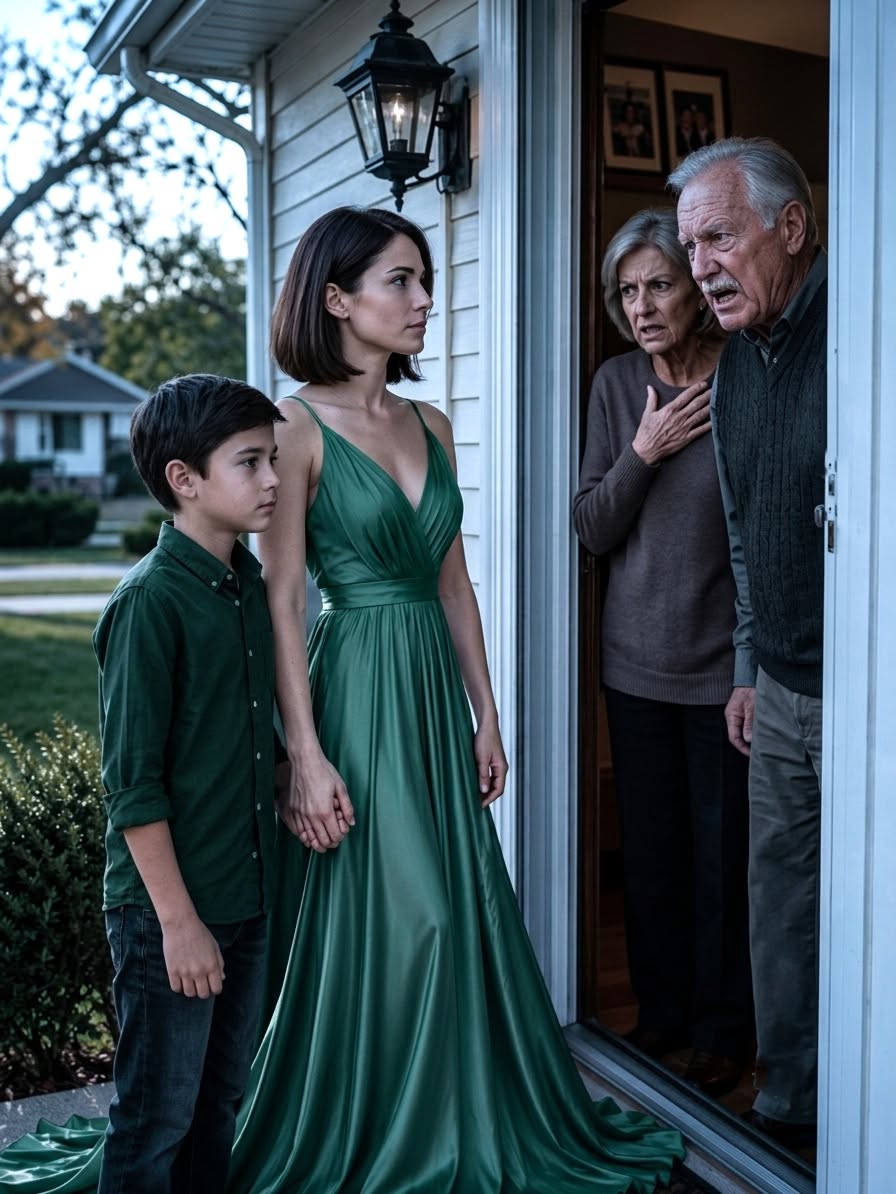
He sat there with the photograph trembling between his fingers, the edges bending under the pressure of his grip. My mother stood beside the doorway, one hand pressed to her chest, breathing as though the room had suddenly run out of air.
Leo looked from one adult to another.
“Mom?” he asked quietly. “Who’s Ethan?”
I turned to him, and for a second, the entire world softened.
How could I explain that the man whose name had haunted me for ten years was not just a ghost from my past?
How could I tell my son that his father had been brave, brilliant, stubborn, and doomed?
I knelt in front of him.
“Ethan was someone very important,” I said. “He was kind. And he cared about people. He wanted to stop something bad from happening.”
Leo’s eyes searched mine.
“Was he my dad?”
The room went completely still.
I had imagined this moment hundreds of times. In some versions, I was calm. In others, I cried. Sometimes Leo got angry. Sometimes he hugged me. But in none of those imagined moments did my parents sit behind us, broken open by the same truth.
“Yes,” I whispered. “He was your dad.”
Leo looked down at our joined hands. His little fingers tightened around mine.
“Did he know about me?”
My throat closed.
“No,” I said softly. “He disappeared before I could tell him.”
Leo nodded once, as if trying to be older than ten.
Then he looked at my father.
“Did Grandpa know him?”
My father flinched.
I stood slowly.
“That’s what we need to find out.”
Dad stared at the photograph again.
“I don’t remember this,” he said. “I swear to you, Anna, I don’t remember standing there with Ethan.”
My mother wiped her eyes.
“Richard,” she said, her voice shaking, “think. Please.”
He closed his eyes.
“I remember the plant director. Martin Vale. Everyone knew him. Cold man. Always polite, never warm.” Dad rubbed his forehead. “I remember the inspections. The night shifts. The rumors. I remember Ethan coming around asking questions.”
My heart jumped.
“You knew he was investigating?”
Dad nodded slowly.
“Everyone did. At first, people laughed at him. Some college kid thinking he could fight a corporation.” He opened his eyes, and there was shame in them. “But then he started finding things.”
“What things?”
Dad looked at the flash drive on the table.
“The truth.”
The word settled over us like dust.
Mom stepped closer.
“Richard, did you help him?”
Dad’s lips parted, but no answer came.
He stared at the photograph again, especially at Ethan’s handwriting.
YOUR FATHER TRIED TO WARN THEM.
“I don’t know,” Dad whispered.
A strange chill moved through me.
For ten years, I had thought my father was angry because I had kept Leo. Because I had refused to tell him the father’s name. Because I had walked out of his house pregnant, frightened, and stubborn.
But now I wondered if his anger had been something else.
Fear.
Guilt.
Or the shadow of a memory someone had stolen.
I picked up the flash drive.
“There’s more,” I said.
Dad looked at me as though I had placed a weapon on the table.
“What do you mean?”
“When I opened it last month, I found a folder labeled R.H.”
My father’s initials.
Richard Hayes.
My mother’s face tightened.
“What was inside?”
“Audio files.”
Dad stood too quickly, knocking the chair backward.
“No.”
His reaction startled Leo, who stepped closer to me.
Dad backed away from the table, shaking his head.
“No. I don’t want to hear them.”
“Richard,” Mom whispered.
“I said no.”
His voice cracked, not with anger, but terror.
And that was when I understood.
Some part of him did remember.
Not everything. Maybe not clearly. But something deep inside him knew that whatever was on those recordings could destroy the life he had built out of silence.
I placed the flash drive back into my bag.
“Fine,” I said. “Not tonight.”
My father turned toward me, eyes wet.
“Anna, listen to me. If Ethan gave you that drive, then he trusted you. But people like Martin Vale don’t just disappear because time passes. If the evidence on that drive is real, then anyone connected to it is in danger.”
“I know.”
“No, you don’t.” His voice dropped. “You have no idea what they’re capable of.”
A heavy silence followed.
My mother stared at him.
“What did they do, Richard?”
He looked at her, and for the first time in my life, my father looked small.
“I don’t remember all of it,” he said. “But I remember waking up in my truck one morning outside the old quarry road. I had mud on my shoes. Blood on my sleeve.”
My mother gasped.
Dad lifted a trembling hand.
“It wasn’t mine.”
Leo hid behind me.
I wanted to tell him to go upstairs, to protect him from every ugly word in that room. But this was his story too. His father’s story. His future.
“What happened?” I asked.
Dad swallowed.
“I went to work the next day. Martin Vale called me into his office. He told me I had suffered a stress episode. Said I had been confused. Said I should take two weeks off.”
“Did you?”
“Yes.”
“And when you came back?”
Dad looked at the photograph.
“Ethan was gone.”
My mother covered her mouth.
I felt something cold and sharp bloom inside me.
“All these years,” I said, “you knew something was wrong.”
Dad nodded, tears running silently down his face.
“But I couldn’t prove anything. And then your mother got sick. Then I got sick. Bills piled up. The company doctor said it was just bad luck. Age. Genetics. Anything but the river. Anything but the plant.”
He looked at Leo.
“And when you came home pregnant, refusing to name the father, saying it would affect all of us…” His voice broke. “I thought you had gotten mixed up with someone dangerous. I thought I was protecting you by pushing you away.”
I laughed once, but there was no humor in it.
“You protected me by abandoning me?”
Pain crossed his face.
“No. I failed you.”
Those words, simple as they were, struck harder than any apology I had ever imagined.
For ten years, I had carried resentment like armor. It had kept me upright when I was young, pregnant, alone, and terrified. It had helped me survive the whispers, the bills, the sleepless nights, the birthdays where Leo asked why Grandpa never came.
But now that armor felt heavy.
Too heavy.
My mother came toward me slowly.
“Anna,” she whispered. “I am so sorry.”
I looked at her, and the little girl in me wanted to collapse into her arms. The woman I had become did not know how.
Before I could answer, the house phone rang.
All of us froze.
No one called my parents’ landline anymore.
The sound cut through the room again.
Dad looked at the phone as if it were alive.
“Don’t answer it,” I said.
It rang a third time.
Mom whispered, “Richard…”
Dad stepped toward it.
“Don’t,” I repeated.
He picked it up.
For several seconds, he said nothing.
Then the color drained from his face.
A voice spoke on the other end. Low. Calm. Male.
I could not hear the words, but I saw their effect.
Dad’s shoulders stiffened. His eyes moved to me, then to Leo, then to the bag where the flash drive was hidden.
Finally, he whispered, “How did you know?”
My stomach turned.
He listened for another moment.
Then the line went dead.
Dad slowly lowered the phone.
“What did they say?” I asked.
He looked at me.
“They said Ethan should have stayed buried.”
My mother cried out.
Leo grabbed my hand.
I moved at once.
“Get your coats.”
Dad blinked.
“What?”
“We’re leaving.”
“Anna—”
“Now.”
My voice was sharper than I intended, but no one argued.
Within minutes, we were in my car. Leo sat in the back beside my mother. Dad was in the passenger seat, staring out at the dark street as rain began to streak the windshield.
The town looked the same as it always had. Small houses. Quiet porches. A church steeple rising against the night. The kind of place where secrets did not vanish—they simply learned to sit politely at dinner tables.
I drove without turning on the radio.
“Where are we going?” Mom asked.
“To Mara’s.”
Mara Chen had been my best friend since high school. She was also a journalist now, working for an independent investigative outlet two counties over. Last month, when I finally opened Ethan’s flash drive, she was the first person I called.
She told me not to go to the police yet.
Not until we knew who was still protecting the company.
Not until the evidence was copied, verified, and placed somewhere no one could bury it again.
My father turned to me.
“You already told someone.”
“Yes.”
“Good,” he whispered.
That surprised me.
“I thought you’d be angry.”
“I’m done being afraid in the wrong direction.”
His words stayed with me as we drove through the rain.
Halfway to Mara’s apartment, headlights appeared behind us.
At first, I thought nothing of it. Then the car followed us through three turns.
Dad noticed too.
“Don’t speed,” he said quietly. “Just keep driving.”
Leo leaned forward.
“Is someone following us?”
“No,” I lied.
My mother put an arm around him.
The headlights grew closer.
My pulse hammered.
Dad reached into his coat pocket and took out an old key ring.
“There’s a service road ahead,” he said. “Left after the bridge.”
“How do you know?”
“I used to take it to the plant.”
The bridge came into view, slick under the rain. I turned left at the last second.
The car behind us kept going straight.
For one breath, no one moved.
Then Leo exhaled shakily.
At Mara’s building, she was already waiting outside beneath a red umbrella, her black hair plastered to her cheeks.
“Inside,” she said before I could speak.
Her apartment was small, cluttered with notebooks, camera equipment, takeout containers, and three laptops glowing on the kitchen table. She locked the door behind us, then hugged me hard.
“You should have called sooner.”
“I know.”
Her eyes moved to my parents, then Leo.
“This is everyone?”
“For now.”
Mara looked at my father.
“You’re Richard Hayes.”
Dad nodded.
“I need to ask you something,” Mara said. “Did you ever use the name Harbor Light?”
Dad’s face changed.
It was subtle, but I saw it.
A flicker.
A door opening somewhere behind his eyes.
“What did you say?”
Mara turned one laptop toward us.
On the screen was a file directory from the flash drive.
One folder was labeled HARBOR_LIGHT.
Inside were scans of memos, maps, test results, and emails. But at the bottom was a video file.
Mara clicked it.
The footage was grainy, taken from a security camera inside what looked like a storage room. Metal shelves lined the walls. Fluorescent lights buzzed overhead.
Ethan stood in the frame, younger than I remembered and exactly as I remembered. His hair was messy. His jaw tense. His eyes alive with urgency.
Beside him stood my father.
My mother whispered his name.
In the video, Ethan held up a stack of papers.
“They know,” Ethan said. “They’ve known for years. The barrels are leaking into the riverbed.”
Dad’s recorded voice answered, low and rough.
“I gave the report to Vale.”
“And?”
“He told me to forget I ever saw it.”
Ethan stepped closer.
“Then we go public.”
Dad shook his head.
“You don’t understand this town. Vale owns people. Judges. Officers. Doctors. Half the council.”
“Then we make copies.”
“I already did.”
Everyone in Mara’s apartment went still.
On screen, Ethan stared at him.
Dad reached into his jacket and handed Ethan something.
A flash drive.
Not the one I had.
A second one.
My father in the room let out a sound like air leaving his body.
On the video, he said, “Harbor Light. That’s the password. If anything happens to me, release it.”
Ethan looked grim.
“What if something happens to me first?”
Dad put a hand on his shoulder.
“Then God help us.”
The video ended.
No one spoke.
Mara leaned back.
“There are references to a second archive all over Ethan’s files. He didn’t have it. He only had pieces. But Richard…” She looked at my father. “You had the original.”
Dad pressed both hands against his head.
“I don’t remember.”
“Try,” I said.
He closed his eyes.
Rain tapped against the windows. Somewhere in the building, a pipe groaned. Leo sat very still beside my mother.
Dad whispered, “A locker.”
My heart jumped.
“What locker?”
“I don’t know. Metal. Blue door.” His breathing quickened. “There was a number. I can almost see it.”
Mara grabbed a notebook.
“Was it at the plant?”
“No.” Dad shook his head. “Somewhere public. Somewhere they wouldn’t look.”
His eyes opened.
“The bus station.”
Mara stood.
“The old Greyhound station?”
“It closed eight years ago,” Mom said.
“No,” Dad said. “Before it closed, they moved unclaimed storage to the county depot.”
Mara was already typing.
“County property warehouse. Opens at eight.”
“We can’t wait until morning,” I said.
Mara looked at me.
“Anna, breaking in is not smart.”
“Neither is sitting here while someone who knows about Ethan calls my parents’ house.”
She had no answer.
Dad stood.
“I know a man who worked there.”
“Can you trust him?” Mara asked.
Dad’s mouth tightened.
“Ten years ago, I would have said yes about a lot of people.”
That was not comforting, but it was all we had.
We left Leo and my mother in Mara’s apartment with instructions not to open the door. Leo hugged me before I went.
“Mom,” he whispered, “was my dad brave?”
I kissed his forehead.
“Yes.”
“Are you?”
The question nearly broke me.
“I’m trying to be.”
Outside, the rain had softened to mist. Mara drove this time, while Dad sat beside her and I sat in the back, gripping my phone. Every passing car felt suspicious. Every shadow seemed to turn its head.
The county depot sat behind a chain-link fence near the old rail line. A single yellow light burned above the entrance.
Dad called his former coworker, a man named Calvin Price. To my surprise, Calvin answered on the second ring.
When Dad explained, Calvin was silent for a long moment.
Then he said, “I wondered when this would come back.”
Twenty minutes later, an old pickup truck rolled up to the gate.
Calvin was thin, gray-bearded, and nervous. He unlocked the gate without greeting us.
“You shouldn’t be here,” he said.
“We know,” Mara replied.
“No,” Calvin said. “You don’t.”
He led us into the warehouse, past rows of labeled shelves and stacked crates. The air smelled of dust and damp cardboard.
“After the station closed,” Calvin said, “everything went into section C. Most of it got auctioned off. Some lockers stayed sealed because of missing records.”
Dad looked around, pale and sweating.
“Blue door,” he murmured.
Calvin stopped near a row of old storage units.
There it was.
A narrow locker with faded blue paint.
Number 317.
Dad stared at it.
“That’s it.”
Calvin handed him bolt cutters.
Dad hesitated, then snapped the lock.
Inside was a cardboard box.
Nothing more.
My heart sank.
Mara lifted it carefully and placed it on the floor. Inside were old newspapers, a broken flashlight, and a child’s red scarf.
Then Dad reached beneath the cardboard lining.
His fingers found a slit.
He pulled out a sealed plastic pouch.
Inside was a flash drive.
Black.
Unmarked.
For a moment, none of us breathed.
Then a sound came from the far end of the warehouse.
A door closing.
Calvin’s face went white.
“We need to leave,” he whispered.
Mara slipped the drive into her pocket.
We turned back toward the entrance, but footsteps echoed between the shelves.
Slow.
Unhurried.
A man stepped into the light.
Older now, but instantly recognizable from the photograph.
Martin Vale.
He wore a dark coat, his silver hair neatly combed, his expression calm enough to be frightening.
“Richard,” he said. “I was hoping memory would be kinder to you.”
Dad moved in front of me.
“Stay away from my daughter.”
Vale smiled faintly.
“Your daughter has carried Ethan’s little souvenir for a decade. I’d say she’s been involved for quite some time.”
Mara’s hand moved toward her phone.
Vale glanced at her.
“Ms. Chen, I wouldn’t. There are officers outside who still believe I’m a respected man reporting a trespass.”
Calvin cursed under his breath.
My father stared at Vale.
“What did you do to me?”
Vale sighed.
“You were tired, Richard. Guilty. Confused. Men like you are easy to break because you insist on having a conscience.”
Dad’s hands clenched.
“Did I hurt Ethan?”
My breath stopped.
Vale tilted his head.
“You really don’t remember?”
Dad looked as if he might collapse.
Vale stepped closer.
“Ethan came to you that night. He trusted you. He thought you would help him. And you did try.”
He smiled.
“That was the problem.”
“No,” Dad whispered.
“You warned him to run. You gave him evidence. You planned to expose everything together.”
Vale’s voice became colder.
“So I made sure neither of you could.”
Mara spoke suddenly.
“The drive is already uploaded.”
Vale’s eyes flicked to her.
It was only half a bluff. I knew Mara had copied Ethan’s original files, but not this new archive.
For the first time, Vale’s calm expression shifted.
I stepped forward.
“Ethan didn’t run away.”
Vale looked at me.
“No.”
“Where is he?”
Dad turned toward me, horrified.
Vale’s smile disappeared.
“Still asking the wrong question.”
My skin prickled.
“What does that mean?”
Before he could answer, red and blue lights flashed through the warehouse windows.
Police.
Vale relaxed again.
“Time to end this.”
Two officers entered through the side door.
But they did not walk toward us.
They walked toward Vale.
One of them said, “Martin Vale, you’re under arrest.”
Vale’s face went blank.
Mara exhaled.
I turned to her.
She held up her phone.
“Live audio stream,” she said quietly. “Started the second he appeared.”
Vale looked at the officers, then at us, and for one second I saw the man beneath the power: old, furious, and afraid.
As they led him away, he stopped beside me.
“You think this ends with me?” he whispered.
I refused to step back.
He leaned closer.
“Ask your father why Ethan wrote that note in the photograph.”
Then he was gone.
At dawn, we returned to Mara’s apartment.
Leo ran into my arms, and I held him so tightly he complained he couldn’t breathe. My mother cried quietly. My father sat by the window, staring at the black flash drive on the table.
Mara plugged it into an offline laptop.
A password prompt appeared.
Dad whispered, “Harbor Light.”
The screen unlocked.
Folders filled the display.
Documents.
Videos.
Medical reports.
Payment records.
Names.
So many names.
Mara clicked one folder labeled E.BROOKS.
Inside was a single video file.
My hands began to shake.
“Anna,” Mara said softly, “you don’t have to watch this now.”
“Yes,” I said. “I do.”
She pressed play.
Ethan appeared on screen.
Not in the storage room.
Not at the plant.
He was sitting in what looked like a cabin, his face bruised with exhaustion but his eyes burning bright.
My mother gasped.
My father stood.
The timestamp was dated two days after Ethan supposedly disappeared.
Ethan looked directly into the camera.
“Anna,” he said.
My knees nearly gave out.
“If you’re watching this, then Richard remembered enough to find the archive. That means my plan worked, or part of it did.”
I pressed a hand to my mouth.
Ethan swallowed hard.
“I’m sorry I couldn’t come back. I wanted to. More than anything.”
Leo stood beside me, silent as stone.
Ethan continued.
“Vale thinks he buried the truth. He didn’t. Richard tried to save me. Don’t blame him.”
My father broke down then, silently, completely.
Ethan leaned closer to the camera.
“And Anna… there’s something else. Something I didn’t tell anyone.”
The room seemed to tilt.
He looked over his shoulder, as if someone had made a sound behind him.
Then he turned back.
“If they come for you, don’t trust the police. Don’t trust the company doctors. And don’t trust the woman who says she was my mother.”
My blood went cold.
Leo whispered, “What?”
Ethan’s voice dropped.
“Because my real mother died when I was six.”
The video suddenly glitched.
Static filled the screen.
Then one final frame appeared.
A woman stood behind Ethan in the cabin doorway.
Older.
Elegant.
Smiling.
And I knew her.
Everyone in town knew her.
She was Mayor Evelyn Brooks.
The woman who had stood at Ethan’s memorial ten years ago, crying into a handkerchief, calling him her beloved son.
The screen went black.
Then a new message appeared:
ARCHIVE PART THREE REQUIRES BIOMETRIC ACCESS.
Mara frowned.
“What biometric access?”
Before anyone could answer, Leo stepped closer to the laptop.
The screen flickered.
A green scan line passed across his face.
Then the computer chimed.
ACCESS GRANTED.
My son stared at me, terrified.
And from the laptop speakers, Ethan’s voice returned, clearer than ever.
“Hello, Leo.”
The Photograph That Made My Father Forget How To Breathe
My father stared at the photograph as if it had reached across ten years and grabbed him by the throat.
For a long time, no one moved.
Not my mother, who stood with both hands pressed against her mouth.
Not Leo, who looked from one adult face to another, sensing that something enormous had entered the room.
Not me.
And not Dad.
The old picture trembled in his fingers. Five men stood inside the chemical plant, all of them smiling beneath harsh industrial lights. Ethan looked younger than I remembered, his brown hair falling over his forehead, one hand tucked into his jacket pocket like he already knew he was standing too close to danger.
Beside him stood the plant director, Charles Voss.
And beside Voss stood my father.
But it was the handwriting at the bottom that made the room feel airless.
YOUR FATHER TRIED TO WARN THEM.
Dad swallowed hard. “I don’t remember this.”
His voice cracked on the last word.
I wanted to believe him. I did. But ten years of abandonment had carved something hard inside me. I had survived childbirth without my mother holding my hand. I had worked double shifts while rocking Leo to sleep with my foot. I had eaten crackers for dinner so he could have milk.
So when Dad whispered, “Emma, I swear to God, I don’t remember,” my heart didn’t open easily.
It flinched.
“You worked there thirty-two years,” I said. “You knew those men.”
“I knew Voss,” he said. “Everybody knew Voss. But Ethan?” He shook his head, staring again at the photo. “I don’t remember meeting him.”
Mom stepped closer, tears sliding silently down her cheeks. “Robert…”
Dad looked up at her like a lost man.
Then his eyes shifted to Leo.
Leo stood very still. His small hand remained in mine, but his fingers had tightened.
Dad’s expression changed.
Not softened exactly.
Cracked.
“Is he…” Dad struggled. “Is he Ethan’s boy?”
“Yes,” I said.
Leo looked up at me. “Mom?”
My stomach turned. I had planned to tell him slowly. Gently. Not in the doorway of the house where my childhood had ended.
But life had never waited for my timing.
I knelt in front of my son and brushed his hair back from his forehead.
“Leo,” I said softly, “your dad’s name was Ethan Brooks. He was brave. He tried to help people.”
Leo blinked. “Did he know about me?”
The question landed like a stone dropped into deep water.
I shook my head. “No, baby. I found out after he was gone.”
Leo looked down at his shoes.
That was the first time I saw my son grieve someone he had never met.
My mother made a small broken sound.
Dad stood suddenly. “Come inside.”
The words stunned me.
Ten years ago, he had thrown me out.
Now he was stepping back, holding the door open.
For a second, I saw both versions of him at once—the furious man who had chosen shame over me, and the trembling man before me, suddenly surrounded by ghosts.
I walked inside.
The living room looked smaller than I remembered. The same brown sofa. The same clock above the mantel. The same family photos on the wall, except I was missing from the newer ones, like someone had carefully erased me from the years.
Leo noticed.
Children always notice what adults hope they won’t.
“There are no pictures of Mom,” he said.
The room froze.
My mother looked at the floor. “I couldn’t take them down from my bedroom,” she whispered. “But your grandfather couldn’t bear seeing them out here.”
Dad closed his eyes.
I almost laughed. Not because it was funny, but because pain sometimes makes the body search for any exit.
“He couldn’t bear seeing me?” I asked. “I was the one sleeping in a bus station the first night.”
Dad’s face crumpled.
“I know,” he said.
“No,” I replied. “You don’t.”
Silence.
Then Mom took one step toward me. “Emma, I called shelters after you left. I called your old friends. I called the college.”
“But not me.”
“I didn’t have your number.”
“You could’ve found me.”
She started crying harder. “I was afraid.”
I stared at her. “Of Dad?”
Her answer came after a pause.
“No,” she whispered. “Of what I’d have to admit if I did.”
That quiet confession hit me harder than any apology could have.
Dad sat down heavily. He still held the photograph.
“There’s something else,” he said.
I looked at him.
He rubbed his forehead, suddenly looking older than I had ever imagined him. “After Ethan disappeared, there was an accident at the plant. At least that’s what they called it. A gas leak. Small one, they said. A few of us were treated at the clinic on-site.”
Mom turned sharply. “Robert, you never told me that.”
“They told us not to worry anyone. Said it was minor.” He tapped his temple. “After that, I had headaches for months. Gaps. Little missing pieces. I’d forget conversations. Forget where I put things. Once I drove to the grocery store and couldn’t remember why I was there.”
My anger faltered.
“What are you saying?” I asked.
Dad looked at the words on the photograph again.
“I’m saying maybe I did warn them. Maybe Ethan knew. Maybe I helped him and then something happened to make me forget.”
Mom sat down beside him, pale with fear.
I wanted to reject it. It sounded too convenient. Too dramatic. Too easy for a man who had broken my life to suddenly say, “I forgot.”
But then Dad reached into the drawer of the side table.
His hand shook as he pulled out a small metal box.
“I haven’t opened this in years,” he said.
Inside were old employee badges, retirement papers, faded receipts, and a key attached to a red plastic tag.
On the tag, in Dad’s handwriting, was one word:
EASTRIDGE.
My breath caught.
Eastridge Storage.
Ethan had mentioned it once, years ago. He said, “If I vanish, there’s more than the flash drive. But you won’t be able to get it without the key.”
I had thought he meant the flash drive itself.
But now I understood.
Dad stared at the key as though it had appeared from nowhere.
“I don’t remember this either,” he said.
Leo stepped forward and picked up the key gently.
“Maybe Grandpa was helping my dad,” he said.
My father made a sound I had never heard from him before.
A sob.
He covered his face with both hands.
And my son—my ten-year-old son, who had every right to hate this stranger—walked over and placed the key in his lap.
“It’s okay,” Leo said quietly. “We can find out.”
In that moment, something shifted. Not forgiveness. Not yet. But the first tiny crack in the wall between us.
Dad lowered his hands.
His eyes were wet.
“Emma,” he said, “there’s a storage facility twenty minutes from here.”
I looked at the key.
Then at the flash drive.
Then at the photograph.
Outside, dusk pressed against the windows, turning the room blue.
For ten years, I had believed I carried the whole truth alone.
Now I realized Ethan had hidden pieces of it everywhere.
And one of those pieces had been sitting in my father’s house the entire time.
“We go tonight,” I said.
Dad looked at me.
“Together?” he asked.
I hesitated.
Then Leo’s hand slipped back into mine.
“Together,” I said.
But none of us noticed my mother standing behind us, staring at the photograph again.
Not at Ethan.
Not at Dad.
At the fifth man in the picture.
A man I had ignored.
A man whose face had been half-shadowed by the overhead light.
My mother whispered, “Oh no.”
We all turned.
She pointed at him with a shaking finger.
“I know him.”
Dad frowned. “Who is he?”
Mom’s voice dropped to nearly nothing.
“He came here after Emma left.”
My blood went cold.
“What?”
Mom’s lips trembled.
“He said he was from the plant. He said if we ever tried to contact you, we would lose everything.”
The room seemed to tilt.
Dad stared at her in horror. “You never told me?”
“I thought he was just trying to scare us,” Mom cried. “But then your medical bills vanished. The mortgage problem disappeared. Every time we were about to collapse, money appeared from nowhere.”
I felt sick.
“You accepted money from them?”
“I didn’t know what else to do!”
Dad rose slowly, his face darkening. “Margaret…”
Mom backed away. “I was trying to keep us alive.”
I could barely speak. “And you never wondered why they wanted you to stay away from me?”
She looked at Leo.
And that was answer enough.
They had known I mattered.
They had known my baby mattered.
Maybe not why.
But enough.
Dad grabbed the storage key.
“No more secrets,” he said.
Then a sound cut through the room.
A car door shutting outside.
We all turned toward the window.
A black sedan sat at the curb.
Its engine was running.
And inside, behind tinted glass, someone was watching the house.
## PART 4 — The Storage Unit Beneath The Storm
For ten seconds, nobody breathed.
The black sedan idled under the streetlight like a patient animal. Rain had started falling, thin silver lines sliding through the glow. The windshield was too dark to see through, but I felt the weight of whoever sat inside.
Dad stepped toward the window.
Mom grabbed his arm. “Robert, don’t.”
Leo moved closer to me.
I wanted to be brave for him, but my heartbeat was hammering so hard I could feel it in my throat.
“Do you recognize the car?” I asked.
Mom shook her head. “No.”
Dad’s jaw tightened. “I do.”
We all stared at him.
“I saw it two weeks ago,” he said. “Parked outside my doctor’s office.”
My blood went cold. “Two weeks ago?”
He nodded slowly. “And once outside the pharmacy. I thought I was being paranoid.”
The sedan’s headlights flashed once.
Then it pulled away from the curb and disappeared down the street.
Mom sank onto the couch. “They know you’re here.”
I clutched Leo’s shoulder.
For years I had imagined returning to this house would mean facing only my parents. Anger. Apologies. Pain. I had not imagined a secret buried so deep that someone might still be guarding it a decade later.
Dad turned to me. “We need to leave now.”
“You’re sick,” Mom said. “You can’t run around in the rain chasing ghosts.”
“They aren’t ghosts,” he snapped. “They’re the reason Ethan died.”
The word died made Leo flinch.
Dad saw it and softened immediately. “I’m sorry.”
Leo swallowed. “It’s okay.”
But it wasn’t.
Nothing was okay.
We left five minutes later in Dad’s old pickup truck. Mom insisted on coming, despite Dad telling her to stay. She climbed into the back seat beside Leo and held an umbrella over them until the doors were shut.
I sat in the passenger seat. Dad drove.
The town looked strange through rain-streaked glass. Familiar streets. Familiar corners. The diner where I used to study. The church where Mom once sang in the choir. The grocery store where Dad bought me strawberry cupcakes for my thirteenth birthday.
Every memory had another memory beneath it now.
A hidden town underneath the town I thought I knew.
Eastridge Storage sat behind a closed hardware store near the edge of town. The office was dark, but the gate had a keypad. Dad pulled up beside it and frowned.
“I don’t know the code.”
Before any of us could speak, Leo leaned forward from the back seat.
“Try Ethan’s birthday.”
I looked back at him. “How would you know that?”
His cheeks colored. “You told me once. March 18.”
I had.
In one of those quiet nights when grief made me too honest.
Dad entered 0318.
The gate buzzed open.
No one spoke.
We drove between rows of storage units, the truck tires hissing over wet pavement. The red tag on the key said C-17.
We found it near the back.
Dad killed the engine.
Rain pounded the roof.
“Stay in the truck,” I told Leo.
“No.”
“Leo—”
“This is about my dad too.”
His voice was small, but firm.
Mom touched my arm. “Let him stand with us.”
I hated it. I hated that my son had to carry any of this. But I had spent ten years protecting him from the truth, and the truth had still found him.
We stepped out together.
Unit C-17 had an old padlock, rusted but intact. Dad slid the key in.
It turned.
The metal door groaned upward.
The smell hit first.
Dust. Cardboard. Old paper. Damp concrete.
Dad clicked on a flashlight.
Inside were three filing cabinets, two plastic bins, and a wooden desk with one drawer.
On top of the desk sat an envelope.
My name was written across it.
EMMA.
My knees nearly gave out.
I picked it up with shaking hands.
The paper had yellowed with age.
Inside was a letter.
Ethan’s handwriting.
Emma,
If you’re reading this, then I didn’t make it back.
I’m sorry. I know that is too small a word for what I’m leaving you with. There are things I couldn’t tell you because I was afraid knowing them would put you in danger. But there is one thing I need you to understand.
Your father is not my enemy.
He helped me.
I didn’t trust him at first. I thought he was like the others—silent because silence paid better than truth. But Robert found me after a meeting and gave me copies of internal reports. He said, “There are kids drinking from that river. Someone has to stop this.”
He was scared. But he helped anyway.
If he ever turns against you, something is wrong.
Trust the evidence.
Trust the boy.
And trust the sentence I taught you.
My breath stopped.
The sentence.
I read the line again.
Trust the boy.
Leo looked up at me. “What sentence?”
I couldn’t answer.
Because suddenly I remembered.
Ethan had once joked that if we ever had a child, he would teach him one sentence before anything else: “The river remembers what people bury.”
I had laughed back then. It sounded poetic and strange.
But Ethan hadn’t been joking.
I folded the letter carefully, hands shaking.
Dad opened the filing cabinets. They were full of documents. Shipping records. Lab tests. Emails printed and dated. Employee memos. Medical complaints from nearby families.
Mom opened one of the plastic bins and found cassette tapes, labeled by date.
“Who still used these?” she whispered.
“Someone who didn’t trust computers,” Dad said.
Leo stood by the desk, staring at the drawer.
“Mom,” he said, “there’s something here.”
I opened it.
Inside was a small silver voice recorder.
And beneath it was a sealed legal envelope addressed to:
ATTORNEY SAMUEL PRICE — DELIVER ONLY IF ETHAN BROOKS IS DEAD OR MISSING.
Dad looked at me. “Samuel Price?”
I knew the name.
Everyone did.
He had been the town’s most respected lawyer, a man who fought big companies and usually lost—but never quietly. He had died six years ago.
Mom suddenly gasped. “His daughter.”
“What?”
“His daughter took over his practice. Nora Price.”
Dad grabbed one of the tapes. “Then we take this to her.”
A sound came from outside.
A faint crunch of gravel.
Dad shut off the flashlight.
We froze in darkness.
Another sound.
A car door.
Then a voice outside the unit.
“Robert Hale.”
Mom’s hand flew to Leo’s shoulder.
Dad stepped toward the opening, but I grabbed his sleeve.
The voice came again.
“You have something that doesn’t belong to you.”
My body went cold.
I knew that voice.
Older now. Rougher.
But I knew it.
Charles Voss.
The plant director from the photograph.
Dad turned pale with recognition.
“Stay behind me,” he whispered.
But Leo moved before anyone could stop him.
He stepped toward the entrance of the storage unit and called into the rain,
“The river remembers what people bury.”
The words sliced through the night.
Outside, silence fell.
Then Charles Voss whispered, “Who told you that?”
Leo stood tall, rain misting his face.
“My father.”
Voss appeared in the doorway, holding an umbrella. He was older than in the photograph, hair silver, face lined, but his eyes were sharp and cold.
He stared at Leo like he had seen a ghost.
Then he smiled.
Not kindly.
“Ethan always was dramatic.”
Dad’s hands curled into fists. “What did you do to him?”
Voss looked at him with mild amusement. “Robert, after all these years, you still don’t remember?”
Dad went rigid.
Voss took a step closer.
“You gave us a real problem. You and that boy. We had to clean up so much.”
Mom whispered, “Leave us alone.”
Voss ignored her. His eyes remained on Leo.
“That child should never have existed.”
I moved in front of my son.
Something in me became fire.
“Don’t look at him.”
Voss smiled wider. “Emma Hale. The girl who vanished. We looked for you.”
“I know.”
“You should have stayed gone.”
Dad stepped forward. “Enough.”
Voss sighed. “Robert, you were always such a disappointment. You could have retired comfortably. Instead you gave a student documents you barely understood.”
Dad’s voice shook with rage. “You poisoned people.”
“We managed liability.”
“You killed Ethan.”
Voss’s expression did not change.
But he said nothing.
That silence was enough.
Then headlights flooded the storage lane.
Another vehicle pulled in fast.
Voss turned sharply.
A woman stepped out beneath a blue raincoat, holding a phone in one hand.
“Nora Price,” she called. “And everything you just said was recorded.”
Voss’s face changed.
For the first time, he looked afraid.
Nora Price walked toward us, rain streaming over her hood.
“I got a scheduled delivery tonight,” she said, holding up the legal envelope. “From my father’s old case system. Ethan Brooks set it to trigger when someone accessed this unit.”
I stared at her.
“How?”
She smiled slightly. “Your father helped him build a dead man’s switch.”
Dad whispered, “I did?”
Nora looked at him with sadness. “Yes, Mr. Hale. You did.”
Voss backed away.
“You don’t know what you’re touching,” he warned.
Nora lifted her phone.
“Actually, I do. And now, so does the county sheriff.”
Sirens wailed in the distance.
Voss turned to run.
But Leo spoke again.
Not loudly.
Not angrily.
Just clearly.
“You can’t bury a river.”
Voss stopped.
For one strange second, his shoulders sagged.
Then police lights painted the storage units red and blue.
And as officers rushed forward through the rain, my father reached for my hand.
I almost pulled away.
But I didn’t.
Because inside that storage unit, surrounded by the evidence Ethan died to protect, I finally understood the impossible truth.
My father had not betrayed Ethan.
Someone had stolen the memory of his courage.
## PART 5 — The Trial Of Buried Years
The arrest of Charles Voss did not fix our family.
Real life is crueler than stories that way.
It opened doors, yes. It broke locks. It brought reporters, lawyers, investigators, and federal agents into our quiet Ohio town. It turned Ethan Brooks from a forgotten missing person into the face of a scandal that stretched across counties and decades.
But it did not erase the night Dad threw me out.
It did not give me back ten years.
It did not give Leo a father.
And it did not make forgiveness simple.
For three days, we stayed in my parents’ house while Nora Price organized the evidence. I slept in my old bedroom, beneath the faint outline of posters I had taken down before college. Leo slept on a mattress beside my bed because he said the house made “weird noises.”
On the second night, I woke to find Mom standing in the hallway, holding a framed photograph.
It was me at seventeen, wearing a yellow dress before senior prom.
“I kept it in my closet,” she said softly.
I sat up. “Why?”
“Because every time I looked at it, I remembered the sound of the door closing behind you.”
I said nothing.
Mom stepped into the room. “Emma, I was a coward.”
The words were simple.
No excuses.
No softening.
Maybe that was why they hurt less.
“I told myself your father was impossible to fight,” she continued. “I told myself you needed to learn responsibility. I told myself a lot of things so I could sleep at night.”
“Did you?”
She shook her head. “No.”
Leo stirred but didn’t wake.
Mom looked at him, and her face folded with love and grief.
“He has Ethan’s eyes,” she whispered.
“Yes.”
“And your stubborn chin.”
Despite everything, I almost smiled.
Mom sat carefully at the edge of the bed. “When that man came after you left, I should have told someone. I should have told Robert. I should have found you.”
“Why didn’t you?”
She looked down at her hands.
“Because part of me was angry too,” she admitted. “Not like your father. But angry that you wouldn’t explain. Angry that you made us afraid. Angry that our good little girl suddenly had secrets.”
The honesty was ugly.
But it was real.
“I was nineteen,” I said. “I was scared.”
“I know.” Her voice broke. “And I made you be scared alone.”
That sentence entered me quietly and settled somewhere deep.
For years I had imagined my mother apologizing dramatically, sobbing in my arms, begging forgiveness. But this was harder. Smaller. More human.
“I don’t know how to forgive you,” I said.
She nodded. “Then don’t yet.”
I looked at her.
She wiped her cheeks. “Just let me earn the chance.”
The next morning, Nora Price came over with three boxes of copied files and a face full of exhaustion.
“The evidence is stronger than I expected,” she said. “Ethan documented contamination, illegal dumping, bribed inspections, falsified safety reports, and medical settlements hidden under shell companies.”
Dad sat at the kitchen table, oxygen tube under his nose. His illness looked more serious in daylight. His hands were thin. His shoulders had lost their old square strength.
“What about the gas leak?” he asked.
Nora’s expression tightened. “There are records of an incident. Several workers were exposed to a neurotoxic compound. The company doctor reported symptoms in three employees, including you.”
Mom gripped the counter.
Dad closed his eyes.
“Memory loss?” I asked.
“Yes,” Nora said. “Confusion, headaches, respiratory damage. Long-term effects possible.”
Dad bowed his head.
I felt the room shift.
For ten years, I had thought Dad’s cruelty came from pride alone. But the truth was more complicated. He had still chosen to throw me out. He had still refused to listen. But beneath that choice was fear, sickness, manipulation, missing memories, and a corporation that had learned how to turn families into silence.
The villain had not only polluted a river. It had polluted trust.
The trial began six months later.
By then, the story had become national news.
Ethan’s remains had been found near an abandoned service road outside the plant property. There was no graphic revelation, no dramatic confession in court, only the solemn confirmation that he had never run away.
He had been stopped.
Silenced.
But not defeated.
Because his evidence survived.
Because my father kept the key.
Because I kept Leo.
And because Leo had asked to meet his grandparents.
The courtroom was packed on the first day.
I sat beside Leo in the front row. He wore a blue button-down shirt and kept his hands folded tightly in his lap. Dad sat on my other side, thinner than before but determined. Mom sat beside him, holding tissues she shredded nervously.
Charles Voss entered in a dark suit.
He did not look at me.
He looked at Leo.
Only once.
But it was enough to make Dad lean forward with a low growl in his throat.
“Don’t,” I whispered.
Dad sat back, shaking.
Nora Price presented the case like a woman setting fire to a locked room.
Document by document.
Tape by tape.
Witness by witness.
Former employees testified. Families spoke about sickness. Scientists explained contamination. Investigators traced money. The photograph appeared on a large screen.
And then Nora called my father.
Dad walked to the stand slowly.
The courtroom watched him.
He raised his right hand and swore to tell the truth.
Nora approached gently. “Mr. Hale, did you know Ethan Brooks?”
Dad looked at the jury.
“I didn’t remember him for ten years,” he said. “But yes. I knew him.”
“And did you help him gather evidence?”
Dad’s voice shook. “Yes.”
“Why?”
He looked at Leo.
Then at me.
“Because he was right.”
Nora let the words breathe.
Dad continued. “Because I worked in that plant and told myself not to ask too many questions. I had a mortgage. A family. A daughter about to start her life. Silence felt safer.”
His eyes filled.
“Then Ethan showed me water reports from neighborhoods where children played. He said, ‘Safe for who?’ And I couldn’t answer.”
The courtroom was silent.
“So I helped him.”
“Did you report the contamination yourself?” Nora asked.
“I tried. We requested a meeting with senior management. This photograph was taken that day.”
The image appeared again.
Dad stared at it.
“I remember now,” he whispered.
A ripple moved through the courtroom.
Dad pressed a hand to his chest. “I remember Ethan telling Voss the river samples were enough to trigger a federal investigation. I remember Voss smiling and saying, ‘Young man, you have no idea how expensive truth can be.’”
Voss shifted at the defense table.
Nora’s voice stayed calm. “What happened after that meeting?”
Dad’s face tightened.
“There was a leak. Or they told us there was. I remember a sharp smell. Men shouting. Then a clinic room. Then pieces missing.”
He swallowed.
“When my daughter told me she was pregnant, something in me panicked. I didn’t understand why. I heard danger in her words, but I couldn’t remember the shape of it. So I did the worst thing I ever did.”
He turned toward me.
“In front of this court, and in front of my grandson, I want to say what I should have said ten years ago.”
My breath caught.
Dad’s voice broke.
“Emma, I failed you. Not because I was sick. Not because I was scared. Because I chose anger when my child needed love.”
I covered my mouth.
Leo reached for my hand.
Dad continued, tears now visible.
“And Leo, you should have been welcomed into this family from the first breath you took. I am sorry I missed ten years of being your grandfather.”
Leo’s eyes shone.
He whispered, “It’s okay.”
But Dad shook his head.
“No, it isn’t. But I hope one day it can be better.”
That was the moment the courtroom stopped being about evidence and became about everything the evidence had stolen.
The defense tried to discredit him.
They called him confused.
Ill.
Unreliable.
But then Nora played the tape.
Ethan’s voice filled the courtroom.
Clear.
Young.
Alive.
“Robert Hale is helping me. If I disappear, he is in danger too. He told me something tonight I can’t stop thinking about. He said, ‘My daughter deserves to grow up in a town that doesn’t poison its own children.’”
Dad broke down.
So did Mom.
So did I.
Leo sat frozen, listening to his father’s voice for the first time.
When the tape ended, he whispered, “Play it again.”
The judge looked at him gently.
No one moved.
Then Nora, with permission, replayed the sentence.
Ethan’s voice returned.
“My daughter deserves to grow up in a town that doesn’t poison its own children.”
Leo pressed his face into my shoulder.
And for the first time, I let myself cry not only for what I had lost, but for what Ethan had been trying to save.
The verdict came after eleven days.
Guilty.
Not on every charge.
But on enough.
The courtroom erupted—not with joy exactly, but with release. A sound like people exhaling after holding their breath for years.
Voss was led away.
He looked smaller than before.
At the doors, he turned back once.
His eyes found Leo.
“You think this ends it?” he said.
The bailiff pulled him forward.
But his words stayed behind.
Because villains rarely build their power alone.
And three days after the verdict, Nora called me.
Her voice was grim.
“Emma,” she said, “we found another name in Ethan’s files.”
I gripped the phone. “Who?”
She hesitated.
Then said a name that made my mother drop the plate she was holding.
Daniel Whitcomb.
My father’s old doctor.
The man who treated the workers after the leak.
The man still treating Dad now.
## PART 6 — The Doctor Who Kept The Town Sick
The strangest thing about betrayal is how ordinary it can look.
Sometimes it does not arrive with a villain’s smile or a dark car outside your house.
Sometimes it wears a white coat.
Sometimes it says, “Take two of these and call me next week.”
Dr. Daniel Whitcomb had treated half the town for twenty-five years. He delivered babies, signed sports physicals, adjusted blood pressure medication, and smiled from a framed newspaper clipping in his waiting room under the headline:
LOCAL DOCTOR HONORED FOR COMMUNITY SERVICE.
He had treated my father after the plant incident.
He had treated my mother’s kidney problems.
He had told Dad his memory issues were “normal aging.”
And according to Ethan’s files, he had also been paid through a shell company linked to the plant.
Nora spread the documents across my parents’ kitchen table.
Leo had gone outside with Mom to help plant flowers along the walkway. It was the first ordinary thing they had done together, and I could hear his laugh through the open window.
That laugh made everything sharper.
“What did Whitcomb do?” I asked.
Nora pointed to a ledger. “He downplayed symptoms, misfiled exposure reports, and signed medical waivers stating workers had no long-term chemical injuries.”
Dad’s face hardened. “He told me I was imagining things.”
“He had reason to,” Nora said. “If your condition was linked to the plant, it would support Ethan’s case.”
I looked at Dad. “You’re still seeing him.”
Dad nodded slowly. “Appointment tomorrow.”
“No,” I said immediately.
Nora leaned back. “Actually, that appointment may be useful.”
I stared at her. “Absolutely not.”
“We need proof he’s still covering something.”
“My father isn’t bait.”
Dad looked up.
For one second, I saw surprise in his eyes.
Then something softer.
He had heard what I called him.
My father.
Not Robert.
Not Dad with distance sharpened around it.
My father.
“I can do it,” he said.
“No.”
“Emma—”
“I lost enough because adults thought secrets were brave.”
That silenced him.
Nora nodded. “Fair. Then we do this legally and safely. I’ll contact investigators. No private heroics.”
But private heroics had always been the disease in our family.
Ethan had carried evidence alone.
Dad had helped in secret.
Mom had hidden fear behind silence.
I had vanished for ten years rather than risk explaining.
And Leo—my brave, impossible child—had stepped into a storage unit doorway and spoken a sentence that made a criminal tremble.
That night, I found Dad sitting on the porch.
The spring air smelled like wet soil and lilacs. Across the yard, Leo and Mom had placed small solar lights along the path. They glowed like captured stars.
Dad held a mug of tea in both hands.
“You should rest,” I said.
He smiled faintly. “You sound like your mother.”
I sat beside him.
For a while, we listened to crickets.
Then he said, “I keep thinking about the night you told us.”
My chest tightened.
“So do I.”
“I remember your face.” His voice grew rough. “You looked like a child trying not to drown.”
I looked away.
“I was.”
Dad closed his eyes. “I told myself I was protecting your future.”
“You were protecting your pride.”
“Yes,” he said.
The answer was immediate.
Honest.
I looked back at him.
He continued, “I was ashamed. Not of you being pregnant, though I thought I was. I was ashamed because I was scared and didn’t understand why. Some part of me recognized Ethan’s name, maybe. Some damaged place inside my head knew danger was coming. And instead of asking, I attacked.”
He stared into the dark yard.
“I have replayed it a thousand times since you came home. Every version ends the same way. I open the door before you reach the sidewalk.”
My eyes burned.
“But I didn’t.”
“No,” I said.
He nodded. “No. I didn’t.”
The truth sat between us.
Painful, but clean.
Then he reached into his shirt pocket and pulled out a folded piece of paper.
“I wrote something for Leo,” he said. “In case my health…”
“Don’t.”
“Emma.”
“No.” My voice broke. “You don’t get to come back and leave again.”
Dad’s eyes filled.
“I’m trying not to.”
I pressed my lips together, fighting tears.
He handed me the paper anyway.
“Not a goodbye,” he said. “A promise.”
I unfolded it.
In shaky handwriting, he had written:
Things I Owe My Grandson
Teach him to fish.
Show him how to fix the old truck.
Tell him stories about his mother when she was little.
Visit Ethan’s memorial with him.
Cheer at every school event he lets me attend.
Never let anger answer before love again.
I couldn’t read the last line twice.
I folded the paper and held it against my chest.
Inside the house, my phone rang.
Nora.
I answered quickly.
“We have a problem,” she said.
My stomach dropped. “What happened?”
“Whitcomb knows we’re looking at him. He cleared out his office records tonight.”
Dad stood.
Nora continued, “But he missed something. My investigator found a storage locker under his clinic’s old corporate account.”
I looked at Dad.
“Where?”
Nora exhaled.
“Under the clinic basement.”
The next morning, federal investigators arrived with a warrant.
The clinic looked painfully normal. Beige walls. Fake plants. A bowl of lollipops at the front desk.
Dr. Whitcomb was not there.
“He called in sick,” the receptionist said nervously.
Of course he had.
Investigators moved through the building while Nora, Dad, and I waited outside the basement door. Mom stayed home with Leo, though Leo protested fiercely until I promised to tell him everything appropriate afterward.
The basement smelled of disinfectant and old cardboard.
Behind a locked supply room, investigators found file boxes stacked floor to ceiling.
Names.
Dates.
Symptoms.
Payments.
And one locked cabinet labeled ARCHIVE.
Inside was the final betrayal.
Medical files on dozens of workers.
Including Dad.
Including Mom.
Including me.
My hands went numb.
“Me?” I whispered.
Nora scanned the file, then looked up slowly.
“Emma, after you left Ohio, someone requested medical tracking under your name.”
“What does that mean?”
She hesitated.
“They were monitoring whether you gave birth.”
The room blurred.
Dad whispered, “Leo.”
Nora nodded.
“There’s more.”
She pulled out a page.
It was a memo from Dr. Whitcomb to Charles Voss, dated ten years earlier.
SUBJECT: HALE PREGNANCY
The daughter refused termination. Potential Brooks offspring may create future legal vulnerability if paternity is established. Recommend continued observation. Family pressure unsuccessful. Direct contact not advised unless subject resurfaces.
I could not speak.
Dad gripped the cabinet to keep standing.
Nora’s voice softened. “Emma…”
I walked away.
Up the stairs.
Out of the clinic.
Into the parking lot.
I bent forward, trying to breathe.
For ten years, I thought my parents had thrown me out and the world had forgotten me.
But the truth was worse.
The world had not forgotten.
It had watched.
My son’s existence had frightened them before he could even open his eyes.
Dad came outside behind me.
He didn’t touch me.
He just stood nearby, crying silently.
“I’m sorry,” he said.
For once, the words did not feel like enough.
But they felt real.
That evening, Dr. Whitcomb was arrested at a motel two towns away.
Reporters called him the “company doctor.”
People in town called him worse.
I called him one more piece of the machine that had tried to crush Ethan, erase Dad’s courage, silence Mom with fear, and turn my unborn child into a liability.
But the machine was breaking.
And then came the discovery that changed everything again.
Three weeks later, Nora arrived at our house with a sealed evidence bag.
Inside was a small cassette tape.
The label read:
FOR LEO BROOKS HALE — WHEN HE IS OLD ENOUGH.
I stared at it.
“That’s Ethan’s handwriting,” I whispered.
Leo stood beside me, eyes wide.
“Is it from my dad?”
Nora nodded.
I wanted to protect him.
But Leo looked at me with the same serious eyes that had brought us back to Ohio.
“Please,” he said.
So we gathered in the living room.
Dad.
Mom.
Nora.
Leo.
And me.
We placed the cassette into an old player from Dad’s closet.
Static crackled.
Then Ethan’s voice filled the room.
“Hey, little one.”
Leo stopped breathing.
Ethan laughed softly on the tape, nervous and warm.
“I don’t know if you exist. That’s a strange way to start, isn’t it? But I love your mother, and sometimes I imagine impossible futures. If one of those futures became you, then there’s something you need to know.”
Leo’s eyes filled instantly.
Ethan continued.
“Truth matters. But people matter more. Don’t let my fight turn your heart into stone. Find joy. Be annoying. Ask too many questions. Love your mother loudly. She pretends to be tough, but she cries at dog food commercials.”
A broken laugh escaped me.
Leo leaned against my side.
“And if Robert Hale is there,” Ethan’s voice said, “tell him I trusted him. Tell him courage counts even when memory fails. Tell him to forgive himself before regret eats the years he has left.”
Dad covered his face.
The tape crackled.
“And to my child, whoever you are—Leo, Lily, little comet—I am sorry I could not stay. But I believe love leaves instructions. Look for them. They’re everywhere.”
The tape clicked off.
No one moved.
Then Leo crossed the room and wrapped his arms around my father.
Dad froze.
Then hugged him back with shaking arms.
And my son whispered the sentence that finally broke us all:
“Grandpa, my dad said you can forgive yourself.”
## PART 7 — The Day The River Gave Something Back
By summer, the town had changed.
Not in the way movies pretend towns change after truth comes out. The sky did not grow brighter overnight. The river did not suddenly run clear. People did not become kinder just because corruption had been exposed.
Some families were angry.
Some were ashamed.
Some denied everything because denial was easier than admitting they had raised children beside poisoned water.
But others came forward.
Former workers. Nurses. Clerks. Truck drivers. A janitor who had kept disposal logs in a shoebox because “something felt wrong.” A retired security guard who remembered Ethan’s car near the plant gate the night he vanished.
The truth widened.
And with it, so did the wound.
But wounds can become openings.
A fund was created for affected families. The plant was shut down pending cleanup. Federal teams arrived to test soil and water. Nora became the busiest lawyer in three counties.
My parents’ house became, strangely, a place people visited.
They came with documents.
With memories.
With apologies.
Some came to see Dad.
One man named George Miller stood on the porch twisting his hat in his hands.
“I called you crazy back then,” he told Dad. “When you said the smell near the east drainage ditch wasn’t right. I laughed at you.”
Dad nodded.
George’s eyes reddened. “My wife’s sick now.”
Dad gripped his shoulder. “I’m sorry.”
George shook his head. “No. I am.”
The town was learning a hard lesson:
Silence never stays empty. It fills with consequences.
Leo watched everything.
He asked questions no child should have to ask, but he also rode his bike down the sidewalk, ate too many popsicles, and built a model rocket with Dad in the garage.
The first time Dad laughed—really laughed—was when the rocket launched sideways into Mom’s hydrangea bush.
Mom came running out, furious.
Leo shouted, “Scientific failure!”
Dad laughed so hard he had to sit down.
Mom tried to stay mad, but she failed.
I stood in the driveway watching them, and something inside me loosened.
Not healed.
But loosened.
One evening, Leo found me sitting on the back steps.
“Are we moving here?” he asked.
I looked at him in surprise. “Do you want to?”
He shrugged. “I like Grandma’s pancakes.”
“That’s not a reason to move states.”
“It’s a pretty good reason.”
I smiled.
He sat beside me. “And Grandpa says there’s a science club at the middle school.”
“You checked?”
He nodded. “And Nora said the school has a debate team.”
“You hate arguing.”
“No, I hate arguing when people don’t use evidence.”
I laughed.
Then he grew serious.
“Mom?”
“Yeah?”
“Are you still mad at them?”
The question settled between us with the evening light.
“Yes,” I said honestly. “Sometimes.”
“But you love them?”
I looked through the window where Mom was washing dishes and Dad was drying them badly.
“Yes.”
Leo nodded like this made sense.
“People can be both?”
I touched his hair.
“Most people are both.”
He leaned his head on my shoulder.
“I think Dad would like it here.”
I closed my eyes.
“Your dad did like it here,” I said. “He wanted to save it.”
Three weeks later, Nora called with news.
“They’re building a memorial,” she said. “For Ethan. By the river.”
The dedication happened on a bright September morning.
Half the town came.
Maybe more.
The river moved slowly behind the temporary stage, brown-green under the sun. Cleanup crews had already begun work upstream, but no one pretended the damage was undone.
A stone marker stood beneath a young oak tree.
ETHAN BROOKS
1990–2012
HE TOLD THE TRUTH WHEN SILENCE WAS SAFER.
Below it, a second line had been added at Leo’s request:
THE RIVER REMEMBERS WHAT PEOPLE BURY.
Leo wore a tie and hated every second of it.
Mom fussed with his collar until he groaned, “Grandma, I can still breathe.”
Dad stood beside him, leaning on a cane. His health had improved slightly under new doctors, though some damage would remain. Still, he looked stronger than he had months ago.
Nora gave a speech.
Then Ethan’s mother, Ruth Brooks, stepped forward.
I had met her only once before, shortly after Ethan vanished. She had looked through me then, consumed by a grief too large to share. After I left Ohio, I assumed she hated me for disappearing.
Now she stood before the crowd, silver hair pinned back, eyes steady.
“My son believed truth was not a weapon,” she said. “He believed it was a light. He was young enough to think light always wins quickly.”
A sad smile crossed her face.
“He was wrong about quickly.”
Soft laughter moved through the crowd.
“But he was not wrong about light.”
Then Ruth looked at Leo.
“Come here, sweetheart.”
Leo froze.
I nudged him gently.
He walked to her.
Ruth took his hands.
The whole crowd watched.
“I lost my son,” she said, voice trembling. “But today, I meet the part of him that kept walking.”
Leo’s face crumpled.
Ruth hugged him.
And I saw Ethan in the curve of Leo’s shoulders, in the way he tried to be brave and failed beautifully.
Then Dad stepped forward.
He had not planned to speak.
I knew because Mom whispered, “Robert?” in alarm.
But he walked to the microphone slowly.
The crowd grew quiet.
“My name is Robert Hale,” he said. “I worked at the plant for thirty-two years.”
A murmur passed through the people.
Dad gripped the microphone stand.
“For a long time, I thought being a good man meant providing for my family and keeping my head down.”
He looked at me.
“I was wrong.”
The wind moved through the oak leaves.
“Being a good man means listening when truth makes you uncomfortable. It means believing your child before your pride. It means opening the door before regret has to knock for ten years.”
My throat tightened.
Dad turned to Ruth Brooks.
“Your son was braver than men twice his age. He trusted me. I forgot that trust, but he didn’t. He left proof. He left words. He left a son.”
He looked at Leo.
“And I promise, for whatever years I have left, I will honor all three.”
The applause began quietly.
Then grew.
Dad stepped away from the microphone, embarrassed and overwhelmed.
Leo ran to him and hugged him around the waist.
Cameras flashed.
But the real moment was smaller than the photographs.
Dad bent and whispered something in Leo’s ear.
Leo nodded.
Later, I asked what he had said.
Leo smiled.
“He said, ‘Let’s build something that flies straight this time.’”
After the ceremony, Ruth approached me.
For a moment, we simply looked at each other.
Then she touched my cheek.
“You look tired,” she said.
I laughed through sudden tears. “I’ve been tired since nineteen.”
“I know.”
“I’m sorry I never told you about Leo.”
She nodded slowly. “I was angry for a while.”
“I understand.”
“But grief made me blind too,” she said. “Maybe all of us were walking around with covered eyes.”
Then she handed me a small box.
“Ethan left this at my house before he disappeared. I couldn’t open it for years. When I finally did, I knew it belonged to you.”
Inside was a ring.
Simple silver.
Not expensive.
But tucked beneath it was a note.
For Emma, when the danger is over.
I stared at the words.
My breath left me.
Ruth smiled sadly. “He was going to ask you.”
The world blurred.
I sat down beneath the oak tree and cried harder than I had cried in years.
Not because of the life we had lost.
But because, for the first time, I allowed myself to imagine the life Ethan had wanted.
A small house.
A noisy child.
Sunday pancakes.
Arguments about laundry.
A ring slipped onto my finger by a boy who believed love leaves instructions.
Leo sat beside me and leaned against my arm.
“Are you okay?” he asked.
I looked at the ring in my palm.
Then at my son.
Then at the river.
“I think,” I whispered, “I’m becoming okay.”
That evening, we returned to my parents’ house.
The porch light glowed.
The door was open.
Not wide.
Just enough.
But enough mattered.
Inside, Mom had made dinner. Dad had set the table. Leo placed Ethan’s tape carefully on the mantel beside my childhood prom photo and a new framed picture from the memorial.
For the first time in ten years, my face was back in the living room.
And so was my son’s.
That night, after everyone went to bed, I stood alone before the mantel.
Three photographs sat side by side.
Me at seventeen.
Ethan at twenty-one.
Leo at ten, laughing beside the river.
I touched the silver ring hanging now on a chain around my neck.
Then I heard Dad’s voice behind me.
“I wish I had known him longer.”
I turned.
“Me too.”
Dad came to stand beside me.
“I can’t change what I did,” he said.
“No.”
“But maybe I can change what comes next.”
I looked at him for a long time.
Then I reached for his hand.
He held it carefully, like he was afraid it might disappear.
Forgiveness did not arrive like lightning.
It arrived like dawn—slow, quiet, and impossible to stop once the dark began to thin.
## PART 8 — The Sentence That Finally Changed Everything
One year after I knocked on my parents’ door with Leo beside me, we returned to the river.
Not for a trial.
Not for a memorial.
For a celebration.
The cleanup had begun to work. Slowly, imperfectly, but visibly. The banks had been reinforced with new soil. Warning signs still stood in places, but wildflowers had been planted near the walking path. Children were not allowed in the water yet, but families came to sit beneath the trees again.
Nora Price had organized the event after the settlement was approved.
The money would not undo the damage. Nothing could. But it would pay medical bills, restore land, fund scholarships, and build a community health clinic independent of corporate influence.
They named the scholarship after Ethan.
The first recipient was not Leo—he was too young.
But he insisted on helping choose the winner.
“He would’ve wanted someone nosy,” Leo said.
Nora laughed. “That may be the official requirement.”
We had moved back to Ohio two months earlier.
Not into my parents’ house.
That would have been too much history under one roof.
Instead, Leo and I rented a small yellow house three blocks away, with a crooked porch and a backyard big enough for failed rockets. Dad helped repair the steps. Mom planted herbs by the kitchen window. Ruth Brooks came every Sunday with a pie and stories about Ethan as a boy.
Our family did not become perfect.
Mom and I still had difficult days. Sometimes a sentence landed wrong and old hurt rose between us. Sometimes Dad’s guilt made him too careful, too eager to please, and I had to remind him I wanted a father, not a servant.
Sometimes Leo got quiet after hearing other kids talk about their dads.
On those nights, he played Ethan’s tape.
Not every part.
Just the beginning.
“Hey, little one.”
Then he would sit silently, eyes closed, letting a voice from the past reach him.
The celebration took place at sunset.
Lanterns hung from the oak tree near Ethan’s memorial. Tables were covered with food. Children chased one another across the grass. Music floated over the river, soft and golden.
Dad arrived wearing a suit jacket Leo had chosen.
It was too formal.
Leo said he looked “like a retired detective.”
Dad said, “Good. Detectives get respect.”
Mom cried when she saw them standing together.
“You cry at everything,” Leo told her.
“I’m gifted,” she replied.
I stood near the memorial, watching the people gather.
For so long, this town had been the place where my life broke.
Now it was becoming the place where broken things learned new shapes.
Nora found me holding a stack of programs.
“You ready?” she asked.
“No.”
“Perfect. That means it matters.”
She nodded toward the stage.
“You’re up after Ruth.”
I groaned. “I agreed to speak for two minutes.”
“You agreed to speak. I ignored the two minutes.”
“Lawyers are criminals.”
“Only the effective ones.”
Ruth spoke first.
She told a story about Ethan at age eight trying to “rescue” frogs from a pond that did not need rescuing. He had carried twenty-three frogs home in a bucket and released them into her bathtub.
The crowd roared with laughter.
Leo laughed hardest.
Then Ruth looked at him and said, “Your father believed every living thing deserved a chance to make it home.”
My chest tightened.
Then it was my turn.
I stepped to the microphone.
The crowd quieted.
I saw Mom in the front row, hands clasped under her chin. Dad sat beside her, one hand resting on his cane. Leo stood between them, serious and bright-eyed.
I took a breath.
“Ten years ago,” I began, “I left this town with a duffel bag, a broken heart, and a secret I thought I had to carry alone.”
The river moved behind me, catching the last light.
“I was nineteen. I was pregnant. And I was terrified. When I told my parents, I said something none of us understood then. I said, ‘If I end this pregnancy, it won’t just affect me. It’ll affect all of us.’”
Dad bowed his head.
“I thought I meant the evidence. Ethan’s truth. The future danger. And I did mean those things. But I know now I meant something else too.”
I looked at Leo.
“I meant that sometimes one life becomes the thread holding many lives from falling apart.”
Leo’s eyes filled.
“My son did not save us by being perfect. He saved us by existing. By asking questions. By wanting to meet the grandparents I was too hurt to face. By speaking a sentence his father left behind.”
I touched the ring at my neck.
“For years, I believed courage meant surviving alone. But Ethan knew better. He left pieces of truth with people. With my father. With Nora’s father. With me. With his mother. And somehow, with a child he never got to meet.”
My voice trembled.
“Love leaves instructions. We just have to be brave enough to follow them.”
The crowd was silent.
Then I turned toward my parents.
“Mom. Dad. I spent years thinking the door that closed behind me was the end of our family.”
Mom was crying openly now.
“But this year, I learned something. A closed door is not always the end. Sometimes it becomes the place where someone finally learns to knock from the other side.”
Dad wiped his eyes.
“I am not grateful for what happened,” I said. “I never will be. But I am grateful for what we chose after the truth came out. We chose to stay. To listen. To repair what could be repaired. To mourn what couldn’t. And to love anyway.”
I looked at Leo again.
“Your father should be here.”
Leo nodded, tears on his cheeks.
“But because he isn’t, we will carry him differently. Not like a stone. Like a lantern.”
The applause began slowly, then rose around us.
I stepped down from the stage, shaking.
Leo ran to me and threw his arms around my waist.
“That was more than two minutes,” he said into my shirt.
I laughed through tears. “Blame Nora.”
“I always do.”
Dad approached slowly.
For a moment, he seemed unable to speak.
Then he took my hands.
“I’m proud of you,” he said.
The words were simple.
But they landed in the exact empty place they had been missing from for ten years.
I closed my eyes.
When I opened them, Mom was beside him.
“I’m proud of you too,” she whispered.
I reached for her.
This time, when she hugged me, I did not stiffen.
I hugged her back.
Not because everything was forgotten.
Because everything was remembered, and love had come anyway.
As the sun lowered, Nora announced the first Ethan Brooks Scholarship.
A girl named Maya Chen won. She was seventeen, fierce, and had written an essay exposing unsafe housing conditions in her neighborhood.
Leo leaned toward me and whispered, “Definitely nosy enough.”
After the ceremony, children were given paper lanterns with battery lights inside. They were not released into the sky or river—Nora had insisted on environmental safety with terrifying lawyer energy—but they were carried along the walking path, little lights bobbing in the dusk.
Leo carried one.
Dad walked beside him.
I walked behind them with Mom and Ruth.
At Ethan’s memorial, Leo stopped.
He looked at the stone.
Then at the river.
Then at Dad.
“Grandpa?”
“Yes?”
“Do you think he’d be mad that I’m happy?”
The question broke something open in every adult standing there.
Dad knelt slowly, wincing a little.
“No,” he said. “I think he fought so you could be.”
Leo looked at the lantern in his hand.
Then he placed it at the base of Ethan’s memorial.
“I’m going to be a scientist,” he said.
Ruth smiled. “Are you?”
“Or a lawyer. Or both. Someone has to keep people from being stupid with chemicals.”
Nora, standing nearby, called, “I support this career path.”
Leo turned to the river.
And in the softest voice, he said,
“The river remembers what people bury.”
Then he added something new.
“But it also remembers what people plant.”
None of us spoke.
Because that was the sentence no one expected.
The one Ethan had not written.
The one Leo made for himself.
That was the shocking thing, in the end: not that the past had secrets, but that the future still had room.
Dad reached for my hand.
Mom reached for my other.
Ruth rested a hand on Leo’s shoulder.
And there we stood—strange, scarred, remade—beside a river that had carried poison, proof, grief, and finally, light.
Years from now, people would tell the story differently.
Some would say Ethan Brooks exposed a corporation.
Some would say Robert Hale remembered the truth too late, but not too late to matter.
Some would say Emma Hale came home with her son and shattered a decade of silence.
But I know the real story.
A frightened nineteen-year-old girl refused to give up her baby because somewhere deep inside, beneath fear and heartbreak, she understood one impossible thing:
That child was not the end of her life.
He was the beginning of everyone’s second chance.
Leo slipped his hand into mine.
“Mom?”
“Yeah?”
“Can we get pancakes after this?”
I laughed.
Dad laughed.
Mom laughed.
Even Ruth laughed through tears.
And just like that, the great mystery of our lives ended not with revenge, not with ruin, but with a boy asking for pancakes beneath a sky full of lantern light.
We walked back together.
The river moved beside us.
The door was open.
The future was waiting.