PART 2 — THE WOMAN ON THE THIRD
“Ma?” Scott said again.
I turned my head and looked at him.
“Yes, honey?”
His eyes moved from me to the branch manager, then to the shoebox already waiting on her desk.
That was the moment he understood.
Not everything.
But enough.
Enough to know Thursday morning was not going the way he had planned.
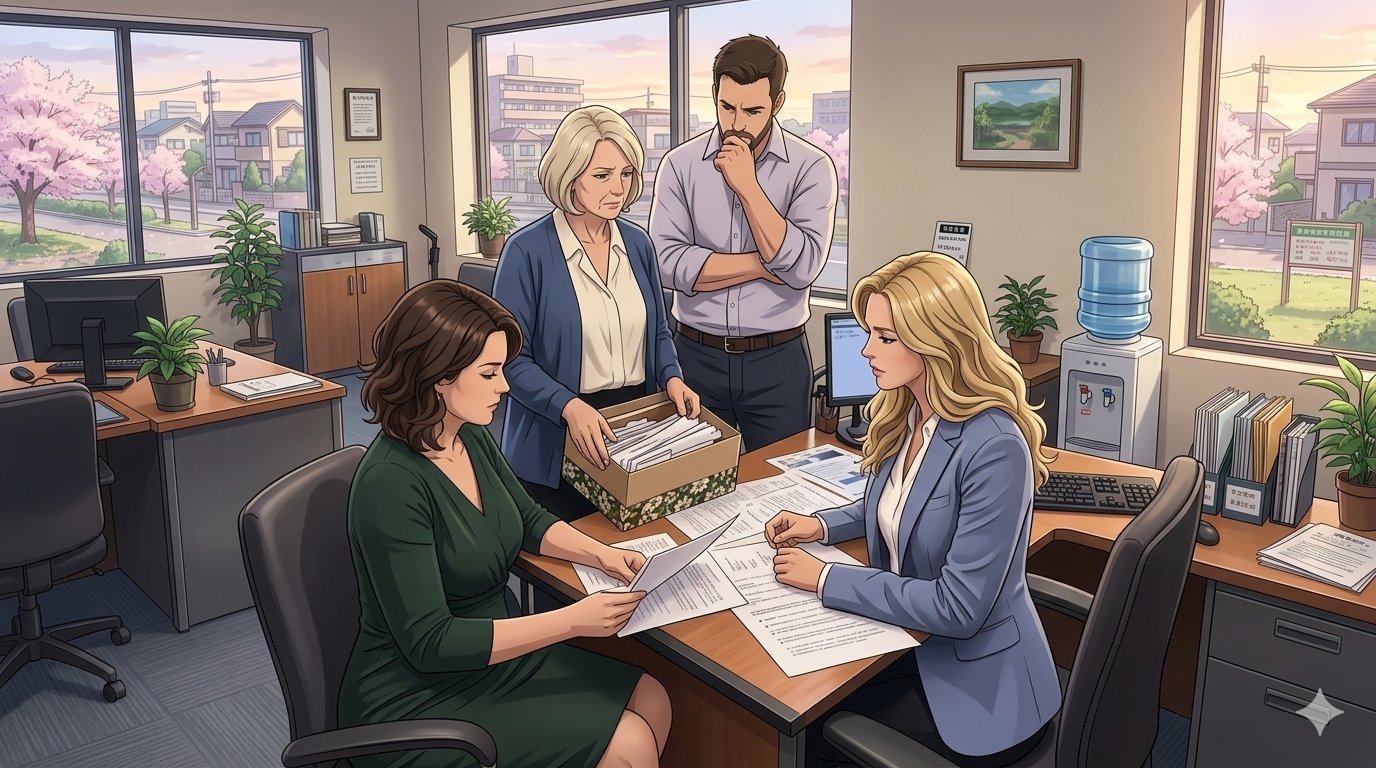
The branch manager, Mrs. Callahan, gestured toward the chairs.
“Please sit down, Mr. Bennett.”
Scott did not sit.
Instead, he gave a little laugh.
The kind people make when they are buying themselves three extra seconds to think.
“I’m sorry,” he said. “What exactly is this about?”
Mrs. Callahan looked at me.
Not at Scott.
At me.
That mattered more than you might think.
For four years, every banker, insurance agent, repairman, tax preparer, and anybody else with a clipboard had eventually turned toward my son.
Scott had trained people to do it.
“Your son handles that.”
“My mother gets overwhelmed.”
“Just call me.”
“She doesn’t really understand online banking.”
Little sentences.
Harmless-looking sentences.
Stack enough of them together and they become a wall.
Mrs. Callahan did not look around that wall.
She looked straight at me.
“Mrs. Bennett,” she said, “would you like your son to remain in the room while we discuss the transactions on your accounts?”
Scott’s face changed.
Only for half a second.
But I saw it.
He had expected the meeting to belong to him.
Instead, they were asking my permission for him to stay.
I folded my handbag neatly onto my lap.
“Yes,” I said. “I think Scott should hear this.”
He finally sat down.
The gentleman from elder services was already there.
His name was Mr. Alvarez.
He had the same yellow legal pad he had used Tuesday.
Scott noticed him immediately.
“And you are?”
“Daniel Alvarez.”
“What department?”
“Financial protection and elder services.”
Scott swallowed.
There are some words that can empty the color from a man’s face.
Elder services was apparently two of them.
He turned toward me.
“Ma, what have you told these people?”
There it was.
Not what happened.
Not what did I misunderstand.
What have you told these people?
I smiled.
“The truth, honey.”
Mrs. Callahan opened a folder.
“Mr. Bennett, we have identified recurring transfers from your mother’s primary checking account over approximately four years.”
Scott leaned back.
“Oh. That.”
That.
I will remember that word until I die.
Four years of my money disappearing.
That.
He waved one hand.
“I manage Mom’s finances. She knows that.”
Mr. Alvarez spoke for the first time.
“Do you have a written management agreement?”
Scott looked at him.
“A what?”
“A document authorizing you to pay yourself a monthly management fee from Mrs. Bennett’s accounts.”
Scott blinked.
“No. I’m her son.”
Mr. Alvarez wrote something down.
That made Scott angry.
I could see it gathering.
He had always hated being written about.
“What are you writing?”
“Notes.”
“Well, don’t write things like I’ve done something wrong.”
Mr. Alvarez lifted his eyes.
“I haven’t said you’ve done anything wrong.”
Scott looked away first.
Mrs. Callahan slid one statement across the desk.
“Can you explain this withdrawal?”
Scott barely looked at it.
“Expenses.”
“What expenses?”
“Things for Mom.”
I spoke quietly.
“Like what?”
Scott turned toward me.
“Come on, Ma.”
“No,” I said. “I would like to know.”
He looked almost hurt.
That was his best face.
When Scott was a little boy, he could knock over a lamp with the baseball still in his hand and somehow make you feel cruel for noticing.
“Utilities,” he said. “Repairs. Groceries. Insurance. All kinds of things.”
Mrs. Callahan opened another page.
“Your mother’s utilities are paid separately from her account.”
Scott’s jaw tightened.
“Then repairs.”
“Which repairs?”
Silence.
He shifted in his chair.
“Her roof.”
I almost laughed.
“My roof was replaced eleven years ago.”
“Then plumbing. I don’t remember every detail.”
Mr. Alvarez asked, “Would you have receipts?”
“Probably.”
“Please provide them.”
Scott rubbed his forehead.
There was the leaky faucet expression again.
Only this time I wasn’t the faucet.
“Mom,” he said, “why are we doing this? You asked me to handle things after Dad died.”
“I asked you to help me.”
“That’s what I’ve been doing.”
“By giving me forty dollars every Friday?”
His mouth opened.
Then closed.
Mrs. Callahan’s eyes moved toward the shoebox.
I reached forward and lifted the lid.
One hundred and ninety envelopes.
Some were cream.
Some white.
Some wrinkled from being carried in my handbag.
Every one dated.
Scott stared at them.
“What is that?”
“My memory.”
For the first time that morning, nobody spoke.
I took out one envelope.
March 8.
Forty dollars.
Another.
August 16.
Forty dollars.
Another.
December 22.
Forty dollars.
Christmas week.
Forty dollars.
“I saved them,” I said.
“Why?”
I looked at him.
“I suppose some part of me knew I might need to remember exactly how small you made my life.”
Scott stood.
“This is ridiculous.”
Mrs. Callahan’s voice sharpened.
“Please remain seated.”
“I don’t have to sit here and be accused of stealing from my own mother.”
“No one has used the word stealing,” Mr. Alvarez said.
Scott looked at me.
“You put them up to this?”
I had imagined this moment several times since Tuesday.
In some versions, I cried.
In some versions, I screamed.
In one particularly satisfying version, I threw the shoebox at him.
But sitting there, I felt strangely peaceful.
“No, Scott. Your bank records did.”
He stared at me.
Then he made his first mistake.
He said, “You weren’t supposed to see those.”
The room became perfectly still.
Scott heard himself.
So did everybody else.
His face tightened.
“I mean—you never wanted to deal with statements.”
“I didn’t receive statements.”
“Because you told me—”
“You changed them to paperless.”
“For convenience.”
“And changed the email address.”
He stopped.
That was something I had learned Tuesday.
The electronic statements were going to an email address I had never seen.
An email address containing Scott’s initials.
Mrs. Callahan slid another document forward.
“We also have authorization logs showing that your online banking contact information was changed from Mrs. Bennett’s information to yours approximately six weeks after your father’s death.”
Scott’s eyes moved rapidly across the page.
“Dad wanted me to handle things.”
“Your father was deceased when the change was made,” she said.
The words landed quietly.
That made them heavier.
Scott sat down again.
Then I asked the question I had been saving.
“What did you spend it on?”
He stared at the carpet.
“Ma.”
“The deck?”
His eyes flicked up.
“The truck?”
Nothing.
“Your vacations?”
“Stop.”
“Your mortgage?”
“I said stop.”
“No.”
That single word surprised both of us.
I had spent four years saying yes.
Yes, honey.
All right, honey.
Whatever you think is best.
No felt wonderful.
Scott leaned toward me.
His voice dropped.
“You don’t understand what I’ve had to do for you.”
Mr. Alvarez immediately said, “Mr. Bennett—”
But I lifted one hand.
I wanted to hear it.
“What have you had to do for me?”
Scott laughed once.
“Everything.”
“Name three things.”
That stopped him.
“Excuse me?”
“Three things, Scott. You’ve taken money every month for managing me. Name three things you did last month.”
He stared.
I waited.
Mrs. Callahan waited.
Mr. Alvarez waited.
Scott could not name three.
Finally, he muttered, “I make sure your bills get paid.”
“One.”
“I check your accounts.”
“Two.”
“And I give you cash.”
My forty dollars.
I nodded.
“Three.”
Something in his face told me he knew how bad that sounded.
So he changed directions.
“You’re eighty-one years old, Ma. You can’t seriously think you should be handling all of this yourself.”
There it was.
The sentence I had expected.
Not thief.
Not apology.
Old.
Confused.
Unable.
The doctor’s appointment was coming next.
I could almost hear him scheduling it.
So I reached into my handbag.
I removed three folded sheets.
“I knew you would say that.”
Scott stared at the papers.
“What are those?”
“A letter from my doctor.”
His face hardened.
I continued.
“She examined me Monday. At my request. Memory screening, orientation, cognition, whatever else she thought appropriate.”
Scott said nothing.
“She says I am perfectly capable of managing my own financial affairs.”
Mrs. Callahan took the letter and placed it in the folder.
Scott looked betrayed.
“You went to Dr. Kaplan without telling me?”
“Yes.”
“You don’t drive.”
“Dottie drove me.”
His expression changed again.
“Dottie.”
That one name carried four years of irritation.
Scott never liked Dottie.
He said she put ideas in my head.
Which, translated properly, meant Dottie occasionally reminded me I possessed one.
Then Mrs. Callahan turned another page.
“Now we need to discuss the second recurring transfer.”
Scott stopped looking at me.
The mysterious woman.
The third of every month.
Mrs. Callahan read the amount.
“Eight hundred and fifty dollars. Monthly.”
I had already seen the number.
Hearing it aloud still hurt.
Forty dollars a Friday for me.
Eight hundred and fifty a month for her.
“Who is Melissa Grant?” Mrs. Callahan asked.
Scott became very still.
I watched my son’s hands.
He folded them together.
Then unfolded them.
Then placed them flat against his knees.
“She’s nobody.”
Nobody.
Four years of payments to Nobody.
Mr. Alvarez asked, “Is she providing a service to Mrs. Bennett?”
“No.”
“Is she a relative?”
“No.”
“Then why is Mrs. Bennett paying her eight hundred and fifty dollars every month?”
Scott looked toward me.
He seemed to be making a decision.
“Ma, this is complicated.”
“I have nowhere to be.”
“You wouldn’t understand.”
“Try me.”
He closed his eyes.
For one second, he looked tired.
Not guilty.
Not angry.
Just tired.
Then he said something I never expected.
“Melissa has Dad’s daughter.”
I thought I had heard him wrong.
Mrs. Callahan’s pen stopped.
Mr. Alvarez looked up.
I said, “What?”
Scott’s face had gone gray.
“Dad had another daughter.”
I laughed.
I actually laughed.
Not because it was funny.
Because sometimes the mind rejects pain before the heart has time to receive it.
“My husband?”
Scott nodded.
“No.”
“Ma—”
“Your father and I were married fifty-three years.”
“I know.”
“No.”
“She was born before you and Dad got married.”
That stopped me.
Before.
Not during.
Before.
I searched backward through fifty-three years of photographs.
Our wedding.
Our first apartment.
Scott as a baby.
Christmas mornings.
Hospital rooms.
Anniversaries.
My husband’s hand in mine when he died.
“Her name is Melissa?”
“No.”
Scott looked down.
“Melissa is her mother.”
Mrs. Callahan frowned.
“You said the daughter belongs to Mrs. Bennett’s late husband?”
Scott nodded.
“Her name is Rebecca.”
I whispered it once.
Rebecca.
A stranger’s name.
A daughter my husband never mentioned.
“How old is she?”
“Fifty-four.”
Older than Scott.
Old enough to have existed before my wedding.
Old enough that my husband had fifty-three years to tell me.
He never did.
I felt something split open inside me.
But then another thought came.
A better thought.
A colder one.
“If Rebecca is fifty-four,” I said slowly, “why have you been sending money to her mother?”
Scott did not answer.
“Why not Rebecca?”
Still nothing.
Mrs. Callahan leaned forward.
“Mr. Bennett?”
He looked trapped.
And that was when I knew there was another door behind this door.
I stood up.
Scott looked startled.
“Ma?”
I walked to the window.
People were crossing the parking lot carrying coffee and purses, living perfectly ordinary Thursday mornings.
I turned back toward my son.
“You’ve lied to me for four years.”
“I was trying to protect you.”
“From what?”
“From the truth.”
“Whose truth?”
His eyes filled with something I could not read.
Fear, maybe.
Or shame.
Then he said, “Dad made me promise.”
I felt the room tilt.
“Promise what?”
Scott took a breath.
“That you would never find out what happened to Rebecca.”
Nobody moved.
Not Mrs. Callahan.
Not Mr. Alvarez.
Not me.
I looked at my son.
“What happened to her?”
He shook his head.
“Ma, please.”
“What happened to Rebecca?”
His voice broke.
“She disappeared.”
My fingers tightened around the back of the chair.
“When?”
Scott’s next words changed the story completely.
“Three months before Dad died.”
I stared at him.
That was four years ago.
Almost exactly when Scott had taken control of my accounts.
Almost exactly when the monthly transfers began.
I looked toward Mrs. Callahan.
She was already looking at the statements.
Then I asked the only question left.
“If Rebecca disappeared four years ago…”
My voice came out quieter than I expected.
“…then who have you been sending my money to every month?”
Scott did not answer.
But he didn’t need to.
Because at that exact moment, Mr. Alvarez’s phone vibrated against the desk.
He looked at the screen.
His expression changed.
“Mrs. Bennett,” he said carefully, “the investigation team just traced the account receiving those transfers.”
I sat down.
“Whose is it?”
Mr. Alvarez looked first at Scott.
Then at me.
“It isn’t Melissa Grant’s.”
Scott went white.
I whispered, “Then whose account is it?”
Mr. Alvarez turned the phone toward me.
And when I read the name on the screen, I finally understood why my son had been terrified from the moment we walked through that door.
Because the name belonged to someone I knew.
Someone who had sat at my dinner table.
Someone who had hugged me at my husband’s funeral.
Someone who had been inside my house dozens of times since he died.
And according to the credit union records…
that person had received more than forty thousand dollars of my money.
PART 3 — THE NAME I NEVER EXPECTED
I stared at the screen in Mr. Alvarez’s hand.
For a few seconds, the letters did not form a name.
They were just shapes.
Black marks against white light.
Then my eyes focused.
And my stomach dropped.
DOTTIE MARSHALL.
My best friend.
The woman who had driven me to the credit union.
The woman who kept my statements hidden in her dresser.
The woman who had sat beside me after my husband’s funeral and held my hand while I cried so hard I could barely breathe.
I looked at Mr. Alvarez.
“That can’t be right.”
He turned the screen back toward himself.
“The receiving account is registered to Dorothy Marshall.”
Dottie.
My Dottie.
I shook my head.
“No.”
Scott covered his face with both hands.
And that was when I understood something worse.
He was not surprised.
I turned toward him.
“You knew.”
He did not answer.
“You knew that account belonged to Dottie.”
“Ma—”
“LOOK AT ME.”
My voice cracked across the office so sharply that even I hardly recognized it.
Scott lowered his hands.
His eyes were wet.
“Yes.”
One word.
That was all.
Yes.
Fifty-seven years of friendship collapsed inside one syllable.
I sat down slowly.
Mrs. Callahan reached toward me.
“Mrs. Bennett, would you like some water?”
“No.”
My mouth was dry, but I did not want water.
I wanted an explanation.
I wanted four years returned to me.
I wanted my husband alive for five minutes so I could ask him what kind of life he had been hiding.
I wanted Dottie sitting across from me.
“Why?” I asked.
Scott stared at the floor.
“It wasn’t supposed to happen like this.”
“Nothing ever is.”
“Dad asked me to keep sending the money.”
“To Dottie?”
“Yes.”
“Why?”
Scott shook his head.
“He said it was for Rebecca.”
I laughed bitterly.
“Rebecca, the daughter nobody told me existed.”
“Yes.”
“And somehow the money for this missing daughter goes to my best friend?”
Scott swallowed.
“Dottie knew about her.”
That hurt differently.
I turned toward the window because suddenly I could not look at anyone.
Dottie knew.
She had known while we sat together at church.
She had known during Christmas dinners.
She had known when my husband became sick.
She had known while helping me choose his burial suit.
All those years.
All those cups of coffee.
All those secrets shared across kitchen tables.
There had been one secret she never shared.
The biggest one.
“How long?” I asked.
Scott hesitated.
“How long has Dottie known about Rebecca?”
“Since before I was born.”
I closed my eyes.
Something cold moved through me.
“Before you were born?”
“Dad told her.”
“Why would your father tell Dottie?”
Scott did not answer.
I opened my eyes.
“Scott.”
He looked miserable.
“Because Dottie knew Melissa.”
The room was silent again.
“Rebecca’s mother?”
“Yes.”
“How?”
“They grew up together.”
I stared at him.
Suddenly, pieces of my life began rearranging themselves.
Dottie had introduced me to my husband.
I remembered it clearly.
A church picnic.
I was twenty-six.
Dottie had waved me over and said, “Margaret, this is Henry Bennett. He’s shy, so you’ll have to do all the talking.”
I had laughed.
Henry had blushed.
Six months later, we were engaged.
A year later, married.
I looked at Scott.
“Dottie introduced me to your father.”
“I know.”
“She already knew he’d had a child?”
“Yes.”
“And she never told me?”
“No.”
I pressed a hand against my chest.
Mrs. Callahan looked concerned.
“Mrs. Bennett—”
“I’m fine.”
I wasn’t.
But I would be.
Later.
Right now I needed the truth more than I needed comfort.
I looked at Scott.
“Tell me everything.”
He shook his head.
“I don’t know everything.”
“Tell me what you do know.”
Scott glanced toward Mr. Alvarez.
“Is this being recorded?”
“No,” Mr. Alvarez said. “But I am taking notes.”
Scott gave a humorless laugh.
“Of course you are.”
Then he leaned back.
“About six months before Dad died, he called me over to the house.”
I remembered that day.
Henry had told me Scott was helping with the garage door.
Apparently, even then, my life had been built from small lies.
“He told me he’d had a daughter before he met you,” Scott continued.
“Rebecca.”
“Yes.”
“He said her mother was Melissa Grant. They’d been young. Melissa got pregnant. Dad wanted to marry her, but her family moved away before Rebecca was born.”
“And he never tried to find them?”
“He did.”
“When?”
“Years later.”
My throat tightened.
“How many years?”
Scott looked at me.
“When I was twelve.”
I remembered that year too.
Henry had taken several weekend trips.
Business, he said.
He worked in insurance then.
Travel was normal.
At least I thought it was.
“He found Melissa?” I asked.
“Yes.”
“And Rebecca?”
“Yes.”
I gripped the arms of the chair.
“So your father knew his daughter for decades?”
“No.”
Scott shook his head.
“Melissa wouldn’t let him see her.”
“Why?”
“Because Rebecca didn’t know he was her father.”
I stared.
“She thought Melissa’s husband was her father?”
“Yes.”
“What happened?”
“Dad left it alone for a long time.”
“How long?”
“Until Rebecca was in her thirties.”
I wanted to scream.
Instead, I asked quietly, “And Dottie knew all of this?”
Scott nodded.
“She helped Dad locate Melissa.”
I closed my eyes.
My best friend had helped my husband find another woman and his secret daughter.
Maybe nothing romantic had happened.
Maybe it had.
At that moment, I didn’t even know which betrayal hurt most.
Scott continued.
“Eventually Rebecca learned the truth.”
“How?”
“Melissa told her.”
“And then?”
“She contacted Dad.”
I could feel my heartbeat in my ears.
“Did he meet her?”
“Yes.”
“How often?”
“Once or twice a year.”
I stared at him.
Once or twice a year.
For how many years?
While I believed my husband was attending conferences, visiting old friends, taking fishing trips?
“How long did that continue?”
“About fifteen years.”
I looked down at my wedding ring.
I still wore it.
Fifty-three years of marriage.
Fifteen years of secret meetings.
A daughter.
A mother.
My best friend helping hide it.
And somehow I had been the only person in the story without a script.
“What happened four years ago?” I asked.
Scott’s expression changed.
Fear returned.
The same fear from the moment he had entered the bank.
“Rebecca called Dad.”
“What did she want?”
“Money.”
Mr. Alvarez leaned forward.
“How much?”
Scott rubbed both hands over his face.
“Two hundred thousand.”
I nearly choked.
“For what?”
“She said she was in trouble.”
“What kind of trouble?”
“She wouldn’t tell him.”
“Did your father give it to her?”
“No.”
Scott looked at me.
“He couldn’t.”
“Why not?”
“Because most of the money was yours.”
That stopped me.
Scott continued.
“Dad’s pension was decent, but the investments, the certificates, the savings—most of that had come from the property your parents left you.”
He was right.
My parents had owned farmland.
After my father died, we sold most of it.
Henry had always told me that money would keep us comfortable.
Apparently, someone else had been looking at it too.
“Rebecca got angry,” Scott said.
“She threatened Dad.”
“With what?”
“To tell you everything.”
I almost smiled.
“Maybe she should have.”
Scott looked away.
“She said if he didn’t pay, she’d come here herself.”
“And?”
“She disappeared before she could.”
The room went quiet.
I leaned forward.
“What does disappeared mean?”
“No calls. No messages. Her apartment was empty.”
“Police?”
“Melissa filed a missing-person report.”
“Did they investigate?”
“Yes.”
“And?”
“They found her car two weeks later.”
My fingers went cold.
“Where?”
“Near Lake Monroe.”
“Was she in it?”
“No.”
“Blood?”
“No.”
“Signs of violence?”
“Not that I know of.”
I looked toward Mr. Alvarez.
He was writing quickly now.
“Was she ever found?”
Scott shook his head.
“No.”
I sat there trying to understand.
Then another thought came.
“If Rebecca disappeared, why did the transfers start afterward?”
Scott’s lips tightened.
“Dad told me Melissa still needed help.”
“But the money went to Dottie.”
“Yes.”
“Why?”
“Because Dad didn’t trust sending money directly to Melissa anymore.”
“Why not?”
Scott hesitated.
Then he said, “Because he thought Melissa knew what happened to Rebecca.”
Mrs. Callahan stopped writing.
Mr. Alvarez looked up.
I whispered, “What?”
“Dad believed Melissa was hiding something.”
“Then why send her money?”
“Because she started threatening him too.”
“With telling me?”
Scott shook his head.
“With going to the police.”
I stared at him.
“About what?”
Scott’s eyes moved toward the door.
He suddenly looked like a little boy again.
The boy who broke the garage window.
The boy who wanted somebody else to take responsibility.
“Scott.”
His voice dropped.
“She said Dad was the last person who saw Rebecca before she disappeared.”
I could hear the clock on the wall.
Tick.
Tick.
Tick.
My husband.
The man I had slept beside for fifty-three years.
The last person known to have seen his secret daughter.
“When?” I asked.
“The night before her car was found.”
My body felt numb.
“Where?”
“At Dad’s cabin.”
The cabin.
Our cabin.
A little place near Bloomington that Henry used for fishing.
He had sold it shortly before his health declined.
Or at least that was what he told me.
I turned toward Scott.
“Why was Rebecca there?”
“She wanted the money.”
“Did your father give it to her?”
“I don’t know.”
“Did they argue?”
“I don’t know.”
“Did she leave alive?”
Scott’s face crumpled.
“I DON’T KNOW.”
Mrs. Callahan stood.
“Mr. Bennett, please lower your voice.”
Scott breathed heavily.
Then he looked directly at me.
“I only know what Dad told me.”
“What did he tell you?”
Scott’s voice became a whisper.
“He said he made a terrible mistake.”
My skin prickled.
“What mistake?”
“He wouldn’t say.”
“Scott.”
“I swear, Ma.”
His eyes were full of tears now.
“He just kept saying, ‘I should have told Margaret. I should have told Margaret years ago.’”
My name.
Apparently, even inside all those secrets, my husband still knew exactly who deserved the truth.
He simply never gave it to me.
I looked at the bank statement again.
Dottie Marshall.
Eight hundred and fifty dollars every month.
Four years.
“Why Dottie?” I asked again.
Scott sighed.
“Dad trusted her.”
“That is becoming less comforting by the minute.”
“She was supposed to receive the money and pass it to Melissa.”
“Did she?”
“I assumed so.”
“You assumed?”
“Dad arranged everything.”
“But Dad has been dead four years.”
Scott nodded.
“And you’ve continued the payments.”
“Yes.”
“Without ever checking?”
He looked ashamed.
“He made me promise.”
I leaned closer.
“You stole money from me because a dead man made you promise?”
Scott flinched.
“I didn’t think of it as stealing.”
“What did you think forty dollars a week was?”
His eyes dropped.
I shook my head.
“No. Don’t hide now. Look at me.”
He did.
“I trusted you.”
“I know.”
“No, you don’t. If you knew what trust meant, you wouldn’t have done this.”
His mouth trembled.
“I thought I was protecting Dad’s secret.”
“You were protecting yourself too.”
He said nothing.
That was answer enough.
Then Mrs. Callahan’s phone rang.
She answered.
“Yes?”
She listened.
Her expression slowly tightened.
“How certain?”
Another pause.
“All right. Send it.”
She ended the call.
Mr. Alvarez looked at her.
“What?”
Mrs. Callahan looked at me.
“The fraud team reviewed the transfer history more closely.”
I almost laughed.
“What else could possibly be hiding in there?”
She did not smile.
“Mrs. Bennett, the account under Dorothy Marshall’s name was opened four years ago.”
I frowned.
“Dottie has banked here longer than that.”
“Yes.”
“Then what do you mean?”
“This is a separate account.”
I looked at Scott.
He looked just as confused as I felt.
Mrs. Callahan continued.
“It was opened online using Mrs. Marshall’s name and Social Security information.”
Mr. Alvarez asked, “Was it actually opened by Mrs. Marshall?”
Mrs. Callahan hesitated.
“We don’t believe so.”
My heart began pounding.
“Then who opened it?”
She turned her monitor around.
“There was an identity-verification document uploaded when the account was created.”
On the screen was a driver’s license.
Dottie’s name.
Dottie’s address.
Dottie’s birth date.
But something was wrong.
The photograph had been altered.
Not well.
Just enough that someone looking quickly might miss it.
Mr. Alvarez stood and moved closer.
“That isn’t Mrs. Marshall.”
“No,” I whispered.
Because I recognized the face.
A younger face.
A face I had seen only once before.
In an old photograph hidden inside my husband’s desk after he died.
A photograph of a dark-haired woman standing beside him sometime before our wedding.
I had asked Henry who she was.
He had looked at the picture for a long time and said,
“Just somebody I used to know.”
I had believed him.
Now the same woman’s face was staring at me from a fraudulent bank document bearing Dottie’s identity.
I whispered her name.
“Melissa.”
Scott shot to his feet.
“What?”
I pointed at the screen.
“That is Melissa Grant.”
Mrs. Callahan looked at Mr. Alvarez.
He immediately picked up his phone.
Scott backed away from the desk.
“No. That doesn’t make sense.”
I looked at him.
“It makes perfect sense.”
“What are you talking about?”
“Melissa has been receiving the money herself.”
“But why use Dottie’s identity?”
I already knew.
Because if anything went wrong, the trail would lead straight to my best friend.
And it almost had.
I reached for my handbag.
“I need to call Dottie.”
Mr. Alvarez held up one hand.
“Mrs. Bennett, I would advise you not to contact anyone connected to these transfers yet.”
“Why?”
“Because whoever created this account committed identity fraud.”
He paused.
“And if the disappearance of Rebecca Grant is connected in any way, we may be dealing with something far more serious than financial exploitation.”
Scott’s face had lost all color.
Then his phone rang.
He looked down.
And froze.
I watched his eyes widen.
“Who is it?”
He didn’t answer.
“Scott.”
Slowly, he turned the phone toward me.
The caller ID displayed one name.
MELISSA GRANT.
Nobody in the room moved.
The phone kept ringing.
Once.
Twice.
Three times.
Mr. Alvarez whispered, “Don’t answer it.”
But Scott was staring at the screen like it had become a ghost.
Then the ringing stopped.
A second later, a message appeared.
Scott read it.
His knees almost buckled.
I grabbed his wrist.
“What does it say?”
He handed me the phone.
The message contained only eleven words.
I know your mother found the account. Do not tell her about the cabin.
I read it twice.
Then I looked at Scott.
“You told me Rebecca met your father at the cabin.”
His lips parted.
“Yes.”
I held up the phone.
“Then what exactly is Melissa afraid you’ll tell me?”
Scott stared at the floor.
And suddenly I knew.
There was still something he had not told me.
Something worse than the money.
Worse than the secret daughter.
Maybe even worse than the disappearance.
I stepped toward him.
“What happened at that cabin, Scott?”
He began crying.
Not quietly.
Not politely.
The kind of crying that comes from carrying something too heavy for too long.
Then he whispered,
“I wasn’t supposed to be there that night.”
My blood went cold.
“What?”
Scott lifted his eyes to mine.
“But I was.”
 PART 4 — WHAT SCOTT SAW AT THE CABIN