The first dinner happened three months after Hannah corrected her birth certificate.
It was Sarah’s idea.
Which surprised everyone.
Especially Michael.
Hannah called me two days before.
“She wants everybody there.”
“Everybody?”
“Michael. David. Grandma Susan. Me.”
I waited.
“And?”
“And she invited you.”
“No.”
Hannah laughed.
“You didn’t even think about it.”
“This is your family dinner.”
“You’re basically family-adjacent.”
“That sounds medically concerning.”
She laughed again.
Then became quiet.
“Candace.”
“What?”
“I want you there.”
That changed things.
Not because she needed me to protect her.
She didn’t.
But wanting someone there was different from needing them to fight your battles.
“Okay.”
Her voice brightened.
“Really?”
“Yes.”
“But I’m not sitting between anyone who’s likely to throw food.”
“No promises.”
The dinner was held at Sarah’s house.
The same white house where Hannah had finally learned that Sarah wasn’t her biological mother.
Only this time, nobody stood on the porch crying.
At least not immediately.
Michael arrived first.
He carried flowers.
Sarah opened the door.
They stared at each other.
Michael held them out.
“For you.”
Sarah blinked.
“Why?”
He looked genuinely confused.
“Because people bring flowers to dinner.”
Hannah whispered to me:
“This is already painful.”
“Give it time.”
David arrived next.
No lawyer.
No folders.
No demands for DNA.
Just a bottle of wine.
He looked at me.
“Candace.”
“David.”
“That sounded threatening.”
“It wasn’t meant to.”
“Good.”
Grandma Susan arrived last.
Sarah helped her inside.
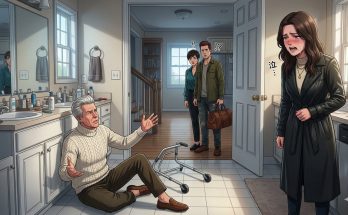
She moved slowly with a walker now.
But her eyes were sharp.
When she saw Michael, she stopped.
He stood.
For a moment, I wondered whether either of them would speak.
Then Susan said:
“You look older.”
Michael stared.
“It’s been nineteen years.”
“Fair.”
Hannah covered a laugh.
Some tension broke.
We sat.
Sarah had assigned seats.
That was a mistake.
Michael and David ended up across from each other.
Hannah sat between Sarah and Susan.
I sat at the end where I could escape if necessary.
For the first ten minutes, everyone discussed safe subjects.
Weather.
Food.
Traffic.
Then David made the mistake of mentioning the trucking company.
Michael’s fork stopped.
Hannah noticed.
“Don’t.”
David frowned.
“I didn’t say anything.”
“You were about to.”
“About what?”
“Money.”
He leaned back.
“You can’t ban an entire topic.”
“I absolutely can.”
Susan smiled.
“She gets that from Emily.”
Sarah laughed.
For a second, everyone looked at Hannah.
Not because she was Emily.
Because the comparison no longer felt dangerous.
Hannah smiled.
“Thank you.”
Then Susan looked at Michael.
“You never saw Emily after my husband sent you away.”
It wasn’t a question.
“No.”
“You tried.”
“Yes.”
“Thirty-four letters.”
“Yes.”
Susan lowered her eyes.
“I mailed one.”
“I know.”
“I should have mailed the truth too.”
Michael said nothing.
Susan continued.
“I thought I was protecting Hannah.”
Michael’s expression hardened slightly.
“You were protecting Sarah.”
Susan looked at him.
“Yes.”
“And your husband.”
“Yes.”
“At my expense.”
“Yes.”
The room went silent.
I watched Hannah.
She wasn’t rushing to rescue anyone.
Good.
Susan wiped her eyes.
“I cannot give you those years back.”
“No.”
“I know.”
Michael finally put down his fork.
“I spent nineteen years grieving a daughter who was alive.”
Susan began crying.
“I know.”
“And she spent nineteen years believing I didn’t exist.”
Hannah spoke quietly.
“I didn’t believe that.”
Everyone looked at her.
“I didn’t know you existed.”
Somehow that was worse.
Michael’s eyes filled.
Sarah reached toward Hannah’s hand.
She let her.
David looked uncomfortable.
Then he said:
“Grandpa did terrible things.”
Michael stared at him.
“You helped him after he died.”
David flinched.
There it was.
The DNA demand.
The hidden letter.
The compensation fund.
“I did.”
“Why?”
David looked at Hannah.
“Because I thought the eight million belonged to the family.”
Hannah blinked.
“It did.”
“To you.”
“I am family.”
David closed his eyes.
“I know that now.”
“No.”
Her voice stayed calm.
“You knew it then.”
Nobody moved.
“You just thought family meant the people whose inheritance looked like yours.”
David had no answer.
Hannah continued.
“You weren’t confused about whether I was Grandpa’s granddaughter.”
“No.”
“You were worried about Michael being my father.”
“Yes.”
“And the money leaving the estate.”
“Yes.”
“So say that.”
David swallowed.
“I was greedy.”
There it was.
Not protecting the company.
Not protecting the estate.
Greedy.
Michael looked at him for a long moment.
Then:
“That’s the first useful thing you’ve said.”
David almost smiled.
“Probably.”
Dinner continued.
Not comfortably.
But honestly.
Then Sarah brought dessert.
Apple pie.
I stared.
“No.”
Hannah laughed.
“You’re famous for apple trees now.”
“This has gotten out of control.”
Susan smiled.
“Emily loved apples too.”
Michael nodded.
“She hated apple pie.”
Sarah froze.
“No, she didn’t.”
“Yes, she did.”
“She made it every Thanksgiving.”
“She made it because Dad liked it.”
Sarah stared at him.
Then burst out laughing.
“You’re right.”
For the first time, Sarah and Michael laughed together over something Emily had done.
Hannah watched them.
I saw tears in her eyes.
Not sad tears.
Something more complicated.
She was finally hearing her mother’s life from people who had known different parts of it.
After dinner, Susan asked Hannah to bring the old wedding photograph.
The one of Emily and Michael beneath the tree.
Hannah returned with it.
Susan held it.
Then looked at Michael.
“I should have helped her marry you.”
Michael’s jaw tightened.
“Maybe.”
Susan nodded.
“I was afraid of my husband.”
He didn’t soften.
Not immediately.
Then he said:
“So was everyone.”
The sentence hung there.
Sarah.
Susan.
David.
Even Michael himself.
Fear had directed the family for years.
Hannah finally said:
“I don’t want fear running this table anymore.”
Everyone looked at her.
“So here’s the rule.”
David raised an eyebrow.
“You have rules now?”
“Yes.”
“Of course you do.”
She ignored him.
“If something hurts, say it.”
Sarah nodded.
“If you’re angry, say it.”
Michael nodded.
“If you’re scared…”
Susan smiled faintly.
“Say it.”
“Yes.”
Then Hannah looked at me.
“What?”
“You’re very quiet.”
“This isn’t my family meeting.”
“You’re at the table.”
Fair.
I smiled.
“Then I think your rule is good.”
David lifted his wine.
“To saying uncomfortable things.”
Michael raised his glass.
“To fewer lawyers.”
I lifted mine.
“To that.”
Everyone laughed.
Later, I found Hannah alone on the porch.
“You okay?”
“Yes.”
“Really?”
She leaned against the railing.
“I thought tonight would fix something.”
“Did it?”
“No.”
I smiled.
“Good.”
She looked at me.
“Good?”
“One dinner shouldn’t fix nineteen years.”
Hannah laughed softly.
“Then what was the point?”
“Beginning.”
She looked through the window.
Sarah was washing dishes.
Michael was drying them.
Badly.
David was arguing with Susan about whether she needed another blanket.
Ordinary.
Messy.
Real.
“I think I like beginning,” Hannah said.
“So do I.”
The next morning, we drove to the lake property.
Workers had started repairing the old chapel grounds.
The future Room for You Center.
Hannah walked through the unfinished building.
“This room will be counseling.”
Another room.
“Legal consultations.”
Then:
“Family meeting space.”
I looked around.
“Looks good.”
She smiled.
“Wait.”
She led me toward the back.
A small room overlooked the lake.
No sign.
No plaque.
“What is this?”
“The letter room.”
I frowned.
“For what?”
“For people who find old letters after someone dies.”
That was oddly specific.
She shrugged.
“You’d be surprised how many people have boxes they can’t open alone.”
Actually, I wouldn’t.
“What happens here?”
“Nothing dramatic.”
She smiled.
“They sit. Read. Cry. Leave. Whatever.”
“No lawyer?”
“Only if they want one.”
“No DNA kit?”
“Absolutely not.”
“Excellent.”
Then she pulled a framed sentence from a box.
Emily’s handwriting.
Nobody who truly loves you should require you to become smaller so they can keep you.
She hung it on the wall.
I looked at it.
“That belongs here.”
“I thought so.”
Three months later, the center opened.
No huge ceremony.
Hannah didn’t want one.
Just family.
Counselors.
Local social workers.
A few attorneys.
Michael stood near the doorway looking uncomfortable in a suit.
Sarah adjusted his tie.
“You’re choking me.”
“You tied it wrong.”
“I am fifty-three.”
“And apparently still need help.”
Hannah laughed.
Susan sat in the front row.
David had donated the first year’s operating costs.
Quietly.
No naming rights.
That mattered.
Before the doors opened, Hannah asked everyone to gather beneath the old oak tree.
The initials were still there.
E + M.
H.
Then S + H + M.
Hannah touched the bark.
“No more carving.”
Michael nodded.
“Agreed.”
Sarah looked offended.
“I had a good idea.”
“No.”
They laughed.
Then Hannah looked at me.
“Picture?”
“Sure.”
We gathered.
But this time, I stood at the side.
Not because I didn’t belong.
Because I didn’t need to be in the middle.
The photographer counted down.
Three.
Two.
One.
Click.
Then Hannah said:
“One more.”
She turned.
“Michael and Sarah. Come here.”
They stood beside her.
Susan behind.
David near the edge.
Her family.
No one erased.
The camera clicked again.
Later, while people entered the building, Hannah handed me a small envelope.
I stared at it.
“You promised.”
She laughed.
“This is not a secret.”
“What is it?”
“Open it.”
Inside was a photograph from that first day at Rebecca Harper House.
Hannah sitting alone on Mom’s stone bench.
She looked terrified.
Small.
Nothing like the woman standing in front of me now.
On the back she’d written:
The day I thought I needed someone to tell me who I was.
I looked at her.
“And?”
She turned the photo over.
Underneath:
The day I learned I needed the truth—and then I needed a choice.
I smiled.
“Keep this.”
“No.”
“Why?”
“Because I want you to remember something.”
“What?”
“You didn’t solve my story.”
“Good.”
“You gave me a place to start solving it myself.”
That hit me harder than praise ever could.
I hugged her.
Then she whispered:
“Also, you were wrong about one thing.”
I pulled back.
“What?”
“You said DNA answers only one question.”
“It does.”
“No.”
She smiled.
“It answered two.”
I frowned.
“What was the second?”
She looked toward Michael.
He was standing beside Sarah, both arguing over where to put a box of brochures.
Hannah said:
“It told me who my father was.”
Then she looked at the center.
“But it also showed me how many people had spent nineteen years deciding what that fact should mean without ever asking me.”
She smiled.
“The second question was whether I was going to let them keep doing it.”
“And?”
“No.”
I laughed.
“Good answer.”
She walked inside.
I stayed beneath the tree for a moment.
My phone buzzed.
Alyssa.
You coming home tomorrow?
Home.
She meant Chicago.
I typed:
Yes.
Then:
Dinner Sunday?
I smiled.
Video call. I’m not flying back for your cooking.
Her reply came immediately.
RUDE.
I slipped the phone into my pocket.
Behind me, the Room for You Center opened its doors.
Ahead of me, I had a flight tomorrow.
No mystery waiting.
No secret family account.
No DNA test with my name on it.
And for once, I didn’t need the next chapter to contain a twist.
Sometimes the strongest continuation wasn’t discovering another secret.
It was watching people finally do something better with the truth they already had.
PART 36 — THE WOMAN WHO REFUSED THE DNA TEST
The first person to sleep overnight at the Room for You Center arrived eleven days after opening.
Her name was Melissa Grant.
She was forty-one.
She carried one suitcase.
When Hannah told me that over the phone, I stopped walking.
“One suitcase?”
“Yes.”
I looked at the suitcase sitting in my own closet.
The one I’d kept for years.
“What’s happening?”
“Her mother died six weeks ago.”
“Will?”
“Of course.”
I sighed.
“Continue.”
Melissa had grown up believing Robert Grant was her father.
He had died twelve years earlier.
Her mother never suggested otherwise.
Neither had anyone else.
Until the will reading.
Melissa’s older brother, Eric, produced an old letter claiming their mother had been involved with another man around the time Melissa was conceived.
“And now he wants DNA?” I asked.
“Yes.”
“Because?”
“The family owns farmland.”
There it was.
Again.
“How much?”
“Enough.”
“What does Melissa want?”
“That is why I’m calling.”
I frowned.
“What do you mean?”
“She doesn’t want the test.”
“Then she shouldn’t take it.”
“I told her that.”
“And?”
“She asked what you would do.”
I smiled.
“No.”
Hannah laughed.
“I knew you’d say that.”
“Good.”
“But she specifically asked to meet you.”
I looked at my calendar.
I was in Chicago.
I had work.
Dinner plans.
An ordinary life I’d fought hard to reclaim.
“I can’t fly to Ohio every time someone asks.”
“I know.”
No disappointment.
No pressure.
Then Hannah said:
“Video call?”
That I could do.
Twenty minutes later, Melissa appeared on my laptop.
She looked exhausted.
Hannah sat beside her.
“Candace?”
“Yes.”
Melissa immediately said:
“I don’t want to know.”
I nodded.
“Okay.”
She blinked.
“That’s it?”
“Yes.”
“But what if Robert wasn’t my biological father?”
“Do you want to know?”
“No.”
“Then don’t test.”
She stared at me.
“My brother says refusing proves I’m afraid.”
“Maybe you are.”
She looked surprised.
“Fear doesn’t automatically make a decision wrong.”
Melissa’s eyes filled.
“I loved my dad.”
“I believe you.”
“He taught me to drive.”
I listened.
“He came to every school concert.”
She smiled through tears.
“He hated every school concert.”
“That sounds believable.”
She laughed.
Then:
“If I take the test and it says he wasn’t my biological father, I’m afraid every memory will feel fake.”
I understood.
“But would the result change who taught you to drive?”
“No.”
“Who came to the concerts?”
“No.”
“Then those memories don’t belong to a laboratory.”
She wiped her eyes.
“But the land might.”
“That is a legal question.”
Hannah nodded.
“We already have an attorney reviewing it.”
Good.
Melissa continued:
“My brother says Dad would’ve wanted biological children to inherit.”
“Does the will say that?”
“No.”
“Then your brother is speaking for a dead man.”
She went quiet.
I knew something about that too.
“Don’t let him turn his opinion into your father’s voice.”
Melissa looked down.
Then asked:
“Did you regret taking your test?”
That question was harder.
“Sometimes.”
Hannah looked at me.
I continued.
“The test gave me information.”
“Good information?”
“Some.”
“Bad?”
“Some.”
“But?”
“But the biggest mistake was believing the result would decide whether I belonged.”
Melissa nodded slowly.
“What if I never want to know?”
“Then you don’t.”
“Ever?”
“Ever.”
I smiled.
“Truth matters. But you still have choices about which questions you ask.”
For a moment, Melissa said nothing.
Then:
“I think I needed permission.”
“No.”
She frowned.
“You just gave it to me.”
I shook my head.
“You gave it to yourself.”
Hannah smiled.
Melissa cried.
Two weeks later, the attorney confirmed something important.
The will didn’t require biological relationship.
Robert had named Melissa specifically.
Her brother couldn’t force DNA testing as a condition of inheritance.
Melissa refused the test.
Eric challenged her anyway.
He lost.
There was no dramatic courtroom confession.
No shocking paternity result.
Because Melissa never took the test.
She kept her share of the farm.
And she kept her memories of her father exactly as she wanted them.
When Hannah told me, she sounded delighted.
“You realize what happened?”
“What?”
“The DNA test didn’t happen.”
“Yes.”
“And the story still had an ending.”
I laughed.
“Remarkable.”
But Melissa’s case changed the center.
More people started calling.
Some wanted DNA tests.
Some didn’t.
Some wanted biological relatives found.
Others wanted them left alone.
Hannah created a rule.
Nobody at the center was told what family should mean.
They were given information.
Legal advice.
Counseling.
Then choice.
Michael loved the idea.
David struggled with it.
Which was why I wasn’t surprised when Hannah called three months later and said:
“David wants to shut down one of our programs.”
I sighed.
“Which?”
“The records assistance program.”
“Why?”
“He says we’re creating family conflict.”
“Are you?”
“Sometimes.”
Fair answer.
“What happened?”
“A woman discovered her adoption records had been sealed improperly.”
“And?”
“She found her biological siblings.”
“Badly?”
“Complicatedly.”
That sounded more accurate.
“David thinks we’re opening doors that should stay closed.”
I went quiet.
That sentence bothered me.
Not because every door should be opened.
They shouldn’t.
But deciding for someone else which door they were allowed to open?
I knew where that led.
“What do you think?”
“I think adults should choose.”
“Then why are you calling me?”
Hannah groaned.
“You’ve become impossible.”
“Excellent.”
“I want your opinion.”
“My opinion is that you already have one.”
Silence.
Then she laughed.
“I hate when you do that.”
“No, you don’t.”
“No.”
She sighed.
“I don’t.”
The board meeting happened the following week.
I attended remotely.
David sat at one end of the table.
Hannah at the other.
Michael and Sarah weren’t board members.
That had been intentional.
The center needed governance, not another family council.
David spoke first.
“We need safeguards.”
Hannah nodded.
“I agree.”
That surprised him.
“So you support suspending the program?”
“No.”
“Then what safeguards?”
“Counseling before records searches.”
David listened.
“Clear consent procedures.”
Another nod.
“And no contacting biological relatives without the client’s explicit decision.”
David leaned back.
“That doesn’t prevent harm.”
“No.”
Hannah’s voice stayed calm.
“Neither does hiding information.”
The room went quiet.
David knew exactly what she meant.
He had hidden Emily’s letter.
“I made a mistake,” he said.
“Yes.”
“Are you going to use that every time we disagree?”
“No.”
Hannah paused.
“But I’m also not going to pretend we don’t know what secrecy can do.”
David looked at her.
Then nodded.
“Fair.”
The program stayed.
With stronger safeguards.
No victory speech.
No humiliation.
Just adults changing something before fear became policy.
Afterward, Hannah called me.
“I think David is getting better.”
“Don’t tell him. It’ll go to his head.”
She laughed.
Then became quiet.
“Grandma Susan isn’t doing well.”
I softened.
“How bad?”
“Hospice.”
“I’m sorry.”
“She asked for Michael.”
That surprised me.
“Did he go?”
“He’s there now.”
“And you?”
“I’m outside.”
“Why?”
“She asked to speak with him alone.”
I waited.
Hannah’s voice shook.
“I’m scared she’ll die before I go back inside.”
“Then tell the nurse.”
“I did.”
“Good.”
“I hate this.”
“I know.”
Twenty minutes later, Hannah called again.
“She wants me.”
“Go.”
She hung up.
I didn’t hear from her until midnight.
Susan had died.
Quietly.
Hannah beside her.
Sarah holding one hand.
David holding the other.
Michael standing near the bed.
The family she’d spent years helping divide had somehow ended up in the same room when she left it.
Two days later, I flew to Ohio for the funeral.
Not because Hannah needed saving.
Because she was my friend now.
That was allowed too.
The service was small.
At the cemetery, Michael stood slightly apart.
I joined him.
“You okay?”
He nodded.
Then shook his head.
“Both.”
Fair.
“What did Susan want to tell you?”
He looked toward Hannah.
“She apologized again.”
“For hiding Hannah?”
“Yes.”
“Anything else?”
Michael reached into his pocket.
For one terrible second, I thought he was about to produce another letter.
I pointed at him.
“No.”
He almost laughed.
“What?”
“If that is a thirty-year-old envelope, I am leaving.”
“It isn’t.”
He opened his hand.
A key.
I stared suspiciously.
“To what?”
“A storage locker.”
“Michael.”
He laughed.
“She told me what’s inside.”
“That helps.”
“What?”
“Emily’s furniture.”
I blinked.
“Furniture?”
“Her crib.”
Hannah’s crib.
“A rocking chair.”
He swallowed.
“And a box of baby clothes.”
No conspiracy.
No secret fortune.
Just things Susan hadn’t been able to throw away.
“Does Hannah know?”
“Not yet.”
“Tell her.”
“I will.”
He looked at the key.
“Susan asked me something before she died.”
“What?”
“She asked whether I hated her.”
I waited.
“What did you say?”
“The truth.”
“Which was?”
“Sometimes.”
I nodded.
Michael continued.
“I told her sometimes I hated what she did.”
His eyes filled.
“But I didn’t want the last thing she heard from me to be a lie.”
“Good.”
“She said she deserved that.”
“Maybe.”
“Then she asked if I could ever forgive her.”
“And?”
“I said I didn’t know.”
I looked toward Susan’s grave.
“That was honest.”
“She smiled.”
He laughed weakly.
“She said, ‘Good. Hannah taught you something.’”
I smiled.
Maybe Susan had learned something too.
After the funeral, Hannah opened the storage locker.
Sarah came.
Michael came.
David came.
I stayed near the entrance.
Inside were pieces of a life that never happened.
A crib.
Boxes of clothes.
Emily’s books.
A rocking chair.
Hannah touched the chair.
“Was this hers?”
Sarah nodded.
“She bought it before you were born.”
Michael ran his hand along the wood.
“I’ve never seen it.”
“Dad wouldn’t let Emily take much when she moved back home.”
Hannah sat in the chair.
It creaked.
Then she smiled.
“I like it.”
“What will you do with everything?” David asked.
Hannah looked around.
“Keep some.”
She pointed toward the crib.
“Donate some.”
Then at the rocking chair.
“This comes with me.”
Michael smiled.
“To your apartment?”
“Yes.”
“You don’t have room.”
“I’ll make room.”
There was that phrase again.
Room.
Hannah looked at me.
“You’re smiling.”
“No.”
“You are.”
“Maybe.”
Then David opened one of the boxes.
Inside were dozens of photographs.
Hannah as a baby.
Sarah holding her.
Susan beside them.
Emily’s photograph tucked into the corner of the first album.
Not erased.
Just absent in a different way.
Hannah flipped through slowly.
Then stopped.
One photograph showed Sarah asleep in the rocking chair.
Baby Hannah on her chest.
On the back, Susan had written:
Sarah has not slept in three days. She refuses to put Hannah down.
Hannah started crying.
Sarah looked embarrassed.
“You were colicky.”
Hannah stood.
Then hugged her.
No speech.
No explanation.
Just a daughter hugging the woman who had raised her.
Michael watched.
There was sadness in his face.
Of course there was.
But no jealousy.
That mattered.
Later, while everyone carried boxes to the cars, Hannah found me outside.
“Part of me feels guilty.”
“For what?”
“Loving Sarah like this in front of Michael.”
I shook my head.
“Don’t.”
“Why?”
“Love isn’t a chair.”
She frowned.
“What?”
“You don’t have one seat and make people fight over it.”
Hannah smiled.
“That was almost profound.”
“Almost?”
“Work on it.”
I laughed.
Then she looked toward Michael.
“He lost nineteen years.”
“Yes.”
“I can’t fix that.”
“No.”
“And I don’t have to pretend Sarah didn’t give me those nineteen years.”
“No.”
Hannah nodded.
“I think I finally understand.”
“What?”
“Making room doesn’t mean moving someone else out.”
Exactly.
Six months later, the rocking chair sat inside Hannah’s apartment.
She sent me a photograph.
Beside it was a bookshelf.
On the shelf:
Emily’s letters.
A photograph of Sarah.
A photograph of Michael.
Susan’s old wedding ring.
And Melissa Grant’s thank-you card to the center.
Under the picture, Hannah wrote:
Room made.
I replied:
Looks crowded.
She answered:
That’s the point.
I laughed.
Then another message arrived.
This one from Alyssa.
Candace. Call me.
My smile faded.
I called immediately.
“What happened?”
Alyssa sounded strange.
“Nothing bad.”
“That’s what people say immediately before something bad.”
“Seriously. Nobody died.”
“Good start.”
“No DNA test.”
“Better.”
“No hidden trust.”
“Excellent.”
She took a breath.
“Harper Industries called.”
I went still.
I had stepped away.
Completely.
“What do they want?”
“Not you.”
That surprised me.
“Then who?”
“Me.”
I sat down.
“For what?”
“The employee board wants me to join.”
I smiled slowly.
“What did you say?”
“I haven’t answered.”
“Why?”
“Because I spent half my life believing that company was something I deserved because of Dad.”
I stayed quiet.
“And now?”
“Now they’re asking because of the work I’ve done with the scholarship program.”
That mattered.
A lot.
“What do you want?”
She laughed softly.
“I knew you’d ask that.”
“Answer.”
“I think I want to say yes.”
“Then say yes.”
“That’s it?”
“Yes.”
“No warning about family legacy?”
“No.”
“No speech about Dad?”
“No.”
She was quiet.
Then:
“I’m scared.”
I smiled.
“Say it anyway.”
She laughed.
“Okay.”
The next morning, Alyssa accepted the position.
Not William Harper’s daughter taking her place.
Not Thomas Lawson’s daughter proving anything.
Just Alyssa.
Chosen for something she had done herself.
And when she sent me the photograph from her first board meeting, I noticed something immediately.
She wasn’t sitting at Dad’s old chair.
Nobody was.
The employee board had removed it.
Not dramatically.
Not symbolically.
They simply needed a larger table.
I stared at that picture for a long time.
Then I smiled.
Maybe that was how families finally changed.
Not by destroying every piece of the past.
Not by pretending it never happened.
But by building a table big enough that nobody’s old chair decided where everyone else had to sit.
And for the first time since Dad’s will reading, Harper Industries wasn’t waiting for another Harper to inherit it.
It was becoming something none of us owned alone.
Exactly as it should have been.
 PART 37 — THE EMPTY CHAIR AT DAD’S OLD TABLE