PART 1
She refused to answer. So I checked the security camera footage—and what I saw made my phone slip from my hands.
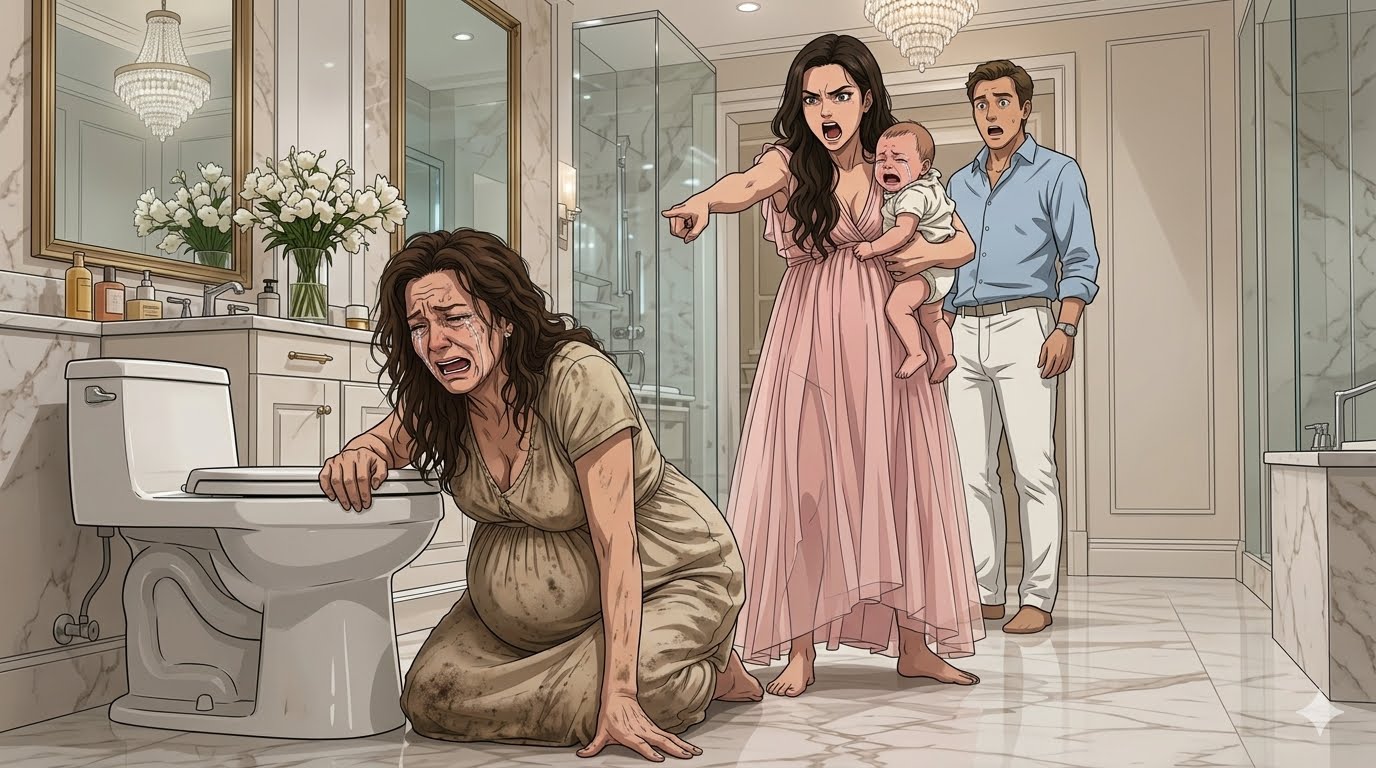
“Who is the man, Mom? Just tell me once and for all! Did you come to my house to help raise my daughter, or to hide a pregnancy?”
It still sickens me to remember those exact words coming out of my mouth.
My mother, Rosa, was fifty-three years old. She had been a widow for nearly a decade and, until six months prior, lived quietly in a small town in New Mexico. She moved to Phoenix because I practically begged her on my knees to help with Maya, my newborn daughter.
My husband, David, and I were drowning.
I was working as a senior project coordinator for a tech firm in Scottsdale. My maternity leave ended right as the most critical product launch of my career was kicking off. David was working long shifts at a logistics firm, and neither of us felt comfortable leaving a three-month-old infant with a complete stranger.
Mom didn’t hesitate for a second.
“Focus on your career, Laura,” she told me, cupping my cheek. “I’ll take care of my granddaughter.”
And she took care of far more than that.
When I came home late from the office, Maya was bathed and fed, the laundry was folded, a warm meal sat on the stove, and the house was spotless. I tried to compensate her by buying her designer clothes, expensive vitamins, luxury creams, and transferring money directly into her account.
She almost always protested. “Save it for the baby.”
I mistook her selflessness for simple maternal gratitude. I understand now that showering her with material things was much easier for me than actually sitting down and asking her how she felt.
By her fifth month living with us, I began noticing subtle changes.
Mom was eating less and less, yet her abdomen was visibly expanding. One afternoon, I even made a lighthearted joke about it. “At this rate, Mom, you’re going to go back home looking like a pampered, well-fed lady.”
She offered a weak, strained smile. “It’s just severe bloating, sweetie. And my lower back has been aching.”
I bought her heat patches, patted her on the shoulder, and went straight back to my laptop.
A few weeks later, her face looked dangerously thin, her arms appeared frail and hollow, but her stomach was noticeably round, firm, and protruding.
She looked pregnant.
I had given birth just months earlier. I recognized that distinct silhouette.
At first, the thought seemed absurd. Then, it began to curdle into suspicion. I offered to take her to a clinic, but she firmly declined. “Don’t waste money. It’ll pass.”
David suggested she was simply exhausted from keeping up with an infant, and I eagerly accepted that excuse—because it was comfortable. It allowed me to keep focusing on my career.
Until that Tuesday evening.
I came home early from work and found my mother bent double over the toilet, dry-heaving so violently her frame was shaking. David stood in the hallway, looking frantic.
“Laura, we need to take her to the emergency room right now,” David urged.
But when I looked at her, seeing her loose blouse stretched tight over her rounded belly, all the anxiety and suspicion I had buried over the past few weeks erupted into pure, ugly cruelty.
“Mom, what are you hiding from us?!” I demanded, my voice echoing off the bathroom tiles.
She lifted her pale, damp face. “What are you talking about, Laura?”
“That!” I pointed directly at her abdomen. “Who is the father?!”
David grabbed my arm, shocked. “Laura, stop it!”
I yanked my arm free. “She’s fifty-three years old, David! She’s been keeping secrets under our roof for months! Mom, if you’re pregnant, just say it! But don’t come into my house making us think you’re sick while you’re hiding an affair!”
Her face completely changed. She didn’t scream. She didn’t defend herself.
That was so much worse.
She looked at me as if the girl standing in front of her were a total stranger. Then, without a word, she wiped her mouth, leaned heavily against the wall for support, and walked slowly into her bedroom.
She didn’t eat dinner. She didn’t say another word to either of us.
Late that night, still convinced I was going to uncover proof of a secret relationship, I logged into the home security app on my laptop to review the living room and kitchen feeds.
I rewound through the past few days.
I watched my mother preparing baby bottles at four in the morning, her face contorted in silent agony. I saw her holding Maya with one arm while her other hand gripped her abdomen tight. I saw her dry-heave quietly into the kitchen sink when she thought the house was empty. I saw her lower herself to sit flat on the floor, catching her breath when the pain became unbearable.
Then, I opened the recording from earlier that afternoon.
Maya had choked slightly on a piece of soft fruit. Mom sprinted across the room, lifted the baby, and performed gentle back blows until Maya coughed, took a deep breath, and cried normally.
The moment the baby was safe, Mom collapsed backward against the kitchen wall. Her loose blouse hitched up above her waist.
And there, taped securely against her right flank, was a medical colostomy bag. Beneath it, a massive, jagged surgical scar spanned across her abdomen.
There was no pregnancy.
I turned the audio volume up to maximum.
My mother was sitting alone on the kitchen floor, breathing in short, ragged gasps. She pressed her hand over her abdomen and whispered to herself in the empty room:
“Just hold on a little longer, Rosa. Just until Laura finishes her big launch. You can’t cause problems for her right now.”
My knees gave out. I slid off the couch onto the floor, choking on my own breath.
I had accused my mother of hiding a secret lover—the very woman who was quietly dying inside my house just so she wouldn’t inconvenience my schedule.
And I had no idea that the darkest part of her secret was still waiting for me.
PART 2

I scrambled to my feet and ran to my mother’s bedroom door, pounding frantically against the wood.
“Mom! Please open the door!”
No answer.
“Mom, please!” I sobbed.
I turned around to see David standing at the end of the hallway, holding a sleeping Maya in his arms. There was an intense, guilty sadness in his eyes.
I stared at him, a sudden wave of realization hitting me. “You knew.”
David lowered his eyes, unable to meet my gaze. “Not everything, Laura.”
I felt a sickening wave of betrayal. “What did you know, David?!”
“A few weeks ago, I found blood-stained towels in the laundry bin,” David admitted softly. “Your mom caught me holding them. She begged me on her knees not to tell you.”
“And you listened to her?!”
“She told me she was already seeing an oncologist,” David stammered. “She said your major product launch was happening, that if you found out, you’d drop everything, ruin your career, and blame yourself. She swore she had it under control.”
Tears burned my eyes. “Did you see her in pain before tonight?”
David went silent.
“How many times, David?!”
“Several times,” he whispered.
I wanted to scream at him. I wanted to blame him entirely.
But then I remembered every single time over the past six months I had seen my mother wince while reaching for a dish. Every time she claimed she had already eaten dinner before we got home. Every single evening I walked through the front door and asked her:
“Did Maya take her full bottle?”
“Did you wash the crib sheets?”
“Can you stay up an hour later tomorrow so I can finish a presentation?”
Never once had I looked her in the eyes and asked: “Mom, are you okay?”
I turned the door handle. It wasn’t locked.
My mother was sitting on the edge of the bed, her small frame looking impossibly fragile in the dim light. I dropped to my knees in front of her, taking her cold hands in mine.
“I saw the security footage, Mom,” I wept.
She turned her head away.
“Mom… please look at me. What is happening to you?”
“It’s nothing I can’t manage, Laura,” she whispered softly.
“Don’t you dare say that to me again!” I sobbed, resting my forehead against her knees. “Please. Tell me.”
She let out a long, shuddering breath.
“Cancer,” she said softly.
A single word that instantly rendered my job, my promotion, my career, and my hideous accusations completely meaningless.
“Where?” I choked out.
“Stage IV colon cancer.”
“Since when?!”
She hesitated, staring down at her lap. “It was diagnosed almost a year ago.”
I went dead cold. A year ago.
“But… you moved in with us six months ago.”
Mom offered a small, heartbreakingly tender smile. “That’s why I came, Laura.”
“What do you mean?”
She looked over at the portable crib set up in the corner of her room. “When you called me crying six months ago, saying you couldn’t find child care and that your career was falling apart… I had already finished my first round of surgery. I had the colostomy fitted. The doctors in New Mexico told me I needed to start aggressive chemotherapy in the city.”
My breath hitched. “You left your treatment to raise my baby?”
“No, sweetie,” she said gently. “I realized I could get my treatment at the medical center in Phoenix while staying with you. But then I saw how stressed you were… how hard David was working… how tiny Maya was…”
“Mom!”
“I just wanted to watch her grow up a little bit, Laura,” she whispered, her own tears finally spilling over her lashes. “I wanted to be here for you.”
That was the moment I understood something far more terrifying than any medical diagnosis. My mother knew her time was short. And she had chosen to spend her remaining energy shielding me from the world.
“We’re going to the hospital right now,” I said, scrambling to my feet.
“Tomorrow, Laura. It’s late—”
“Now, Mom!”
“I don’t want to be a burden—”
I dropped back to my knees and grabbed her face with both hands, looking straight into her eyes. “Listen to me very carefully, Rosa Martinez. You are not a burden. You have never been a burden!”
A tear tracked through the lines around her eyes. “I just didn’t want to become a chore for you to manage.”
A fierce, protective rage surged through me—not toward her, but toward myself, toward my ambition, toward the culture that taught women that requiring care makes them a nuisance.
We called an ambulance.
In the emergency room, the triage nurses fired questions at me that I couldn’t answer.
-
What chemotherapy regimen was she currently on?
-
When was her last blood panel?
-
-
Who was her primary oncologist?
-
What was the date of her bowel resection?
To almost every question, I had to choke out: “I don’t know.”
Every “I don’t know” felt like a physical blow to my chest.
At three in the morning, the attending physician stepped out into the waiting room.
“Your mother has a severe partial bowel obstruction, a localized infection around her stoma site, and a massive accumulation of fluid in her abdominal cavity,” he explained quietly.
“Is that… is that why her stomach was swelling?” I asked, my voice barely audible.
The doctor nodded sympathetically. “It’s called ascites. It’s a common complication when GI cancers advance. We need to run full scans to see how far the disease has progressed.”
The word pregnancy flashed across my mind again, making me feel physically sick. It was never new life growing inside her. It was fluid caused by an aggressive disease I had actively chosen not to see.
At dawn, while Mom was being prepped for a procedure, I drove back to the house to gather her personal documents. She had told me her medical file was stored in a false bottom of her travel trunk.
I pulled out the folder. Inside were official pathology reports, surgical discharge papers, oncology referrals, and prescriptions.
Tucked beneath the medical files was a thick white envelope containing every single dollar I had transferred into her bank account over the past six months. She hadn’t spent a single penny.
Written on the front of the envelope in her neat cursive was:
“For Maya’s college fund.”
And beneath the envelope rested a folded sheet of notebook paper.
I recognized her handwriting immediately:
“If Laura ever finds these papers, please make sure she doesn’t blame herself. Coming to Phoenix was my choice. I wanted to see my daughter become a mother. I wanted to hold my granddaughter. Caring for Maya was never a chore; it was the greatest gift of my life.”
I collapsed onto the bedroom rug, clutching the paper against my chest, crying until I couldn’t breathe. My mother had hidden her terminal illness, saved my money for my daughter, and prepared my forgiveness in advance—all while I was accusing her of having an affair.
I turned the page over. Written on the back was a specific medical instruction that made my blood run cold.
A request that forced me to face a reality I wasn’t ready for.
PART 3
When I returned to the hospital room, the senior oncologist was standing by Mom’s bedside, holding her chart.
He turned to me with a grave expression. “Mrs. Sterling, we need to discuss your mother’s current status and our realistic treatment options.”
I pulled a chair right up to her bed and held her frail hand in both of mine.
“The scans show the cancer has metastasized extensively throughout her peritoneal lining,” the oncologist explained gently. “The bowel obstructions will continue to recur. We can attempt to stabilize the current infection and administer a mild palliative chemotherapy regimen, but we need to be very clear about our goals.”
I hated that word the moment it left his mouth.
Palliative. To me, it sounded like giving up.
“So you’re saying you won’t even try to cure her?!” I demanded, my voice rising.
The oncologist looked at me calmly. “At Stage IV, our goal must shift from curative to quality of life—managing her pain, preventing suffering, and giving her meaningful time with her family.”
“How much time?” I choked out.
Mom squeezed my hand softly. “Laura, don’t.”
“I need to know, Mom!”
“No doctor can give you an exact date, Mrs. Sterling,” the physician answered honestly. “It could be a matter of months.”
My mother took a slow, labored breath. “Then we do what is reasonable, Doctor.”
“No!” I interrupted, looking at her. “We do everything. We get second opinions. We look into clinical trials. We do everything possible!”
My mother turned her pale face toward me. “No, Laura.”
I blinked, stunned. “What do you mean, no?!”
“I am not going to let you force me through aggressive, painful experimental treatments just because you feel guilty,” she said, her voice quiet but firm.
The blunt truth of her words hit me like a physical slap.
“It’s not guilt, Mom!” I sobbed. “I want to save you!”
“I know you love me, Laura. But saving me doesn’t mean forcing me to spend my final months hooked up to machines in an ICU just so you can feel like you paid off a debt.”
I stood up, shaking my head violently. “Don’t talk about ‘final months’!”
“Someone in this room has to be realistic,” she replied softly.
The oncologist quietly excused himself, closing the door to give us privacy.
I wanted to cover my ears like a child. I wanted to shut out the reality. But my mother wouldn’t let me hide.
“Look at me, Laura,” she insisted, tugging gently on my hand until I met her eyes. “If the doctors say a mild treatment will give me a few good months without severe pain, I’ll take it. I want to see Maya take her first steps. I want to tease David about his terrible cooking. I want to sit on the porch with you. But if the day comes where treatment only prolongs my agony, I need you to promise me that you will let me go peacefully.”
Tears streamed uncontrollably down my face. “I can’t promise you that, Mom.”
“Yes, you can,” she said firmly.
“I don’t want to lose you!”
“I don’t want to leave you either, sweetie.”
It was the very first time I had ever heard my mother admit she was afraid.
My entire life, Rosa Martinez had been an immovable pillar of strength. When my father died a decade ago, she held our family together. When money was tight, she took on extra seamstress work late into the night. When I applied to college, she sold her mother’s heirloom gold earrings to cover my application and deposit fees.
She had never once said, “I can’t.”
And that had been our fatal mistake: we had all grown up believing she was invincible.
I sat on the edge of her mattress, burying my face in her shoulder. “Why didn’t you tell me from the very beginning, Mom? Why keep it all to yourself?”
Mom looked out the hospital window at the rising sun. “Because my whole life, I was the one who fixed things for everyone else. I was ashamed to let you see me weak… hooked up to a colostomy bag, vomiting, needing help just to bathe.”
“You’re my mother!” I cried.
“Exactly,” she whispered. “Mothers do foolish things to protect their children from seeing them break.”
“Well, your secret almost killed you!”
“No, Laura,” she corrected me softly. “The cancer is killing me. My silence just made it harder for you to walk beside me.”
She didn’t offer excuses. She didn’t let me wallow in self-pity, nor did she let me shoulder all the blame alone. That was who she was: even while facing death, she was still trying to guide me.
I called my VP at the tech firm that same morning.
My boss immediately started pressing me over the phone: “Laura, the product launch is entering its final sprint. Your presence is non-negotiable right now.”
For the first time in my life, I felt zero fear about disappointing my employer.
“My mother has Stage IV cancer,” I said, my voice deadpan and steady. “I’m not asking for your permission to take family medical leave. I’m informing you that I won’t be in the office.”
I hung up before he could respond.
For years, I had believed that being indispensable at work was the ultimate proof of success. That morning, I realized how tragic it was to be indispensable everywhere except in my own mother’s life.
Mom spent eleven days in the hospital while the medical team managed the infection and cleared the obstruction. When she was finally discharged, everything about our household routine changed.
We didn’t allow her to carry the burden alone anymore.
We hired a private home-health nurse for the daytime hours. We enrolled Maya in a local morning daycare program three days a week to give Mom quiet time to rest. David arranged to work remotely three days a week to help with meals and transportation.
And I restructured my life around a simple, non-negotiable truth: my mother needed to be cared for.
At first, she protested constantly.
“You’re spending too much money on nurses!”
“We can afford it, Mom.”
“Maya is too young for daycare!”
“She loves playing with the other toddlers, Mom.”
“Your job—”
“I have a mother,” I interrupted firmly.
The first time I said those four words, she stopped arguing entirely.
Caring for her didn’t erase the memory of what I had said in the bathroom, though. Guilt would wash over me at unexpected moments—whenever I found a fresh medical dressing in the bathroom trash, whenever I saw her fall asleep sitting upright from sheer exhaustion, or whenever I had to gently take a dish rag out of her hands when she tried to force herself to wipe down the counter.
The toxic words I had yelled at her constantly echoed in my mind:
“Who is he?!”
“How could you come into my house like this?!”
One sunny afternoon, Mom was sitting on our back patio, watching ten-month-old Maya crawl across a blanket on the grass.
I sat down beside her, setting a cup of warm tea in her lap. “Mom… we need to talk about that night.”
“We’ve already talked about it, Laura.”
“Not enough,” I insisted. “I need you to tell me the truth. When I accused you… how badly did it hurt you?”
Mom went quiet, staring out at the yard. This time, I didn’t let her protect me with a gentle lie.
“Yes,” she admitted softly. “It hurt.”
A heavy knot tightened in my throat. “A lot?”
“For a few seconds… it felt as if all the years I spent raising you vanished,” she whispered.
I bowed my head, tears dripping onto my knees. “I am so, so sorry, Mom. I was a monster.”
“You were scared, Laura,” she corrected me gently.
“That doesn’t justify how I treated you!”
“No,” she agreed softly. “It doesn’t.”
Her honesty hurt, but I needed to hear it. I didn’t want a fake, convenient absolution just to make myself feel better.
“Can you ever forgive me?” I asked.
Mom looked over at Maya, who was happily stacking soft foam blocks on the lawn.
“Forgiving doesn’t mean pretending it never happened, Laura,” Mom said. “But I refuse to spend whatever time I have left punishing you for a terrible moment.”
Whatever time I have left. I had finally learned not to ask her to stop using those words.
“Then let me care for you, Mom,” I whispered.
“You already are, sweetie.”
“Not to pay off a debt,” I added, looking her in the eyes. “Just as your daughter.”
A genuine smile illuminated her face. “That’s all I ever wanted.”
The next four months were painful, challenging, and difficult—but they were also the most profoundly meaningful months of my life.
There were endless doctor consultations, heavy medications, and harrowing nights where the pain flared. There were days Mom couldn’t swallow a single bite of solid food. But there were also glorious days where she asked for homemade chicken soup, cherry popsicles, or fresh peaches, eating with genuine enjoyment.
-
-
There were mornings where Maya would waddle into her bedroom, babbling loudly, and Mom would open her frail arms with a radiant smile: “Come here, my sweet girl!”
And there were deep, honest conversations we had never had in thirty years.
I discovered that before she met my father, my mother had dreamed of becoming an elementary school teacher. I learned that as a young woman in New Mexico, she used to sing in a local community choir. And I discovered that after my father passed away, a kind man named Thomas who ran a local fruit stand back home used to set aside the sweetest peaches for her every single week.
“Did you like him?” I teased one afternoon.
Mom let out a bright, embarrassed laugh. “Oh, mind your own business, Laura!”
“That means you did!” I grinned.
She looked out the window, her eyes softening. “He was a very good man.”
“Why didn’t anything ever happen between you two?”
“I was too busy surviving,” she answered quietly. “And then I just got used to being alone.”
Her words cut deep into my heart. For thirty years, I had thought of her exclusively as Mom—never as Rosa, a woman who had dreams, who enjoyed music, who experienced deep loneliness, and who deserved to be asked what she wanted out of life.
I began using my phone to record her telling stories for Maya to watch when she grew up—recipes, family memories, lullabies, and advice for future milestones.
In one video, Mom looked directly into the camera lens and smiled:
“Maya, my sweet girl, when you grow up, remember that your mother works very hard and sometimes thinks she has to be strong for the whole world. If you ever see her looking too stressed, make her sit down, hold her hand, and remind her to breathe.”
I sobbed quietly behind the camera. Mom cranked an eyebrow at me. “Don’t ruin my video with your sniffling, woman!”
We both ended up laughing through our tears.
By late autumn, her health began to deteriorate rapidly.
One evening, she called me into her room. Her voice was faint, barely above a whisper.
“Laura… I want to go back to New Mexico.”
“For a visit?” I asked, my heart sinking.
She shook her head slowly. I understood immediately.
“Mom…”
“I want to be in my own home, sweetie.”
My initial instinct was to refuse. The top specialists were here in Phoenix. The major hospitals were minutes away. I was terrified of what would happen if an emergency occurred on a quiet rural road in New Mexico.
But then I remembered the instruction she had written on the back of that medical document months ago:
“If the day comes where medicine can do no more, I want to go home. I don’t want Laura to confuse keeping me alive with saving me.”
My mother knew me better than I knew myself. She knew I would try to turn my guilt into a desperate, agonizing war against the inevitable.
I looked down at her frail, peaceful face and took a breath. “I’ll arrange everything, Mom.”
We traveled four days later with the full support of her hospice care team. David drove us in our SUV while Mom, Maya, and I sat together in the back.
When we pulled up to her small, adobe-style home in New Mexico, the local neighbors were already waiting on the porch with warm meals, fresh flowers, and home-baked bread. The house smelled exactly as I remembered from my childhood—pinon wood, lavender soap, and fresh coffee.
The following afternoon, a soft knock sounded at the front door.
An elderly man wearing a silver bolo tie and a wide-brimmed hat stood on the porch, holding a brown paper bag.
“Rosa?” he called out gently.
Mom lifted her head from her pillows, a brilliant smile breaking across her face—a smile I hadn’t seen in months. “Thomas.”
He set the bag on her nightstand. “Brought you some fresh peaches. Had to drive two towns over to find them this late in the season.”
Mom chuckled softly. “You always were a terrible businessman, Thomas.”
Thomas sat quietly beside her bed for nearly an hour. They didn’t speak much; they just held hands and enjoyed the quiet afternoon breeze coming through the window.
When he stepped out onto the porch later, I followed him. “Did you know she was sick before she moved to Phoenix?”
He nodded slowly. “She told me last year before she left.”
A sudden sting of jealousy hit me—another stranger knew what I had been blind to. But I kept my temper in check.
“Why didn’t you reach out to me?” I asked softly.
“Because Rosa made me promise not to,” Thomas replied gently. He looked out over the desert landscape. “Your mother talked about you constantly, Laura.”
“What did she say?”
Thomas smiled. “She talked about you as if you had invented the stars.”
I had to turn away to hide my tears.
Mom passed away nine days later, just as the sun was rising over the red rocks.
It was peaceful. Maya was sleeping in the adjacent room, David was quietly making coffee in the kitchen, and I was sitting right beside her bed, holding her hand.
Mom opened her eyes one last time, locking her gaze onto mine. “Laura.”
“I’m right here, Mom.”
“Promise me… don’t carry too much weight on your shoulders.”
“I promise, Mom,” I wept.
“And when Maya tells you she’s hurting… listen to her before you try to fix everything.”
“I will.”
A faint, beautiful smile touched her lips. “You were a wonderful daughter, Laura.”
“Not always,” I sobbed, shaking my head.
Her frail hand squeezed mine with surprising strength. “Daughters don’t have to be perfect, sweetie. They just have to know how to come home.”
Those were her final clear words. Minutes later, her breathing slowed, then stopped entirely.
I didn’t scream. I didn’t break down in panic. I simply leaned forward, pressed my forehead against her warm hand, and whispered: “Thank you for waiting for me, Mom.”
EPILOGUE
-
 After the funeral service, I found a small wooden box tucked beneath her bed back in New Mexico. Inside were sealed letters—one for David, one for Maya to open on her eighteenth birthday, and one for me.
I opened mine sitting on the front porch where Mom used to read.
“Dearest Laura,
If you are reading this, I have finally moved on to join your father. You are allowed to cry, my sweet girl, but promise me you will remember to eat a good meal today.
I need you to promise me that you will never let that terrible afternoon in the bathroom define our entire story. Yes, it hurt me in the moment. But our story is so much bigger than a few harsh words spoken in fear.
Our story is you coming home from elementary school with scraped knees, demanding a hug.
Our story is you studying late into the night at the kitchen table until you fell asleep on your textbooks.
Our story is watching you walk down the aisle in your wedding dress.
Our story is watching you hold Maya for the very first time and asking me if you were going to be a good mother.
I don’t want you to spend the rest of your life punishing yourself. I want you to learn.
The people you love need you to really look at them—not just when they are useful, not just when they are cooking meals, taking care of children, or appearing strong. Look at them when they go quiet. Ask them questions when they change. Listen to them when they tell you they are tired.
And please, never teach Maya that love means enduring pain until you break. Teach her that it is okay to say: ‘I’m hurting,’ ‘I’m afraid,’ or ‘I need help.’
And make sure that whenever she says those words, you stop everything and reply: ‘I’m right here.’
Not when your work project is finished.
Not when it’s convenient.
Right now.
All my love,
Mom.”
I wept for a long time on that porch, feeling a profound, transformative peace wash over my soul.
When we returned to Phoenix, I officially declined the corporate executive promotion I had spent two years chasing.
My VP called me into his office, utterly bewildered. “Laura, opportunities like this don’t come around twice in a career.”
I thought of my mother whispering to herself on a security camera that she had to hold out until my project launch was over.
“My life doesn’t come around twice either,” I told him, and handed in my three weeks’ notice.
I transitioned into a remote consulting role that allowed me to work flexible hours, giving me the time and space to actually be present for my family. David and I entered marriage counseling to heal the communication barriers that had allowed secrets to fester in our home.
And together, we established a non-negotiable rule in our house: No one ever has to pretend they are fine just to make things easier for everyone else.
A year after Mom’s passing, we drove back to New Mexico to visit her grave.
Thomas was still working at his fruit stand near the town plaza. When he saw three-year-old Maya running toward him, he reached into his wooden crate and handed her a large, ripe peach.
Maya took it with both hands and offered a big, bright smile. “Thank you, Grandpa Thomas!”
Thomas froze for a second, his eyes brimming with tears. He tipped his silver hat down to hide his face, clearing his throat quietly. I didn’t correct Maya.
We walked up the hill to the cemetery. Maya set a colorful drawing she had made on her grandmother’s headstone—a picture of four people holding hands beneath a bright yellow sun.
“This is Grandma Rosa,” Maya said proudly, pointing to the largest figure.
I sat down on the grass beside the headstone, feeling the warm desert breeze brush against my face.
“I’m still learning, Mom,” I whispered to the quiet wind.
For months, I had hated that home security recording. I had viewed it as the ultimate evidence of my self-absorbed cruelty. But over time, I realized it had been my mother’s final, miraculous gift to me.
That camera had forced me to open my eyes. It had forced me to stop running, stop prioritizing status, and start seeing the human beings right in front of me.
I picked up Maya, holding her tight against my chest, and took David’s hand in mine.
I knew I wouldn’t magically become a perfect mother. I still get tired. I still get overwhelmed. There are still busy days, endless chores, and moments where life feels chaotic.
But now, whenever my daughter calls my name while I’m staring at a screen, I shut the laptop lid immediately. I look up. And I really see her.
Because I finally understand that a family doesn’t fall apart all at once. First, we stop asking how people are. Then, we stop listening. And eventually, we start treating the people we love like background scenery in our own busy lives—the mother who cooks, the husband who fixes things, the grandmother who babysits, the daughter who never causes trouble.
Strong people. Useful people. People who can supposedly “handle everything.”
Until the day you wake up and realize they were never handling everything at all. They were just suffering in silence, waiting for someone to finally notice.
My mother came to my house to help me raise my baby. Six months later, I saw her abdomen swelling and assumed the worst of her. I thought she was hiding a shameful secret. In reality, she was hiding immense pain.
And the most devastating part of all was that even while facing death, her greatest fear wasn’t dying—it was inconveniencing me.
That is why there is one phrase I have erased from my family’s vocabulary forever:
“I can handle it on my own.”
No.
The people who love you are allowed to be tired. They are allowed to be sick. They are allowed to ask for help. And they deserve to be cared for with the exact same devotion they give to the world.
Sometimes a mother won’t ask for help twice. Sometimes she won’t even ask once. Sometimes she will simply lean against a wall, clench her teeth, and wait in silence for one of her children to stop looking at everything else—and finally look at her.